Western Madagascar
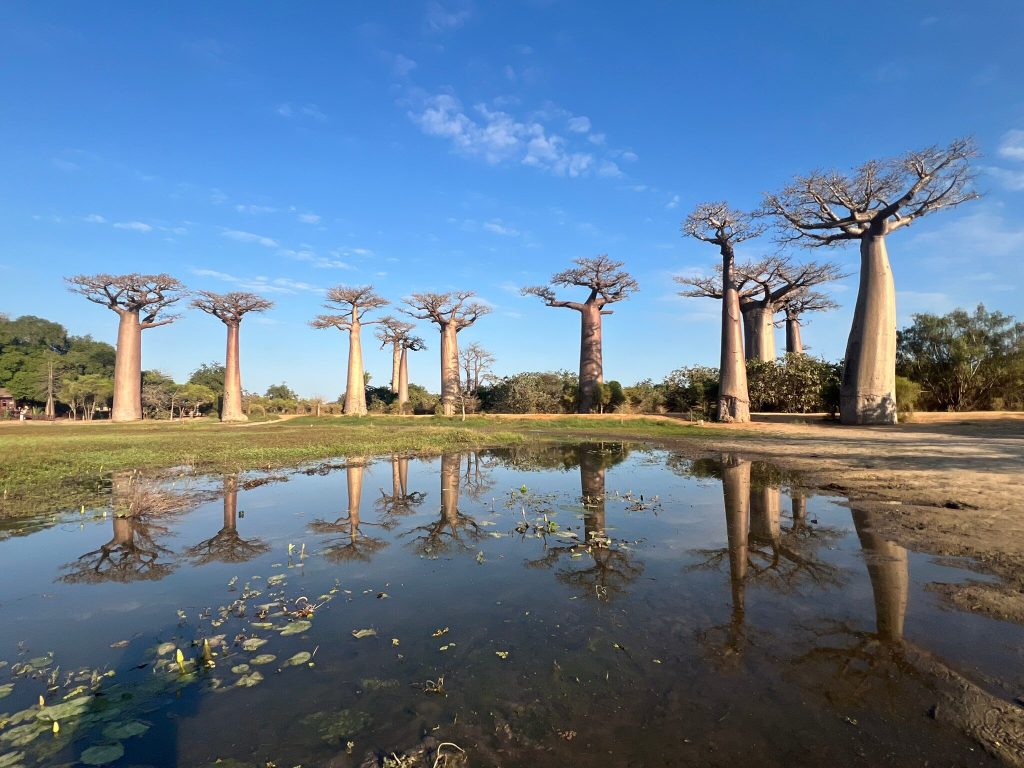
Western Madagascar holds the country’s most dramatic scenery and its hardest travel: the Avenue of the Baobabs, the fossa at Kirindy Forest, and the limestone pinnacles of Tsingy de Bemaraha at the end of a road that takes six to ten hours and two river ferries. The whole region closes in the wet season. It is dry season travel only, and worth the effort.
The Western Circuit and What It Involves
Everything in the west runs off one road north from Morondava. The Avenue of the Baobabs sits 20 km out, Kirindy Forest 50 to 60 km, and Tsingy de Bemaraha 200 to 230 km at the far end.
That last stretch is the defining feature of the region. Six to ten hours in a four-wheel drive over unsealed track, with two vehicle ferries, one departing when enough vehicles gather rather than to any schedule. Standard cars do not make it.
From roughly December through March the road floods, the ferries stop and Tsingy de Bemaraha shuts in all but name. Reopening usually falls somewhere in April or May depending on how the rains ended, and April bookings should be confirmed with an operator rather than assumed.
The west has the best scenery in Madagascar behind the worst road. Three days minimum to reach Tsingy de Bemaraha and get back, and only between April and November.
The Avenue of the Baobabs
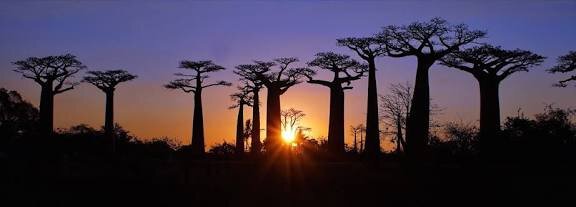
The Avenue of the Baobabs is the most photographed place in Madagascar, a 260-metre stretch of dirt road lined with twenty to twenty-five Grandidier’s baobabs reaching thirty metres.
Entry is free, a visit takes an hour, and the whole thing depends on arriving at sunrise or sunset. Under low light the trunks turn copper and the trees drop into silhouette. Under midday sun they flatten out completely.
Anyone travelling north to Kirindy or Tsingy passes twice, going out and coming back, which conveniently gives both a sunrise and a sunset. The Baobab Amoureux, two trees twisted around each other, sits a short drive further on.
These trees are remnants of forest that covered the whole region. The road and the rice fields arrived around them after the clearance, which is why a stand of giants stands with almost no young trees coming through.
Kirindy Forest and the Fossa
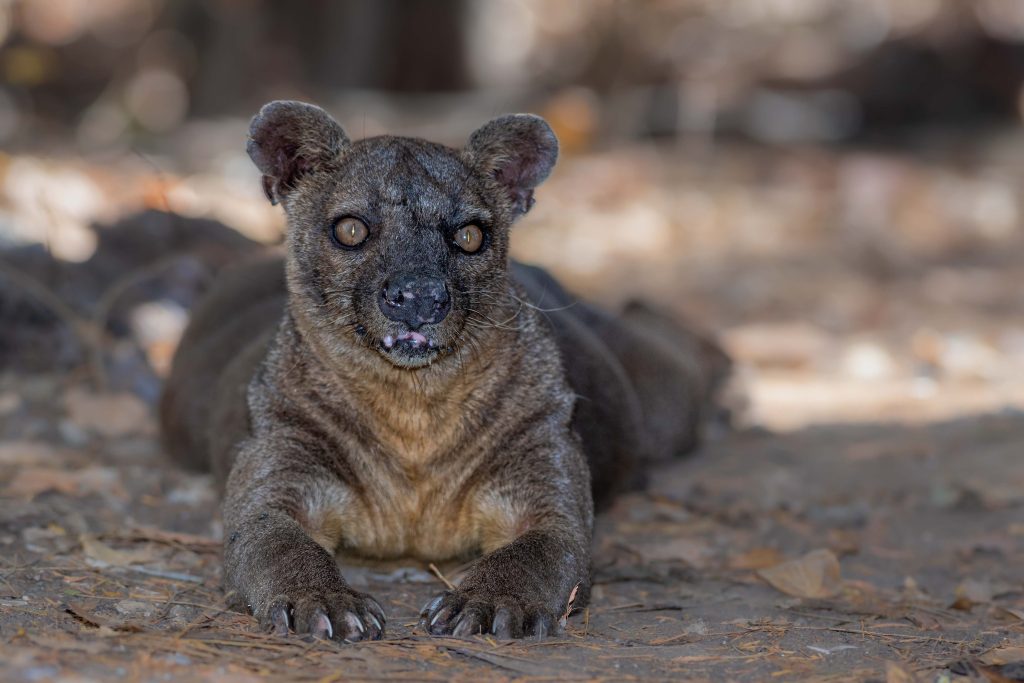
Kirindy Forest Reserve is the one place in Madagascar where fossa sightings are realistic. Animals come through the camp area in the afternoon, and visitors staying overnight see them with reasonable regularity, particularly during the October and November mating season.
Because the reserve is privately managed rather than a national park, night walks run inside the forest itself. That is where the giant jumping rat appears, a rabbit-sized rodent that hops and can launch itself close to a metre, along with Madame Berthe’s mouse lemur, the smallest primate on earth at around thirty grams.
Staying overnight is close to mandatory. Day visitors from Morondava consistently miss all three of the animals the reserve is known for, since the sightings cluster around dusk and after dark.
The reserve is known locally as the Swiss Forest, managed since the eighties by a Swiss forestry organisation running research alongside conservation, which is why the guides here carry knowledge accumulated across decades of fieldwork.

Tsingy de Bemaraha
Tsingy de Bemaraha protects the largest forest of limestone pinnacles on earth, a field of razor-edged grey needles rising up to a hundred metres, inscribed by UNESCO in 1990.
The Grand Tsingy circuit is a via ferrata route, roughly 5.6 km over four to six hours, threading through tunnels and crevices at ground level then climbing vertical ladders onto the pinnacle field. Fixed steel cables run the exposed sections and suspension bridges span the gaps between towers.
Anyone uncomfortable with heights or enclosed spaces should take the Petit Tsingy instead, ninety minutes to two hours with no harness and better odds on Decken’s sifaka in the surrounding dry forest.
Pirogue trips along the Manambolo gorge fill a half day, poled beneath cliffs rising a hundred metres, past Vazimba burial sites set into ledges that look unreachable from the water.
Short version, three to four days. Morondava, the Avenue at sunset, an overnight at Kirindy for the fossa, and back. No Tsingy. Works year-round apart from the wettest months and needs no serious commitment.
Full western circuit, seven to ten days. Adds the drive north to Bekopaka with two nights at Tsingy de Bemaraha for the Grand and Petit circuits and the gorge. Dry season only, four-wheel drive required.
Belo sur Mer, Kirindy Mite and the Southern Coast
South of Morondava the country changes. Kirindy Mite National Park at Belo sur Mer puts dry forest, spiny thicket, mangrove, dune, sacred lakes and coral reef within a day’s walking, and claims the highest primate density anywhere.
Note the naming trap: Kirindy Forest north of Morondava and Kirindy Mite south of it are entirely different places about 150 km apart, and operators confuse them constantly.
Belo sur Mer is a working boatbuilding village where Vezo craftsmen construct wooden dhows on the beach, using timber from the forest inland. It is reached by three to four hours on rough road or by speedboat from Morondava.
Three of Madagascar’s baobab species grow at Kirindy Mite, with the largest Grandidier’s population anywhere standing in natural forest rather than beside a cleared road.
Morondava and the Menabe Coast
Morondava is the base for everything in the west, reached by air from Antananarivo in about an hour or by a twelve to fourteen hour drive.
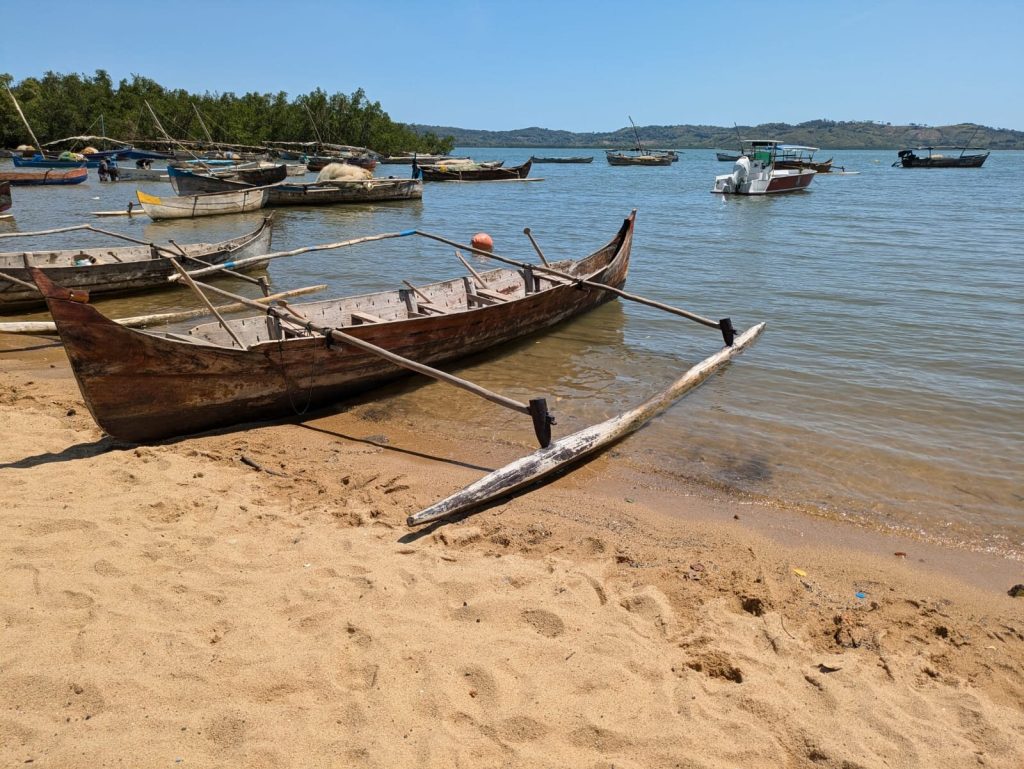
The town itself is relaxed, with hotels concentrated on the Nosy Kely sand peninsula and a beach that functions as a working community space rather than a resort strip. Fishermen land the catch, children play football and the whole town turns out for sunset.
The Sakalava royal tombs nearby carry elaborately carved wooden posts, much of the funerary sculpture frankly erotic, asserting continuity between the dead and the living. Visiting needs a local guide and permission, and some sites are closed to outsiders.
Pirogue trips across the channel to Betania land you in a Vezo fishing village, best in late afternoon when the outrigger fleet comes in.
The RN8 north from Morondava carries two separate problems. It floods seasonally, closing Tsingy de Bemaraha from roughly December to March, and it has historically seen dahalo activity. Standard advice is to travel with a reputable operator or in convoy rather than setting off independently, and to check current road conditions locally before committing to the drive.
The Tsiribihina River and the Makay
For travellers with more time, the Tsiribihina river descent is one of the classic Madagascar trips, two or three days by pirogue from Miandrivazo inland down to Belo sur Tsiribihina, camping on sandbanks and passing villages reachable no other way.
The Makay massif further inland is a maze of sandstone canyons that remained largely unexplored until scientific expeditions in recent decades. Reaching it is measured in days rather than hours and only a handful of operators run it.
Scenic charter flights over Tsingy de Bemaraha can be booked from Morondava for anyone who wants the formations without the road. Small aircraft carrying three to five passengers make the run, which is expensive and removes days of driving.
Best Time to Visit Western Madagascar
The west is strongly seasonal and the wet months close off most of what people come for.
April and May. The road north usually reopens somewhere in this window, though the date shifts each year with the rains. Country still green, temperatures moderate, few visitors. Confirm the Tsingy route before booking.
June to September. Peak conditions. Cooler temperatures make the via ferrata far more comfortable, road access is at its most reliable and wildlife is active. Lodges at Bekopaka are few and fill months ahead.
October and November. Still open and hot. Fossa are mating at Kirindy, which is when sightings become realistic. Reptiles are active. Midday on the exposed tsingy becomes hard work.
December to March. Closed in practice. The RN8 floods, ferries stop and Tsingy de Bemaraha becomes unreachable. Kirindy is cut off from mid-January to late March. Plan a different region.
Frequently Asked Questions
How long do I need for western Madagascar?
Three to four days covers Morondava, the Avenue of the Baobabs and an overnight at Kirindy. The full circuit including Tsingy de Bemaraha needs seven to ten days, since the drive north takes six to ten hours each way and the park deserves two nights. Anyone attempting Tsingy in under five days will spend nearly all of it driving.
What does a western trip cost?
Tsingy de Bemaraha charges 55,000 Ariary per adult per day plus a compulsory 5,000 helmet fee, higher than the standard 45,000 elsewhere. Kirindy is private and sets its own rates. The dominant costs are the four-wheel drive and driver, commonly 150 euros or more for the multi-day return run, and the flight to Morondava at roughly 200 euros each way.
When is the western circuit open?
Roughly April or May through November. From December to March the RN8 floods, the river ferries cannot operate and Tsingy de Bemaraha shuts in practice. Kirindy is unreachable from mid-January to late March. Reopening dates shift each year, so confirm April travel with an operator.
Do I need a four-wheel drive?
For anything north of the Avenue of the Baobabs, yes. The track to Kirindy and on to Bekopaka is unsealed, deeply rutted in places and includes water crossings. Standard vehicles do not make it. The Avenue itself is reachable by ordinary taxi from Morondava.
Is Tsingy de Bemaraha worth the effort?
For most travellers who make the trip, yes. It is the largest limestone pinnacle field on earth and the via ferrata routes are unlike anything else in Madagascar. The honest caveat is that it costs three days minimum of hard travel, and anyone unsure about heights should plan on the Petit Tsingy rather than the Grand.
Will I see a fossa at Kirindy?
Better odds than anywhere else in Madagascar, though not guaranteed. Staying overnight is close to mandatory, since animals appear around camp in the afternoon and evening. October and November are the strongest months, when the mating season concentrates normally solitary animals.
What is the difference between Kirindy Forest and Kirindy Mite?
Two different places roughly 150 km apart. Kirindy Forest Reserve is private, 50 to 60 km north of Morondava, and is where fossa sightings happen. Kirindy Mite National Park is 90 km south at Belo sur Mer, protecting dry forest, mangrove and reef. Operators and guidebooks confuse them constantly, so check which one an itinerary means.
Is the road north safe?
The RN8 has historically seen dahalo activity alongside seasonal flooding, and the standard advice is to travel with a reputable operator or in convoy rather than independently. Check current conditions locally before committing. The road itself is the larger practical risk, being rough, remote and slow.
Planning Your Trip
The west is the region that punishes loose planning hardest. Ferry timings, road conditions, the reopening date after the rains and the small number of beds at Bekopaka all have to line up, and getting one wrong costs a day you cannot spare.
Booking Your Madagascar Trip
The safari companies and tour operators listed on this website put trips like this together for a living and know which camps, guides and routes actually deliver. We are an independent guide to Madagascar; we do not book or sell tours ourselves.
When you are ready, arrange your safari, tour or holiday with one of the recognised operators listed here. Tell them your dates and what matters most, and a real person, not a form, will handle the itinerary, park bookings and logistics for you.