Budget Travel and Backpacking in Madagascar
Madagascar is cheap on the ground and expensive to move around, which shapes every budget trip here. Food, guesthouses and park fees cost very little; vehicle hire and domestic flights dominate. Shoestring travellers using taxi-brousse and simple guesthouses manage on around 45 to 60 US dollars a day, and the RN7 is the one route that works properly without a hired vehicle.
Where Budget Travel Works and Where It Does Not
The single most useful thing to understand is that transport, not accommodation, decides your budget. One documented four-week trip for two spent about £3,454 on vehicle hire against £675 on accommodation across the same period.
That ratio explains which routes are viable. The RN7 corridor from Antananarivo to Toliara is sealed and served by frequent taxi-brousse, so it works independently and cheaply. The RN2 east to Andasibe and Toamasina and the RN6 north are the same.
What does not work on a shoestring is the west and the northeast. The road to Tsingy de Bemaraha needs a four-wheel drive with two river ferries, Masoala needs boat charters, and Marojejy needs a full trekking team hired at Manantenina. There is no cheap version of these.
Four weeks for two people: about £675 on accommodation, about £3,454 on the car. In Madagascar the saving is in how you move, not where you sleep.
Taxi-Brousse and Getting Around Cheaply
Taxi-brousse minibuses connect every town in Madagascar and are how most Malagasy people travel. They leave when full rather than to a timetable, cost a fraction of private hire, and take considerably longer.
Typical inter-town fares run in the region of 10,000 to 15,000 Ariary. Services are frequent on the RN7, RN2 and RN6, and the experience is a genuine part of seeing the country rather than a compromise.
The friction is reaching park entrances. Ranomafana sits off the RN25 east of Fianarantsoa, Anja is a short hop from Ambalavao, and Andasibe’s gate is beyond the village. Drop-offs leave you with a further taxi or a walk, and getting back after a full-day circuit can be awkward.
The practical compromise most budget travellers reach is taxi-brousse between towns and a local vehicle hired for the park legs. That captures most of the saving without the worst of the difficulty.
Cheap Accommodation Across the Country
Simple guesthouses run around 20 to 40 US dollars a night and are widely available in the towns and near park entrances. Antsirabe, Fianarantsoa and the highland towns are the cheapest in the country.
Hostels barely exist in Madagascar, so budget travellers use small hotels and guesthouses rather than dorms. Standards vary and hot water and reliable power are not guaranteed at this level.
Camping inside the national parks is the cheapest option where facilities exist. Isalo has sites at Namaza and the Piscine Naturelle with running water and sanitary blocks. Andringitra, Marojejy, Zahamena and Namoroka all have sites, though most need your own tent, hireable in the gateway towns.
Nosy Be is the most expensive part of the country across every category and the place shoestring budgets come under most pressure. Île aux Nattes off Sainte-Marie is the cheap island alternative, with beachfront guesthouses at a fraction of Nosy Be prices.
Shoestring, 45 to 60 dollars a day. Guesthouses, local eateries, taxi-brousse between towns, one or two parks. Works on the RN7, RN2 and RN6. Slow and demanding but entirely workable.
Mid-range, 100 to 150 dollars a day. Comfortable guesthouses, restaurant meals, shared or hired vehicle for park legs, several parks with guides. What most independent travellers actually spend.
Not achievable cheaply. Tsingy de Bemaraha, Masoala, Marojejy, Namoroka and Baie de Baly. All require four-wheel drive hire, boat charters or full trekking teams with no budget alternative.
Park Fees and Guiding on a Budget
Park fees are modest and standardised, which makes them one of the easier costs to plan. Most parks charge 45,000 Ariary per adult per day with children under twelve at 25,000.
Guides are compulsory almost everywhere and charged per group rather than per person, which is the key saving available to budget travellers. A guide fee of 30,000 Ariary split between four people costs a quarter of what it costs alone.

Teaming up at the park office is common and worth doing. Other travellers arrive at the same gates, and combining into a group of four or five reduces the guide cost substantially without affecting the walk.
Everything is cash in Ariary at the gate. Draw money in the towns with reliable banks, since there are no ATMs at most park entrances and none at all at Bekopaka, Soalala or Manantenina.
Eating Cheaply
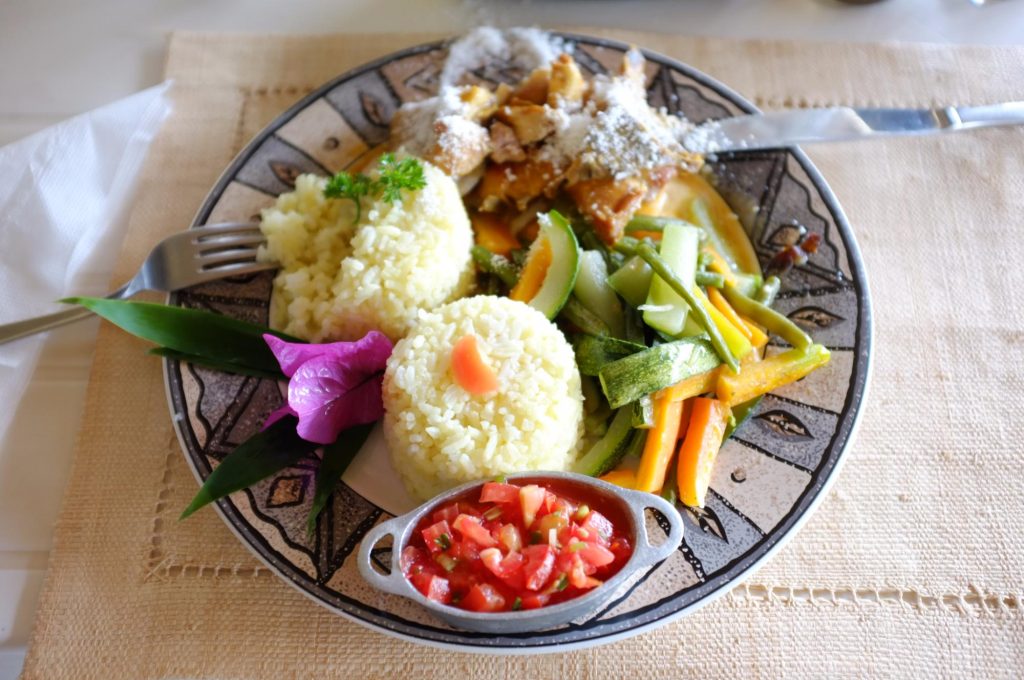
Food is where Madagascar is genuinely inexpensive. A meal at a local eatery costs a few dollars and street food less.
Rice with laoka is the staple and the cheapest filling option, available everywhere. Street vendors sell mofo gasy in the mornings, samosas, fried snacks and grilled skewers through the day. Markets sell fruit at prices well below what hotels charge.
The exception is remote lodges with compulsory half board, since there is nowhere else to eat. Setam Lodge at Ranomafana and the Masoala peninsula properties both work this way, and the meal cost is built into the room rate.
Bottled water is a constant expense. A filter bottle or purification tablets pay for themselves over a long trip and reduce plastic waste, since plastic bags were banned in 2017 and the country has a visible waste problem.
Budget for park fees, guides and tips separately from your daily spending, and draw the cash before leaving the last town with a bank. Guide fees are not included in park entry, porters and cooks are extra on the trekking routes, and tipping is customary rather than optional. Travellers who budget only for accommodation and food consistently run short at the gate.
The RN7 as a Budget Route
The southern circuit is the backpacking route in Madagascar and the reason is simple: one sealed road links everything.
Taxi-brousse runs the full length from Antananarivo to Toliara. Guesthouses in every town rarely need booking outside July to October. Park guides are arranged on arrival. Banks in Antananarivo, Antsirabe, Fianarantsoa and Toliara cover the cash requirement.
The stops that matter are Antsirabe for the highlands, Ranomafana for rainforest, Anja for ring-tailed lemurs at ninety minutes and minimal cost, and Isalo for canyon walking. Zombitse sits directly on the road west and takes an hour.
Anja deserves particular mention for budget travellers. It sits on the main road, takes ninety minutes, is community-run so the money stays local, and delivers the densest ring-tailed lemur population in Madagascar. Nothing else in the country offers that ratio.
Community Reserves and Cheap Wildlife
Some of the best value wildlife in Madagascar is at community-run sites rather than national parks, and budget travellers benefit twice: lower costs and money that stays local.
Anja Community Reserve is the standout. Ninety minutes, directly on the RN7, entirely owned and run by the village, and holding the densest ring-tailed lemur population in the country. It was created in 2001 when deforestation was destroying both the forest and the lemurs, and the recovery since is why it is cited as the most successful community conservation project in Madagascar.
The night walks at Andasibe happen in the community reserves at VOIMMA and Mitsinjo rather than inside the national park, and cost less than the park itself while delivering the nocturnal species that make up half the lemur list.
Lake Alaotra near Zahamena has community-run canoe trips for the bandro, and Nosy Komba’s lemur reserve is village-managed. Village stays exist around Tsingy de Namoroka and in the Mandrare valley.
Beyond cost, these are the visits where a traveller’s money most clearly funds the protection of the forest rather than an operator’s margin.
Frequently Asked Questions
How much does backpacking Madagascar cost?
Around 45 to 60 US dollars a day on a shoestring, covering a simple guesthouse, local food, taxi-brousse travel and park entry. Aggregated traveller data puts budget travel at roughly 45 dollars daily. Mid-range independent travel runs 100 to 150. The variable is transport rather than comfort.
Can I travel Madagascar without hiring a vehicle?
On the RN7, RN2 and RN6, yes. Taxi-brousse connects every town on these corridors frequently and cheaply. The difficulty is reaching park entrances from drop-off points, which usually means a further taxi. The west, the northeast and the remote parks have no viable public transport alternative.
Are there hostels?
Barely. Madagascar has very few dorm-style hostels, so budget travellers use small guesthouses and hotels at around 20 to 40 US dollars a night. Camping inside the parks at Isalo, Andringitra, Marojejy and elsewhere is cheaper where facilities exist, though most sites need your own tent.
How do I reduce guide costs?
Team up with other travellers at the park office. Guides are charged per group rather than per person, so a 30,000 Ariary fee split four ways costs a quarter of what it does alone. Other visitors arrive at the same gates and combining is common and straightforward.
Which parks are cheapest to reach?
Anja at ninety minutes directly off the RN7, Zombitse on the road between Isalo and Toliara, Ankarafantsika on the sealed RN4 between the capital and Mahajanga, and Andasibe three to four hours east on the RN2. All are reachable by taxi-brousse with a short onward hop.
What is the biggest budget mistake?
Underestimating cash requirements at the parks. Guide fees are separate from entry, porters and cooks are extra on treks, and tipping is customary. There are no ATMs at most park gates and none at all at Bekopaka, Soalala or Manantenina. Calculate the full requirement before leaving the last bank.
Is taxi-brousse safe?
It is how the country travels and works for most people, though vehicles are crowded, often overloaded and maintenance varies. Travel by day, keep bags with you rather than on the roof where possible, and avoid night services entirely. Road travel is the main practical risk in Madagascar regardless of how you do it.
When should a budget traveller go?
April to June or November, when prices are lower than the July to October peak and conditions are still good. The wet season from December to March sees rates drop substantially, but several parks close, roads flood and eastern travel becomes unreliable, which costs more in lost days than it saves in fares.
Planning Your Trip
Budget travel in Madagascar means accepting slow transport in exchange for a genuinely cheap country underneath. The RN7 does this well and is the route nearly every backpacker takes for good reason. Trying to reach the west or the northeast on a shoestring is where budgets break.
Booking Your Madagascar Trip
The safari companies and tour operators listed on this website put trips like this together for a living and know which camps, guides and routes actually deliver. We are an independent guide to Madagascar; we do not book or sell tours ourselves.
When you are ready, arrange your safari, tour or holiday with one of the recognised operators listed here. Tell them your dates and what matters most, and a real person, not a form, will handle the itinerary, park bookings and logistics for you.