Hiking and Trekking in Madagascar
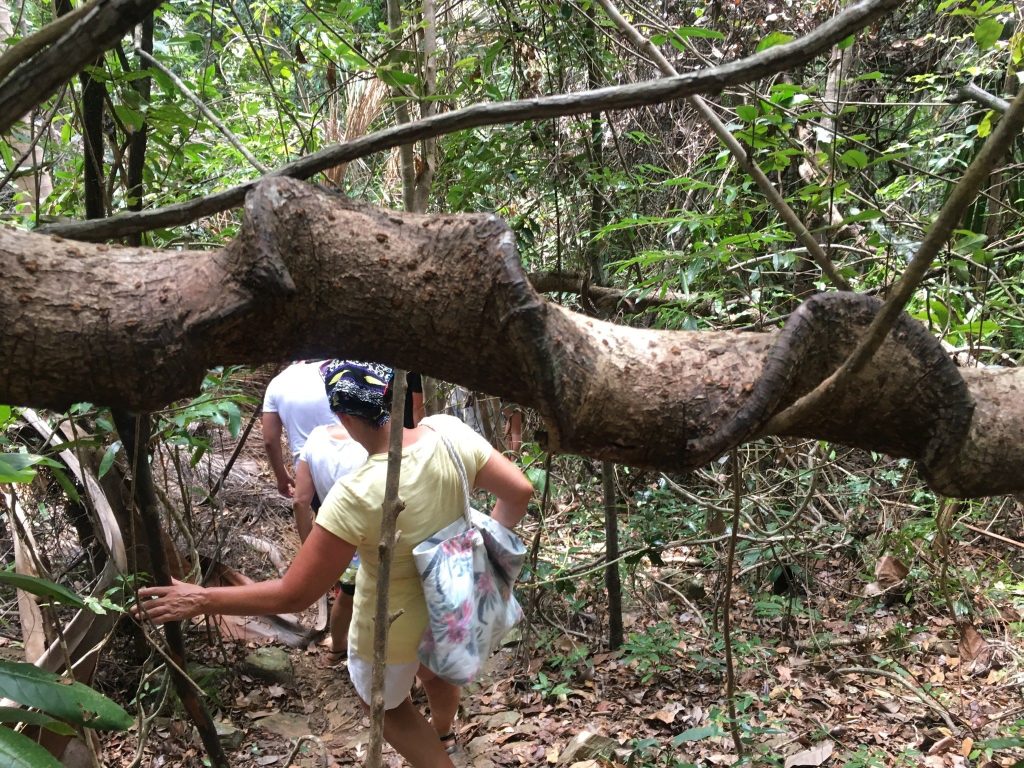
Walking is how you see Madagascar. There are no game drives here, so every park visit means a guided walk, and the range runs from ninety-minute circuits at Anja to four-day treks to the silky sifaka at Marojejy and the summit of Pic Boby at 2,658 metres. Guides are compulsory almost everywhere, and the terrain varies more than most visitors expect.
Why Everything in Madagascar Is Walking
Madagascar has no large predators and no big game, which means no vehicles crawling through savanna looking for lions. What it has instead is forest, and the only way into forest is on foot.
That changes the physical demand of a trip considerably. A conventional safari involves sitting; a Madagascar trip involves several hours of walking most days, often on steep, muddy or exposed ground.
Guides are compulsory in all Madagascar National Parks properties, and this is not bureaucratic. Trails are frequently unmarked, the wildlife is genuinely hard to find without trained eyes, and on the tsingy and the exposed plateaus getting lost carries real consequence.
No game drives, no vehicles in the parks. Every wildlife sighting in Madagascar happens because you walked to it.
Multi-Day Trekking at Andringitra and Pic Boby
Andringitra National Park holds the best mountain trekking in Madagascar. The Imarivolanitra circuit runs roughly 28 km over three days with five to six hours of walking daily, crossing high grassland and climbing to Pic Boby at 2,658 metres.
The summit is the highest in Madagascar that ordinary walkers can reach. Maromokotro in the far north is higher at 2,876 metres but requires a remote expedition. The climb from the plateau camp takes two to three hours on rock and grass with no technical sections.
Summit day starts around three in the morning to be on top for sunrise, since cloud builds through the day. Elevation gains and losses of around 500 metres are routine across the route.
This is the coldest ground in Madagascar. Nights on the plateau drop below freezing and frost is normal, so a proper sleeping bag, insulated layers and gloves are needed rather than optional.
Marojejy and the Rainforest Treks
Marojejy National Park is the other serious multi-day trek and the hardest of the two. There is no road in and no day visit: you walk between mountain camps and sleep in the forest.
The Mantella trek is two days to the first camp at 450 metres. The Simpona trek continues to Camp Marojejia at 775 metres and is where silky sifaka sightings happen, needing three to four days. The summit trek adds Camp Simpona at around 1,250 metres and the peak at 2,132 metres, taking four to five days.
Distances are short and the gradients are severe. The stretch from Camp Mantella to Camp Marojejia is only about 2 km and takes one to two hours on a stone path that turns treacherous when wet.
Porters carry the loads and are hired at Manantenina along with a guide, a cook and, for the sifaka, a specialist tracker. Camps have cabins with beds rather than requiring tents, though pitches exist.
Short circuits, one to three hours. Anja, the Andasibe Analamazaotra loops, Amber Mountain‘s waterfall routes, the Ankarana short circuit. Flat to moderate, suitable for most fitness levels, and where most wildlife sightings happen.
Full-day walks, four to eight hours. Isalo’s Piscine Naturelle and Namaza circuits, Ranomafana‘s longer routes, Mantadia, Ankarana’s Moyen Circuit at 20 km. Need reasonable fitness and an early start.

Multi-day treks, two to five days. Andringitra to Pic Boby, Marojejy to the silky sifaka or the summit, the Tsingy de Namoroka circuits, Zahamena’s Bemoara route. Porters, camps and real hill fitness required.
Canyon and Tsingy Walking
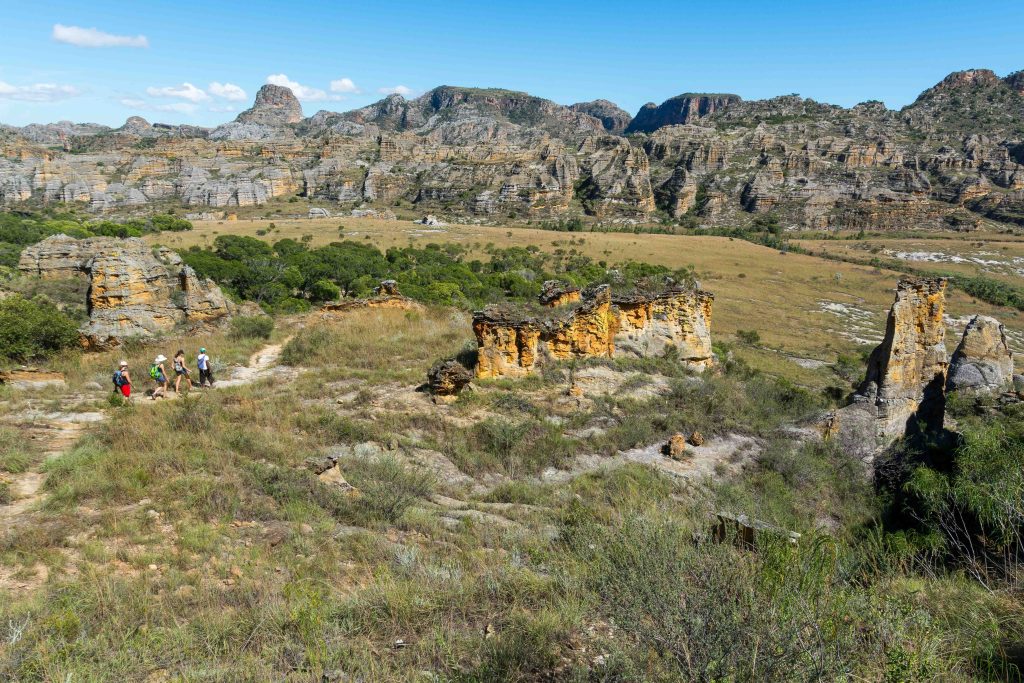
Isalo National Park is Madagascar’s leading hiking destination for scenery rather than wildlife, built around a Jurassic sandstone massif cut by canyons and spring-fed pools.
The Piscine Naturelle circuit takes about three hours each way over roughly 3 km, which sounds trivial and is not: the route crosses eroded rock and an exposed savanna plain with no shade at all. Namaza gorge drops about 180 metres into a valley with a chain of pools.
Multi-day routes cross the plateau, with the Teniky caves a minimum of two days walking each way. Two campsites take bookings, at Namaza with 33 pitches and the Piscine Naturelle with around 40.
Tsingy de Bemaraha is walking of a different kind. The Grand Tsingy circuit is a via ferrata route with fixed cables, vertical ladders and suspension bridges over long drops, roughly 5.6 km over four to six hours. Anyone uncomfortable with heights or enclosed spaces should take the Petit Tsingy instead.
Tsingy de Namoroka in the northwest offers similar formations with multi-day options and almost no other walkers.
Fitness, Terrain and What to Expect
The terrain varies more than a single description allows, and matching the walk to your fitness matters.
Rainforest at Ranomafana, Marojejy, Masoala and Zahamena is the hardest going. Steep clay trails, exposed roots, near-constant mud and humidity above 90 percent. Ranomafana has only about five percent flat ground and Zahamena less.
Canyon and plateau at Isalo and Andringitra is drier underfoot but exposed, with heat the limiting factor rather than gradient. Walking between eleven and two is a mistake people make once.
Tsingy at Bemaraha, Ankarana and Namoroka involves scrambling on limestone sharp enough to open skin, squeezing through passages and, at Bemaraha, harness work. Gloves are worth having even where not required.
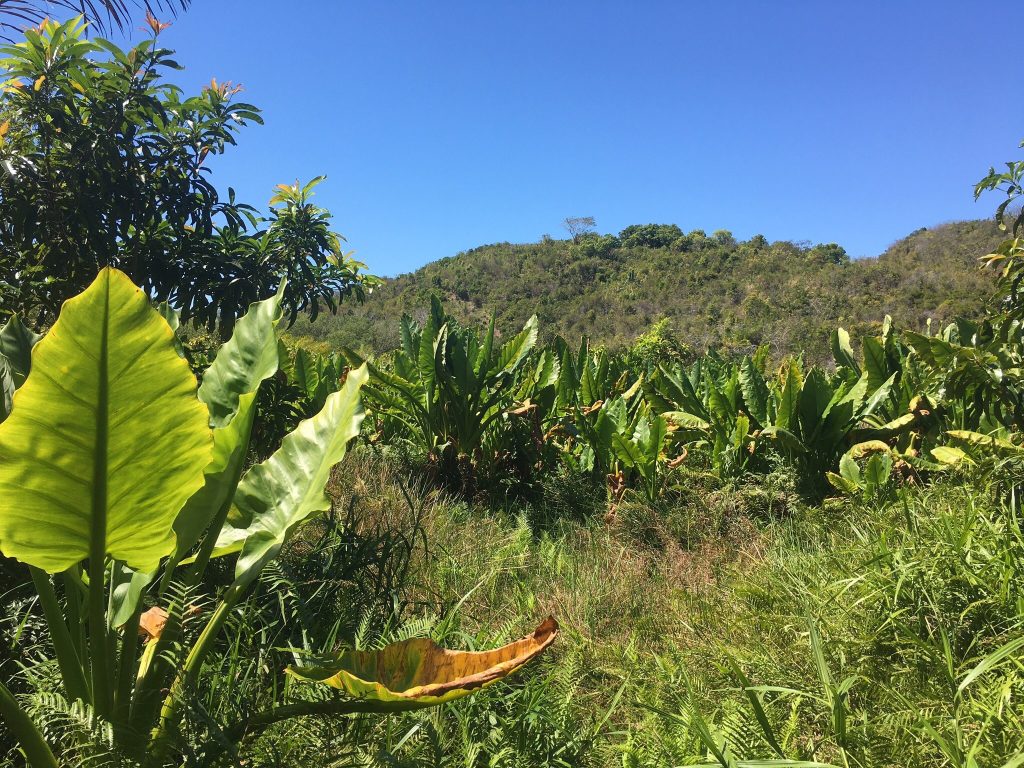
Dry forest at Ankarafantsika, Kirindy and Zombitse is the easiest walking in Madagascar, flat and open, which is one reason Ankarafantsika suits visitors with limited mobility.
Boots with real grip are the single most useful thing you can bring. Rainforest trails run on wet clay and roots where trainers turn a walk into a slow negotiation, and the tsingy is sharp enough to cut through thin soles. Add a waterproof jacket regardless of season, since the eastern parks record rain on roughly 210 days a year, and a headlamp for the night walks that hold half the wildlife.
Guides, Porters and How Trekking Is Organised
Guides are hired at the park office on arrival and charged per group by circuit rather than per person or per hour. Longer and harder routes cost more.
For multi-day treks the team grows. Marojejy requires a guide plus porters at roughly one per trekker, a cook, and optionally a specialist tracker for the silky sifaka, which is the single best value item on the fee list. Andringitra uses guides and porters with cooking arrangements agreed in advance, since collecting firewood inside the park is prohibited.
Everything is cash in Ariary at the office. There are no card facilities and no advance online booking anywhere in the Madagascar National Parks system, so calculate your full requirement before leaving the last town with a bank.

Asking for a specialist matters. A guide who works birds by call, or one tracking bamboo lemur groups at Ranomafana, changes what you see considerably compared with whoever is next in the rotation.
Best Time for Hiking and Trekking
Trekking is a dry season activity in Madagascar, and the reasons are practical rather than about comfort.
April to June. Rains ending, trails firming up, river crossings dropping to safe levels. Comfortable temperatures and few walkers. A strong window for the long circuits at Andringitra and Isalo.
July to September. Driest and most reliable, with the firmest ground and clearest summit views. The best window for Marojejy and Pic Boby. Nights at altitude are genuinely cold and reptiles are less active.
October and November. Warming, with wildlife at its most active and infant lemurs appearing. Still good for trails. Midday on the exposed plateaus and tsingy becomes hard work toward the end.
December to March. Rainforest trails turn to deep mud, Marojejy’s river crossings run high, and the western tsingy parks close entirely. Not the season for multi-day trekking anywhere.
Frequently Asked Questions
How fit do I need to be for Madagascar?
Moderately fit for the standard park circuits, which run one to eight hours on uneven ground. The multi-day treks at Andringitra and Marojejy need real hill fitness and tolerance for consecutive days of steep walking in wet conditions. Ankarafantsika, Anja and the dry forest parks are the easiest and suit most visitors including those with limited mobility.
What does trekking cost?
Park entry is 45,000 Ariary per adult per day at most parks, with Tsingy de Bemaraha at 55,000 plus a 5,000 helmet fee and Namoroka around 65,000. Guides are charged per group by circuit, roughly 15,000 to 40,000 Ariary for shorter routes and more for full-day or multi-day treks. Porters and cooks are extra on the long routes. All cash in Ariary at the gate.
Do I need a guide?
Yes, in all Madagascar National Parks properties, and it is not a formality. Trails are often unmarked, the wildlife is genuinely hard to find without trained eyes, and on the tsingy and exposed plateaus the terrain carries real risk. Community reserves recommend guides strongly rather than requiring them.
Which is the best multi-day trek?
Andringitra to Pic Boby for mountain walking and the highest accessible summit in Madagascar, on a three-day circuit that occasional hikers manage. Marojejy for wildlife, since it is the only way to see the silky sifaka, though it is harder and wetter. Isalo’s plateau routes for canyon country over two to seven days.
What should I wear?
Boots with real grip above everything else. Quick-drying long sleeves and trousers for sun and insects, a waterproof jacket in any month, and warm layers for the highlands where nights drop close to freezing. Leech socks for the eastern rainforest in the wet months. Gloves for the tsingy parks.
Are there dangerous animals on the trails?
No. Madagascar has no large predators and none of its roughly eighty snake species is dangerous to people. The real hazards are terrain, heat and slippery ground. Nile crocodiles are present in some rivers and lakes, which is why guides direct where swimming is safe.
Can I camp in the parks?
At Isalo, Andringitra, Marojejy, Zahamena, Namoroka and several others, yes. Facilities vary from cabins with beds at Marojejy to dry toilets and nothing else at Andringitra. Most sites need your own tent, hireable in gateway towns. At the remote parks camping is often the only option rather than a budget choice.
What time should I start?
Before dawn wherever possible. Rainforest wildlife is active at first light and quiet by mid-morning, and on the exposed circuits at Isalo and in the south the plateau becomes punishing by eleven. A six o’clock start rather than a nine o’clock one is the cheapest improvement available to any Madagascar itinerary.
Planning Your Trip
Trekking in Madagascar is more demanding than most visitors expect and better organised than they fear. Camps at Marojejy have beds, porters carry loads, and guides know the ground. The decisions that matter are matching the route to your fitness and travelling in the dry season.
Booking Your Madagascar Trip
The safari companies and tour operators listed on this website put trips like this together for a living and know which camps, guides and routes actually deliver. We are an independent guide to Madagascar; we do not book or sell tours ourselves.
When you are ready, arrange your safari, tour or holiday with one of the recognised operators listed here. Tell them your dates and what matters most, and a real person, not a form, will handle the itinerary, park bookings and logistics for you.