Madagascar Travel Guide

Madagascar is the fourth largest island on earth and the only place to see lemurs, baobab forests and limestone tsingy in the wild, with roughly nine in ten of its species found nowhere else. Most trips run 10 to 14 days on one of three circuits, built around national parks and long drives between them. The island rewards travellers who accept slow roads and plan around a real dry season.
Why Visit Madagascar
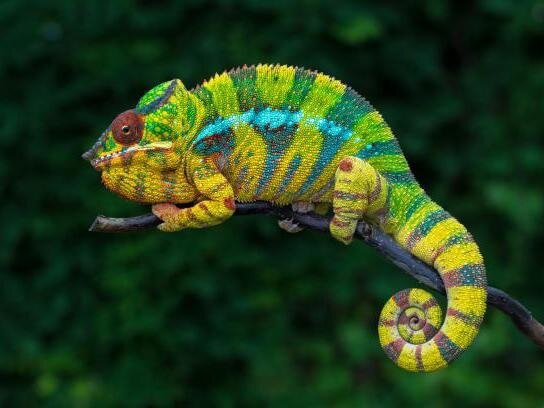
Madagascar split from Africa around 165 million years ago and from India roughly 88 million years ago, and everything on it has evolved in isolation since. The result is a place where the wildlife has no equivalent anywhere: over a hundred lemur species, six endemic baobabs, chameleons ranging from the length of a forearm to the size of a fingernail.
It is not a conventional safari destination. There are no lions, elephants or big game, and nobody drives around in an open vehicle looking for predators. What you do instead is walk, usually in forest, usually with a guide who finds things you would never see alone.
The country is also among the poorest in the world, with infrastructure to match. Roads are slow, domestic flights are limited, and comfort varies enormously outside the main circuits. Travellers who arrive expecting Kenya or Botswana are disappointed. Those who come for the strangeness of the place rarely are.
Around ninety percent of what lives here lives nowhere else. Madagascar is less a country you visit than an experiment in isolation that ran for eighty-eight million years.
Madagascar Safari Highlights and Where to Go
Three circuits cover most itineraries, and choosing between them is the first real decision.
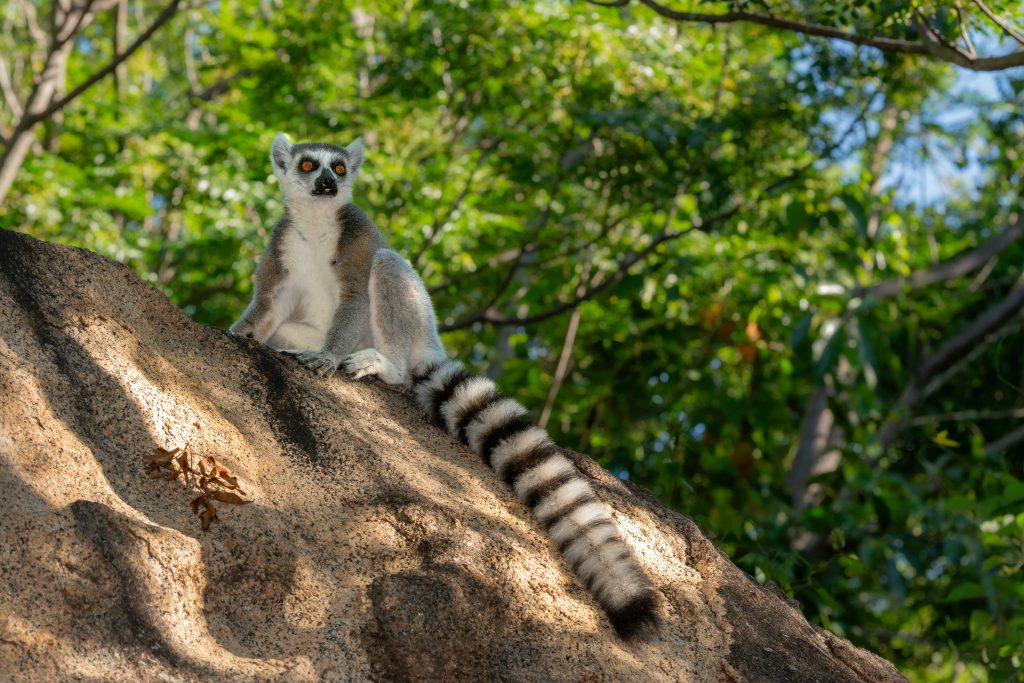
The RN7 southern circuit. The classic route from Antananarivo to Toliara: Antsirabe, Ranomafana, Ambalavao, Anja, Isalo, ending at the coast. Sealed road throughout, rainforest and canyon country, ring-tailed lemurs and sifaka. Ten to fourteen days. The best first trip.
The northern circuit. Based on Diego Suarez: Amber Mountain rainforest, Ankarana tsingy and caves, the Red Tsingy, the Emerald Sea, then Nosy Be for reefs. Shorter driving distances than anywhere else and the widest habitat range in a small area. A week to ten days.
The western circuit. From Morondava: the Avenue of the Baobabs, Kirindy Forest for fossa, and the hard road north to Tsingy de Bemaraha. Demanding, dry season only, and the most spectacular scenery in the country. Seven to ten days.
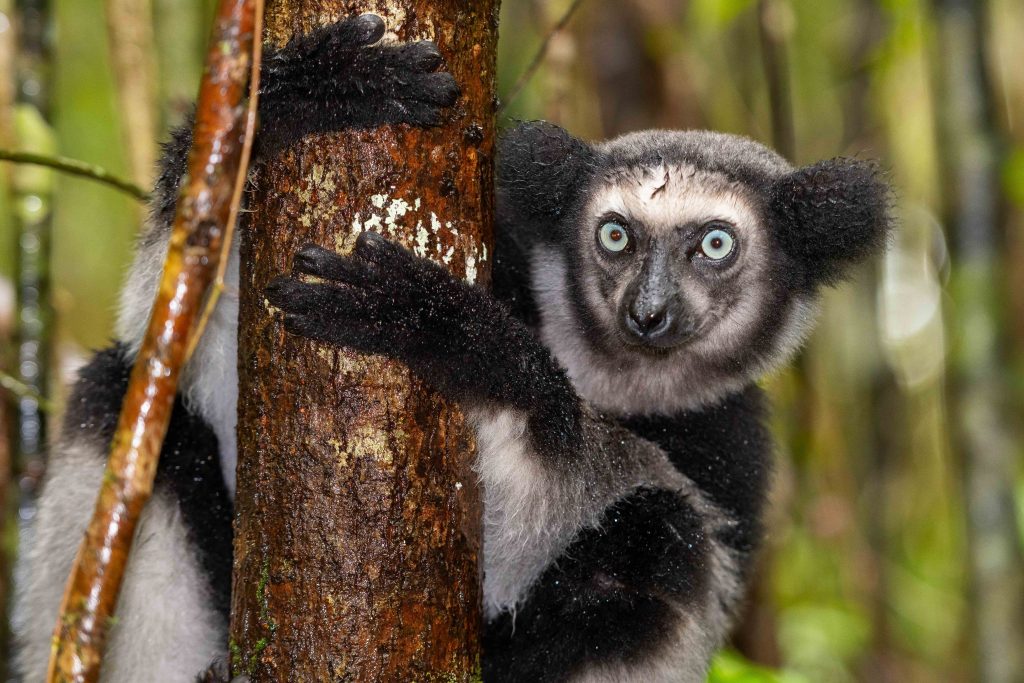
The eastern route from the capital to Andasibe-Mantadia and on to Toamasina or Île Sainte-Marie is the fourth option, and the easiest add-on. Andasibe is three to four hours from Antananarivo on sealed road and gives near-certain indri sightings, which makes it the single best-value park in the country.

Planning Your Madagascar Itinerary
Distances deceive. The map suggests you can link the north and the south in a fortnight. In practice road speeds average well below what the kilometres imply, and domestic flights run at limited frequency and sell out in peak season.
Ten days realistically covers one circuit with a couple of parks properly. Fourteen covers a circuit plus a coastal stay. Anything under a week should focus on Andasibe and one other destination rather than attempting a loop.
Nearly every itinerary routes through Antananarivo at least twice, since it is the hub for all domestic aviation. Build that transit time in rather than treating it as lost days, and avoid scheduling a long drive on the day you land.
Getting There and Getting Around Madagascar
International flights arrive at Ivato airport in Antananarivo, with Nosy Be also receiving some direct services. Connections typically route through Paris, Addis Ababa, Nairobi, Johannesburg or Réunion.
Inside the country, most travellers use a private vehicle with a driver. This costs more than public transport and is what almost every operator arranges, because roads are demanding and a driver who knows them makes a substantial difference. Four-wheel drive is required for the western and remote routes and optional on the RN7.

Taxi-brousse minibuses connect everywhere cheaply and slowly, and are how Malagasy people travel. Domestic flights save days on long transfers to Nosy Be, Sainte-Marie, Fort Dauphin, Morondava, Toliara and the northeast, and booking them early matters more than booking hotels.
Best Time to Visit Madagascar
The dry season runs roughly April to November and is when most people come. January to March is cyclone season, with heavy rain, flooding and several parks closing outright.
April to June. Rains ending, country green, few visitors and lower prices. Reptiles still active. Roads improving through the period. Strong value.
July to September. Peak season. Coolest, driest, most reliable for roads. Humpback whales off Sainte-Marie and Nosy Be. Cold nights in the highlands. Book well ahead.
October and November. Widely rated the best overall. Infant lemurs, active reptiles, flowering plants, settled weather and fewer people than mid-year.
December to March. Hot, wet and cyclone-exposed. Rainforests at their richest and prices lowest, but Tsingy de Bemaraha, Baie de Baly and Namoroka close and eastern travel becomes unreliable.
Several parks are seasonally inaccessible, which catches travellers out more than the weather does. Check your target parks against the calendar before booking flights.
Safety and the Current Situation in Madagascar
Madagascar has been under a transitional government since October 2025, when the military assumed power following large-scale demonstrations and announced a two-year transition ahead of new elections. Reporting since indicates conditions have remained calm, and the United States lowered its advisory from Level 3 to Level 2 in the period that followed.
Current advice from the UK, Australian and Canadian governments is to exercise a high degree of caution, citing crime, the possibility of civil unrest and natural disaster risk. Check your own government’s advisory before booking, since these are updated regularly and this page is not.
The practical risks for most visitors are ordinary ones. Pickpocketing and bag-snatching are common in Antananarivo, particularly around markets and transport hubs. Take taxis after dark rather than walking, keep valuables out of sight and use hotel-arranged transport at night.
Regional advisories are worth reading properly. The southern triangle between Ihosy, Toliara and Fort Dauphin is described as tense, with armed cattle-rustling groups known as dahalo active in rural areas, and authorities advise using a recognised operator rather than travelling independently there. Similar advice applies on parts of the RN7 and the road north from Morondava. Tourists have not for the most part been the target, but the guidance exists for good reason.
Road travel is the risk that deserves most respect and gets least attention. Distances take far longer than the map suggests, night driving is genuinely dangerous, and vehicle standards vary. Travel by day, use a reputable operator with maintained vehicles, and fly rather than drive to Fort Dauphin, which official advice recommends by name.
Costs and Budgeting for a Madagascar Trip
Madagascar is inexpensive on the ground and expensive to reach. International flights and domestic connections dominate most budgets, while food, guides and park fees are modest by international standards.

National park entry is standardised at a set daily rate per adult with a lower rate for children, and guides are compulsory almost everywhere and charged separately per group. Everything is paid in cash in Ariary, since cards are not accepted at park offices and there is no advance booking system.
Accommodation spans a very wide range, from simple guesthouses to a handful of genuinely upmarket lodges. The remote places cost more than their comfort suggests, because everything they use arrived by boat or over a bad road.
Health, Vaccinations and Malaria
Malaria is present across most of the country and prophylaxis is standard advice. Discuss it with a travel clinic well before departure rather than at the airport pharmacy.
Yellow fever vaccination is required only if arriving from an endemic country, not for Madagascar itself. Hepatitis A, typhoid and tetanus are commonly recommended, with rabies considered for remote or longer trips. Measles vaccination status is worth confirming given global case numbers.
Medical facilities outside Antananarivo are limited and evacuation cover is worth having rather than optional, particularly for the remote parks in the northwest and northeast where the nearest hospital may be many hours away. Drink bottled or treated water throughout.
Culture, Fady and Travelling Respectfully
Malagasy society runs on fady, a system of ancestral taboos that varies from village to village and is not written down anywhere. A fady might attach to a particular tree, a spring, an animal, a direction of travel or a day of the week.
Guides brief visitors on anything relevant, and the rules are easy to follow once you know them. Ignoring them causes real offence in a way that is entirely avoidable. Sacred sites, tombs and certain lakes carry restrictions on access and photography across the country.
Eighteen recognised ethnic groups make up the population, from the highland Merina and Betsileo to the coastal Sakalava, Betsimisaraka, Vezo, Antandroy and Antanosy. Ask before photographing people, dress modestly away from beaches, and buy from makers directly where you can.
Frequently Asked Questions
How much does a trip to Madagascar cost?
National park entry is typically 45,000 Ariary per adult per day with children under twelve at 25,000, plus compulsory guide fees charged per group. Simple guesthouses run around 20 to 40 US dollars a night, mid-range lodges 60 to 120, and remote or upmarket properties considerably more. The largest costs are the international flight and any domestic connections. A two-week trip with a private vehicle and driver is a substantial outlay; the same route by taxi-brousse costs a fraction and takes far longer.
How long do I need?
Ten days covers one circuit with two or three parks properly. Fourteen adds a coastal stay or a second region. Under a week, focus on Andasibe-Mantadia plus one other destination rather than attempting a loop. Trying to combine north and south in a fortnight means spending most of it travelling.
Is Madagascar safe for tourists?
For most visitors travelling sensibly, yes, though several governments currently advise a high degree of caution. Petty theft in Antananarivo is the common problem. Regional advisories apply to parts of the south and to some roads, where using a recognised operator rather than travelling independently is the standard recommendation. Check your own government’s current advice before booking.
When should I go?
April to November for the dry season. October is the strongest single month for most visitors, with infant lemurs and active reptiles. August if humpback whales are the priority. Avoid January to March unless you are flexible, since cyclones, flooding and park closures make itineraries unreliable.
Do I need a visa?
Yes, in nearly all cases, available as an eVisa online or on arrival at the airport. Passports need six months validity and blank pages. Fees changed in early 2026 and reporting is inconsistent, so confirm the current schedule on the official portal before travelling.
Can I see lemurs easily?
Yes. Andasibe-Mantadia gives near-certain indri sightings three to four hours from the capital. Anja Community Reserve on the RN7 has the densest ring-tailed lemur population in the country and takes two hours. Berenty near Fort Dauphin offers the closest viewing anywhere. Ankarafantsika delivers eight species in a single short stay.
Is it suitable for a first trip to Africa?
It depends what you want. Madagascar is harder work than a lodge-based safari in eastern or southern Africa, with long drives, variable comfort and walking rather than game drives. Travellers who prize wildlife they cannot see anywhere else, and who do not mind the effort, rate it highly. Those wanting ease and luxury usually do not.
What should I pack?
Waterproof jacket regardless of season, boots with real grip, warm layers for the highlands, a strong headlamp for night walks, insect repellent and dry bags. Cash in Ariary, since cards are useless outside major hotels. Binoculars make a substantial difference in rainforest.
Planning Your Trip
Madagascar rewards planning more than most destinations, because the constraints are real. Park closures, domestic flight capacity, road conditions and cyclone season all narrow what is possible in a given month, and the difference between a well-sequenced route and a badly-sequenced one is measured in days.
Booking Your Madagascar Trip
The safari companies and tour operators listed on this website put trips like this together for a living and know which camps, guides and routes actually deliver. We are an independent guide to Madagascar; we do not book or sell tours ourselves.
When you are ready, arrange your safari, tour or holiday with one of the recognised operators listed here. Tell them your dates and what matters most, and a real person, not a form, will handle the itinerary, park bookings and logistics for you.