Flights to Madagascar

Almost all international flights to Madagascar land at Ivato airport in Antananarivo, with some services also reaching Nosy Be directly. There are no direct flights from North America or the UK, so nearly every route involves a connection through Paris, Addis Ababa, Nairobi, Johannesburg, Istanbul, Mauritius or Réunion. Return fares commonly run between 1,100 and 1,450 US dollars depending on season and routing.
Where International Flights Arrive
Ivato International Airport sits about 15 km north of Antananarivo and handles the overwhelming majority of arrivals, along with every domestic route in the country. Transfers into the city take anywhere from forty minutes to well over an hour depending on traffic.
Fascene airport on Nosy Be receives some direct international services, mostly seasonal charters and connections from Réunion, Mauritius and occasionally Italy. Arriving there suits travellers whose trip is island-focused, since it avoids transiting the capital entirely.
Antsiranana, Toamasina and Toliara have airports handling domestic traffic and occasional regional connections, but international arrivals through them are rare.
Main Routes and Connecting Hubs
Six hubs carry most traffic to Madagascar, and which suits you depends more on where you start than on price alone.
Paris is the historic connection given the colonial relationship, with direct services to Antananarivo. It suits European travellers and offers the most frequent capacity.
Addis Ababa and Nairobi connect Madagascar to the wider African network and to long-haul routes from Europe, North America and Asia. These are the practical options for travellers combining Madagascar with mainland Africa.
Johannesburg serves southern African connections and works well for anyone adding a conventional safari. Réunion and Mauritius offer short hops and suit travellers pairing Madagascar with an Indian Ocean island stay. Istanbul has become a useful connection for travellers from Europe and Asia.
No direct flights from North America or the UK. Every trip involves at least one connection, and the choice of hub shapes both the cost and the total travel time.
Flight Costs and When to Book
Return fares from Europe or North America commonly fall between 1,100 and 1,450 US dollars, with one-way fares from around 640. Prices rise through the July to October peak and fall in the wet season from January to March.
Booking several months ahead matters more for the peak months, when capacity fills. The shoulder periods of April to June and November offer better fares alongside good travel conditions, which is one of the stronger arguments for travelling then.
Premium carriers cost more than the connecting options through African hubs, and the trade-off is usually total travel time rather than comfort. Routes with a single connection and a reasonable layover are worth paying for on a trip where you will already spend days on Malagasy roads.
Domestic Flights and Onward Connections
Domestic aviation is what makes a Madagascar itinerary possible, and it is also the constraint that breaks self-planned trips. Routes connect Antananarivo to Nosy Be, Diego Suarez, Sambava, Maroantsetra, Toamasina, Morondava, Toliara and Fort Dauphin.
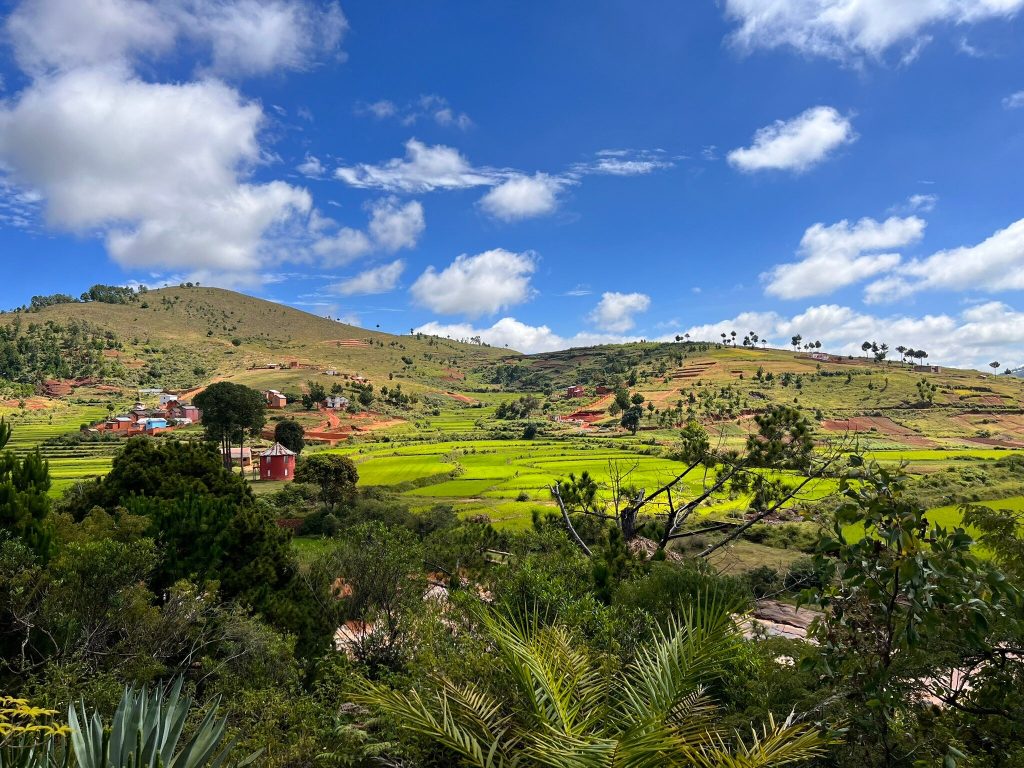
Almost every route transits the capital rather than connecting regions directly, so a move from the north to the west means flying back through Antananarivo. Frequency is limited, with most routes running a few times weekly rather than daily.
Book domestic legs before accommodation. Capacity determines what itinerary is possible far more than hotel availability does, and a sold-out flight can force a complete replan. Rescheduling happens with little notice, so build a buffer day before any international departure.
Never plan an international departure on the same day as a domestic arrival. Domestic flights in Madagascar reschedule and cancel, and travellers who leave no margin between a flight from Nosy Be or Fort Dauphin and a long-haul departure from Ivato lose the connection rather than the day. A night in Antananarivo before flying home is cheap insurance.
Airlines Serving Madagascar
The national carrier operates domestic routes and some regional connections, and its reliability is a frequent topic among travellers. Schedules shift and cancellations occur, which is the practical reason for building buffer days into any itinerary that depends on internal flights.
International services are handled largely by carriers from the connecting hubs: French, Ethiopian, Kenyan, South African, Turkish and Indian Ocean regional airlines all serve Antananarivo. Capacity is thinner than for comparable destinations, which is why fares hold up in peak season.
Charter flights operate to some remote destinations, including the airstrip near Bekopaka for Tsingy de Bemaraha and Soalala for the northwest parks. These are expensive and arranged through operators rather than booked directly, but they remove days of hard driving for travellers whose budget allows it.
Arrival at Ivato and What to Expect
The arrivals process runs visa counter, immigration, baggage and customs, and can take an hour or more when several flights land together. Visa on arrival is issued at the counter for most nationalities, paid in cash, so bring euros or dollars in notes if you have not applied for an eVisa.
Change money at the airport on landing, since you will need Ariary immediately for a taxi and the Ariary cannot be obtained before arriving. Rates are workable and the convenience outweighs the small difference against a bank in town.
Arrange your first transfer in advance through your accommodation. Taxi fares from Ivato are negotiated rather than metered, and arriving tired after a long-haul flight is not the moment to start bargaining.
Baggage and Domestic Flight Limits
Domestic flights impose lower baggage allowances than international carriers, and the small aircraft serving Sambava, Maroantsetra and Morondava are stricter still.
Check limits before packing rather than at the counter, since excess is charged and occasionally refused outright on full flights. Soft bags travel better than hard cases given how vehicles and pirogues are loaded once you leave the airport.
Anyone carrying camera gear, binoculars or trekking equipment should keep the essentials in hand luggage, since baggage delays on domestic routes are not uncommon and a rerouted bag can miss a park entirely.
Via Paris. Direct to Antananarivo, most frequent capacity, straightforward for European travellers. Usually the shortest total travel time from Europe.
Via Addis Ababa, Nairobi or Johannesburg. Connects to the African network and to long-haul routes from further afield. The practical choice for combining Madagascar with mainland Africa, and often cheaper.
Via Réunion or Mauritius. Short hops into Antananarivo or Nosy Be. Suits travellers pairing Madagascar with an Indian Ocean island stay, and useful when direct capacity is full.
Departure, Customs and Leaving Madagascar
Allow plenty of time at Ivato on departure, since the airport processes slowly when several flights leave together. Check-in queues and security both move at their own pace, and arriving three hours before a long-haul flight is sensible rather than cautious.
Export restrictions catch travellers at customs more often than they should. Rosewood and protected timbers are prohibited outright, wildlife products of any kind are illegal, and shells, coral and sand taken from beaches and marine parks fall under the same rules. Precious stones need documentation and vanilla is subject to quantity limits.
Spend or exchange remaining Ariary before leaving, since the currency is closed and cannot be converted abroad. Airport banks will change it back with the original exchange receipt, so keep those, though rates on the return leg are poor.
Airport shops sell vanilla, spices and crafts at prices well above what the same items cost at Analakely or in the regional markets. Anyone wanting to bring vanilla home should buy it during the trip.
Flying Into Nosy Be Instead
Arriving directly at Nosy Be makes sense for a specific kind of trip. If the plan is beaches, island excursions and the northern parks, landing there removes a domestic flight and a night in the capital.
From Nosy Be you can reach the mainland by boat to Ankify and travel south on the RN6 to Ankarana and the Red Tsingy, or north to Diego Suarez, which opens the northern circuit without transiting Antananarivo at all.
The limitation is that services are less frequent and often seasonal, and the option disappears entirely for travellers wanting the RN7 or the eastern rainforests, which are reached from the capital.
Frequently Asked Questions
How much do flights to Madagascar cost?
Return fares from Europe or North America commonly run between 1,100 and 1,450 US dollars, with one-way tickets from around 640. Prices rise through the July to October peak and drop in the wet season. Premium carriers cost more than connections through African hubs, where the trade-off is total travel time rather than comfort.
Are there direct flights from the UK or United States?
No. Every route from North America and the UK involves at least one connection, most commonly through Paris, Addis Ababa, Nairobi, Johannesburg or Istanbul. Travellers from continental Europe have the most direct options, with Paris offering the shortest total travel time.
Should I fly into Antananarivo or Nosy Be?
Antananarivo for almost every itinerary, since it is the hub for all domestic aviation and the gateway to the RN7 and the eastern parks. Nosy Be suits trips focused on beaches, island excursions and the northern circuit, since it removes a domestic leg and a night in the capital. Services there are less frequent and often seasonal.
When should I book?
Several months ahead for July to October, when capacity fills and fares peak. Six to eight weeks is usually sufficient for the shoulder months. Book domestic flights at the same time as international ones, since limited domestic frequency constrains what itinerary is possible more than accommodation does.
How reliable are domestic flights?
Reasonably, though rescheduling happens with little notice and routes run a few times weekly rather than daily. Almost every route transits Antananarivo rather than connecting regions directly. Always leave a buffer day before an international departure, and never plan a long-haul flight on the same day as a domestic arrival.
What happens at immigration?
Visa on arrival is issued at the counter for most nationalities and paid in cash, so carry euros or dollars in notes if you have not applied for an eVisa online. Bring proof of onward travel and accommodation, both of which are sometimes requested. Passports need six months validity and blank pages.
Can I combine Madagascar with another country?
Yes, and the hub you choose makes it easier. Addis Ababa, Nairobi and Johannesburg connect naturally to mainland African safari destinations. Réunion and Mauritius suit an Indian Ocean pairing. Anyone transiting a yellow fever country should check whether a certificate becomes required for entry to Madagascar.
How long does the trip take in total?
From Europe, typically ten to fourteen hours including a connection. From North America, closer to twenty to twenty-four hours depending on routing. Add the domestic leg if your itinerary starts outside the capital, plus the transfer time from Ivato, which can exceed an hour in traffic.
Planning Your Trip
The flight decision that matters most is not the international leg but the domestic ones, since their limited frequency determines which regions you can realistically combine. Booking those first and building the itinerary around them avoids the commonest planning failure on Madagascar trips.
Booking Your Madagascar Trip
The safari companies and tour operators listed on this website put trips like this together for a living and know which camps, guides and routes actually deliver. We are an independent guide to Madagascar; we do not book or sell tours ourselves.
When you are ready, arrange your safari, tour or holiday with one of the recognised operators listed here. Tell them your dates and what matters most, and a real person, not a form, will handle the itinerary, park bookings and logistics for you.