Lemurs of Madagascar
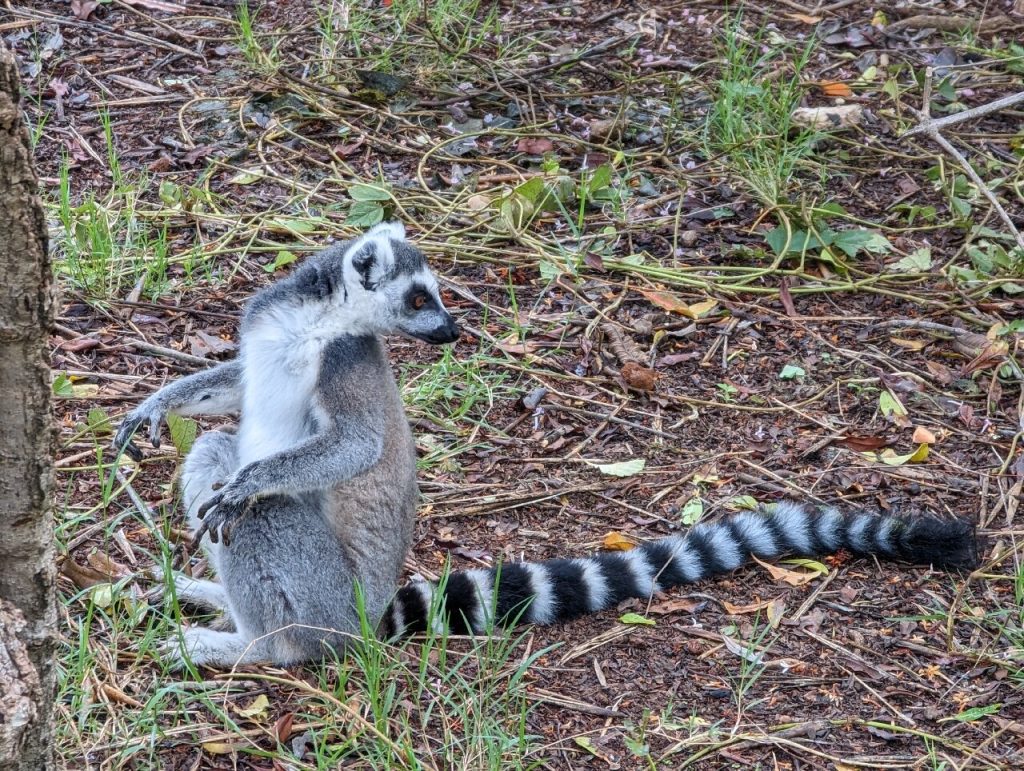
Madagascar holds more than a hundred lemur species and every one of them lives here and nowhere else. They range from the indri, the largest at over a metre when its legs are extended, to Madame Berthe’s mouse lemur at around thirty grams, the smallest primate on earth. Which species you see depends almost entirely on which parks you visit, and a well-planned trip can turn up twenty or more.
The Lemur Families and How to Tell Them Apart
Five families cover the lemurs a visitor will meet, and knowing the groupings makes the sightings easier to place.
The Indriidae are the large leapers: the indri, the sifakas and the woolly lemurs. They have long powerful hind legs, short arms and an upright posture, and they move between trunks in leaps rather than climbing.
The Lemuridae include the ring-tailed lemur, the brown lemurs, the ruffed lemurs and the bamboo lemurs. This is the family most visitors picture, active by day and often in sizeable groups.
The Cheirogaleidae are the small nocturnal ones: mouse lemurs, dwarf lemurs and fork-marked lemurs. The Lepilemuridae are the sportive lemurs, also nocturnal. The Daubentoniidae contains a single species, the aye-aye, which is strange enough to need a family of its own.
Over a hundred species, all of them found only here. Lemurs reached Madagascar on rafts of vegetation and evolved in isolation for tens of millions of years.
Indri Trekking and the Largest Lemur
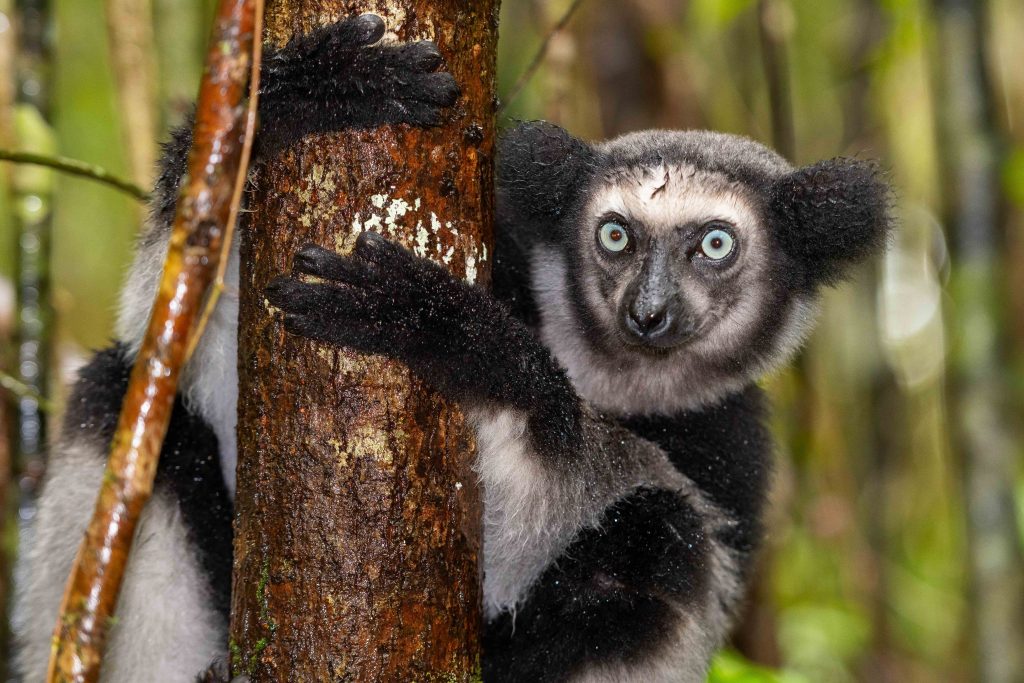
The indri is the animal most people come to Madagascar to see. Black and white, tailless, with a body plan closer to human proportions than most primates, it reaches over a metre with the legs extended.
The call is what stays with visitors. A long rising howl closer to whale song than anything a primate should produce, carrying two to three kilometres through the forest, with family groups answering each other across valleys from dawn until late morning.
Andasibe-Mantadia National Park is the reliable place, three to four hours east of Antananarivo, where several groups are habituated and morning sightings are close to certain. Indri cannot survive in captivity, so every one that exists lives in this band of eastern rainforest. They are revered in Malagasy tradition, known as babakoto, and feature in local legend.
Sifaka Watching Tours and the Dancing Lemurs
Sifakas are the other Indriidae you will meet, and they are the ones that produce the footage everybody has seen. Their feet are built for gripping branches rather than walking, so crossing open ground means standing upright and bounding sideways with arms raised.
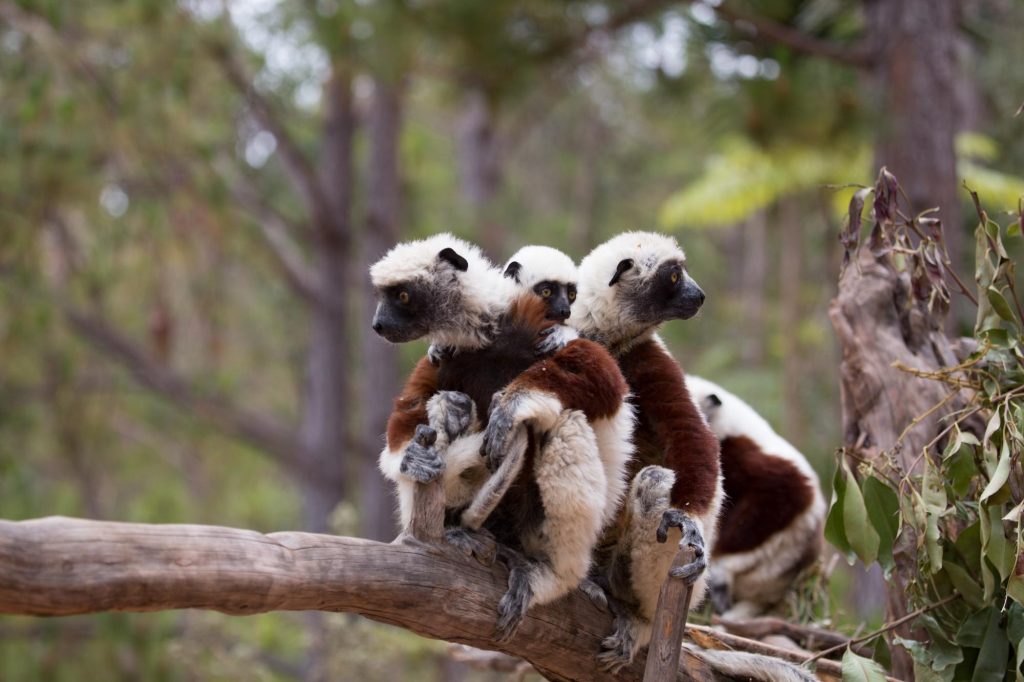
Verreaux’s sifaka is the southern and western species and the classic dancer, white-furred with a dark face. Berenty near Fort Dauphin, Isalo and Kirindy Forest all hold them, and at Berenty the animals are habituated enough that crossings happen in the open at close range.
Other species are worth knowing. Coquerel’s sifaka at Ankarafantsika is relaxed around visitors and easy to photograph. Diademed sifaka at Mantadia is dark-bodied with gold and silver patches. Milne-Edwards’ sifaka lives at Ranomafana. Decken’s sifaka crosses the limestone at Tsingy de Bemaraha and Namoroka, leaping ten metres between needle-sharp spires.
Ring-Tailed Lemur Watching Tours
The ring-tailed lemur is the species everyone recognises, with its banded tail and orange eyes. It is also the most terrestrial, spending real time on the ground, which makes it far easier to watch and photograph than the canopy species.
Three places offer reliable viewing. Anja Community Reserve on the RN7 holds the highest density anywhere in Madagascar, in forest beneath three granite domes, and is village-owned and run. Berenty near Fort Dauphin has around 500 in tamarind gallery forest and the animals will sit on bungalow verandas. Isalo has semi-habituated troops that walk alongside hikers in the canyons.
Andringitra holds the oddest population: ring-tails living above the treeline at 2,520 metres, with denser woollier fur and fewer tail rings than lowland animals, in country that frosts at night.

For the indri. Andasibe-Mantadia, and nowhere else reliably. Three to four hours from the capital on sealed road. Morning circuits, habituated groups, near-certain sightings.
For ring-tails and sifaka. Anja for density, Berenty for proximity, Isalo for setting. All in the south, all easy walking, all deliver sightings without much effort.
For rare and nocturnal species. Ranomafana for golden bamboo lemur, Marojejy for silky sifaka, Masoala for red ruffed, Kirindy for Madame Berthe’s mouse lemur. Harder work, longer travel, no guarantees.
Bamboo Lemurs and the Ranomafana Discovery
Three bamboo lemur species share the forest at Ranomafana, feeding on different parts of the same plant, which happens nowhere else in Madagascar.

The golden bamboo lemur was unknown to science until 1986, when the primatologist Patricia Wright found it while searching for the greater bamboo lemur, presumed extinct. Both turned out to be there. Loggers moved into the same forest almost immediately, and the campaign that followed created the national park in 1991.
Golden bamboo lemurs feed on giant bamboo containing enough cyanide to kill most animals their size, which remains an unresolved puzzle. Both species are critically endangered and sightings take a guide working the bamboo stands rather than a standard circuit.
The Aye-Aye and Nocturnal Species
The aye-aye is the strangest primate alive, with rodent-like teeth, enormous ears and a skeletal middle finger it uses to tap for grubs beneath bark and hook them out. It was long thought to be a rodent and is the sole member of its family.
Seeing one in the wild is exceptional. They occur at Ranomafana, Masoala, Zahamena and elsewhere, and are almost never encountered. Palmarium on the Pangalanes Canal is where most aye-aye photographs come from, with animals provisioned on a small island for night viewing, which is reliable but not wild.
The rest of the nocturnal cast is easier. Mouse lemurs turn up on night walks at nearly every park, tiny and quick in a torch beam. Dwarf lemurs, fork-marked lemurs, woolly lemurs and sportive lemurs fill out the list. Madame Berthe’s mouse lemur at Kirindy Forest is the smallest primate in the world at around thirty grams.
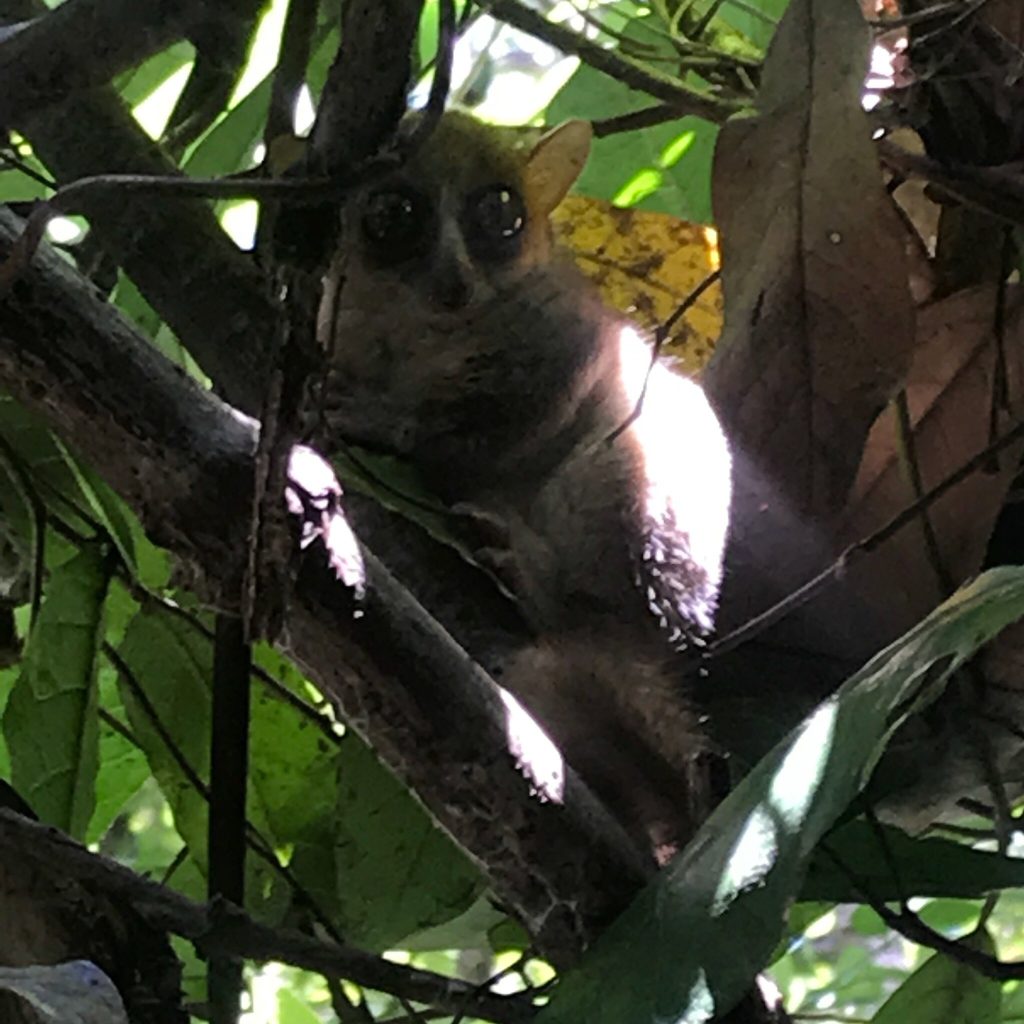
Night walks are where half the lemur species live, and they do not happen inside national parks. Gates close in the afternoon, so after-dark walking takes place in community and private reserves next door: VOIMMA and Mitsinjo at Andasibe, the roadside forest at Ranomafana, lodge grounds elsewhere. Kirindy Forest is the exception, being privately managed, where night walks run inside the reserve itself.
Rare Lemurs and Where They Survive
Several species exist in tiny populations in one or two forests, and reaching them means committing days.
The silky sifaka survives only at Marojejy and neighbouring Anjanaharibe-Sud, with fewer than two thousand animals. Seeing one means three to four days of trekking between mountain camps and hiring a specialist tracker alongside your guide.
The red ruffed lemur lives on the Masoala peninsula and nowhere else, reached by boat from Maroantsetra. The Lake Alaotra bamboo lemur lives in marsh reeds beside the lake and is critically endangered, visited by canoe from Andreba village.
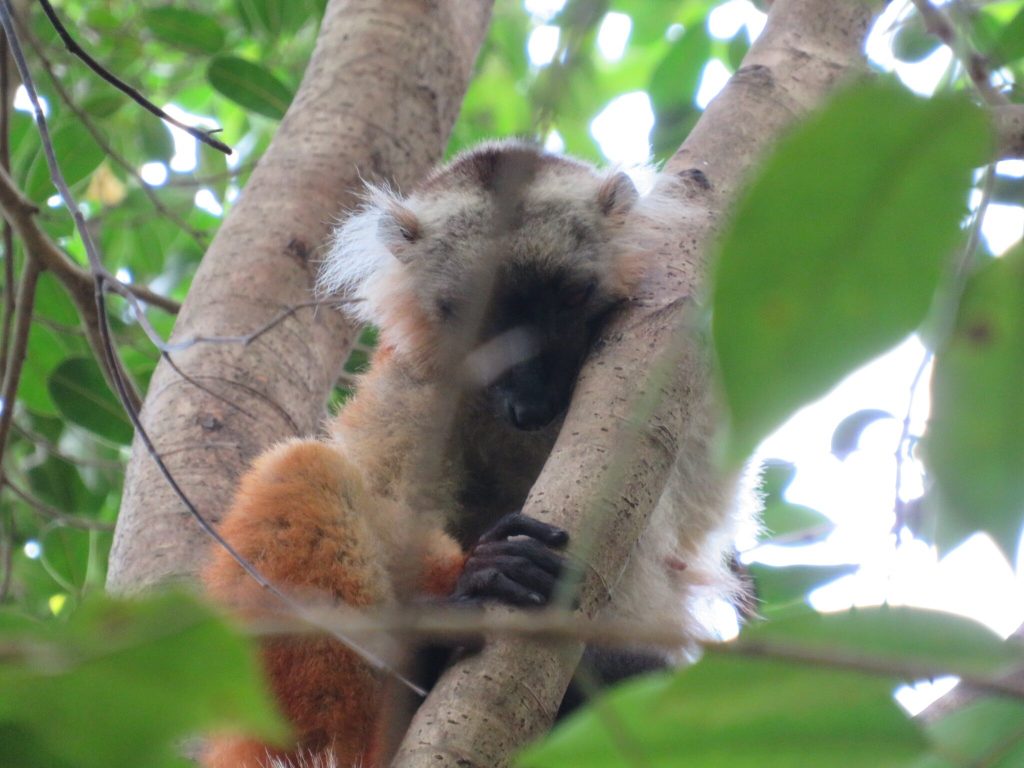
The blue-eyed black lemur is one of only two primates with truly blue eyes, the other being humans. It was described as a separate species relatively recently and is critically endangered, found in the northwest around Sahamalaza.
Conservation and Watching Lemurs Responsibly
Lemurs are among the most threatened mammal groups on earth, and the pressure is habitat loss above all. Forest clearance for agriculture, charcoal and pasture has reduced Madagascar’s original cover to a fraction, and species with small ranges have nowhere to move.
Feeding is the practical question visitors face. Inside national parks it is prohibited and guides enforce it. At some village-run sites and private facilities, habituated lemurs are called down with bananas and will climb on visitors. Nosy Komba and the Vakona island near Andasibe both work this way.
Opinion divides on whether this is acceptable. The revenue funds communities that protect the forest, and the alternative to a community earning from wildlife is often the community clearing it. Travellers uncomfortable with the practice can choose Lokobe over Nosy Komba’s reserve, or Anja over Berenty, and see the same species without the interaction.
Frequently Asked Questions
How many lemur species are there?
More than a hundred, with the count still shifting as genetic work separates populations previously treated as one species. All are found only in Madagascar. They range from the indri at over a metre to Madame Berthe’s mouse lemur at around thirty grams, which is the smallest primate anywhere.
Where is the best place to see lemurs?
Andasibe-Mantadia for indri, which is the only reliable site anywhere. Anja Community Reserve for ring-tailed lemurs at the highest density in the country. Ankarafantsika for the widest range in one short stay, with eight species realistically visible. Ranomafana for the largest species list, though sightings take more work.
What does it cost to see lemurs?
Park entry is typically 45,000 Ariary per adult per day with children under twelve at 25,000, plus compulsory guide fees charged per group by circuit. Night walks in community reserves cost around 20,000 to 25,000 Ariary. At Marojejy a specialist tracker for silky sifaka is an additional hire and worth every ariary. Everything is cash in Ariary at the gate.
Can I see lemurs without a long trip?
Yes. Andasibe is three to four hours from the international airport on sealed road and gives near-certain indri sightings, which makes a five-day trip genuinely worthwhile. Lemurs’ Park near the capital and Tsimbazaza in the city hold captive collections for anyone with only hours.
When is the best time for lemur watching?
September to November, when infants appear clinging to their mothers and later riding on their backs. Lemurs are visible year-round, but this window adds the young animals and coincides with settled weather. Nocturnal species are more active in the warmer wetter months from September through March.
Will I see an aye-aye?
Almost certainly not in the wild, and any operator promising one is overselling. They occur at Ranomafana, Masoala, Zahamena and elsewhere but are exceptionally rarely encountered. Palmarium on the Pangalanes Canal provisions them on a small island for night viewing, which is where most photographs come from and is reliable but not a wild sighting.
Are lemurs dangerous?
No. They are harmless to people, and Madagascar has no large predators at all. Habituated animals at some sites will investigate bags and take food from hands, which is why doors and windows should be kept closed at Berenty. Feeding them is discouraged and prohibited inside national parks.
Why are lemurs only in Madagascar?
Their ancestors reached the island on rafts of vegetation after it had separated from Africa, and evolved in isolation with no competition from monkeys, which never arrived. Tens of millions of years of that produced the diversity you see now, filling niches occupied by entirely different animals elsewhere.
Planning Your Trip
Seeing lemurs well comes down to which parks you visit and which guides you walk with. Asking for a guide working the bamboo lemur groups at Ranomafana, or hiring a tracker at Marojejy, changes the odds considerably compared with taking whoever is next in the rotation.
Booking Your Madagascar Trip
The safari companies and tour operators listed on this website put trips like this together for a living and know which camps, guides and routes actually deliver. We are an independent guide to Madagascar; we do not book or sell tours ourselves.
When you are ready, arrange your safari, tour or holiday with one of the recognised operators listed here. Tell them your dates and what matters most, and a real person, not a form, will handle the itinerary, park bookings and logistics for you.