Kirindy Forest Reserve
Kirindy Forest Reserve is the best place in Madagascar to see the fossa, the island’s largest carnivore, along with the giant jumping rat and the smallest primate on earth. Because it is privately managed rather than a national park, night walks run inside the forest itself, which is why so many itineraries build in an overnight stop. The reserve sits about 50 to 60 km north of Morondava on the road toward Tsingy de Bemaraha.
Kirindy Forest Reserve is not Kirindy Mite National Park. The two lie roughly 150 km apart on opposite sides of Morondava and share almost nothing but a name. This page covers the private reserve north of town, the one with the fossa and the research station. The national park south at Belo sur Mer is a separate place with separate access. Operators confuse them regularly.
Fossa Watching Tours at Kirindy
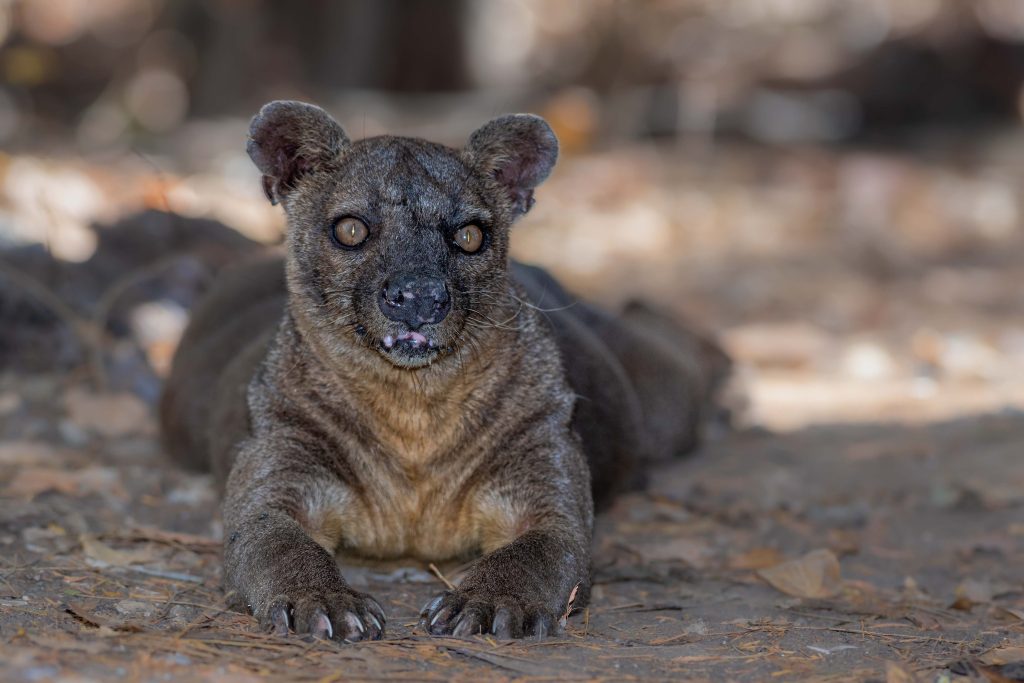
Fossa watching tours are the reason Kirindy has a reputation out of all proportion to its size. Cryptoprocta ferox looks something like a small puma and is related to the mongoose family, and it sits at the top of the food chain here, feeding largely on lemurs.
Elsewhere in Madagascar a fossa sighting is a matter of luck across many days. At Kirindy the animals come through the camp area in the afternoon, checking for anything left around the restaurant, and visitors staying overnight see them with reasonable regularity. October and November, the mating season, is when they are most active and most visible.
This is a wild animal behaving opportunistically rather than a habituated one being fed, and guides keep visitors at a distance. Deforestation across the west is the pressure on the species, with projections suggesting the fossa could be lost entirely within decades if forest loss continues at current rates.
Night Walk Tours for Mouse Lemurs and the Giant Jumping Rat
Night walk tours run inside the reserve, which is the key difference from every national park in Madagascar. Elsewhere the gates close in the afternoon and after-dark walking happens in community forest outside the boundary. Here you walk the reserve itself.
The giant jumping rat, Hypogeomys antimena, called vositse locally, is the animal people ask about. It is roughly rabbit-sized, moves in hops, can launch itself close to a metre when startled, and occurs nowhere else of any consequence. It visits the camp area at night, and if you are staying at the lodge you can ask the staff to wake you when it appears.
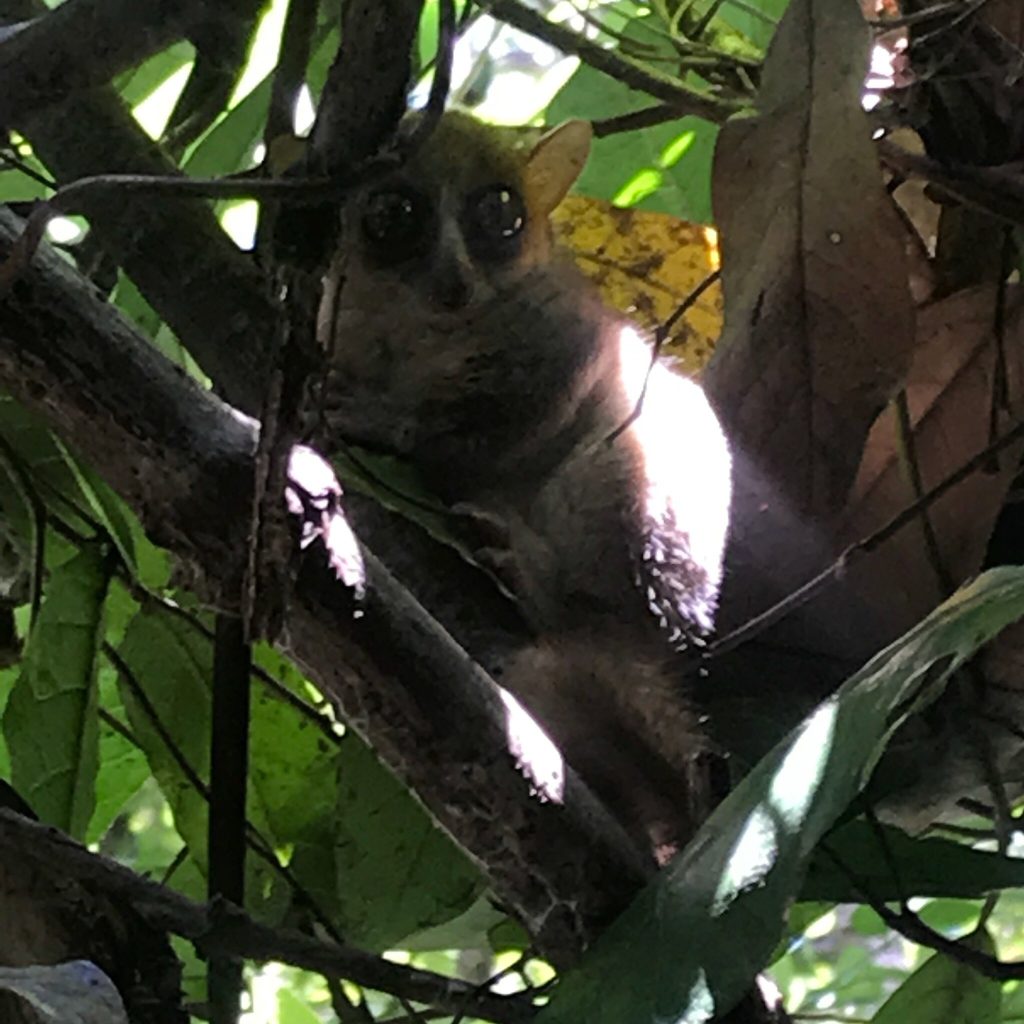
Madame Berthe’s mouse lemur was rediscovered in this forest and weighs about thirty grams, the smallest primate anywhere. Fork-marked lemurs, Coquerel’s dwarf lemurs, fat-tailed dwarf lemurs, grey mouse lemurs and Milne-Edwards’ sportive lemurs fill out the night list.
The apex predator, the smallest primate on earth and a rodent that jumps a metre in the air, all within walking distance of the same camp.
Verreaux’s Sifaka and Daytime Lemur Watching Tours
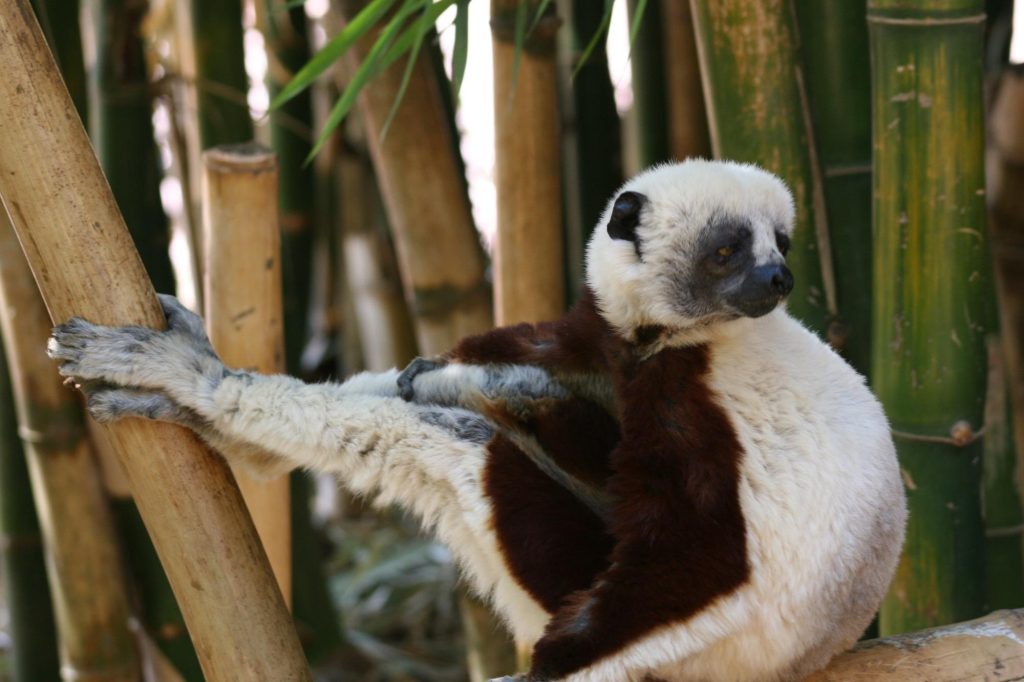
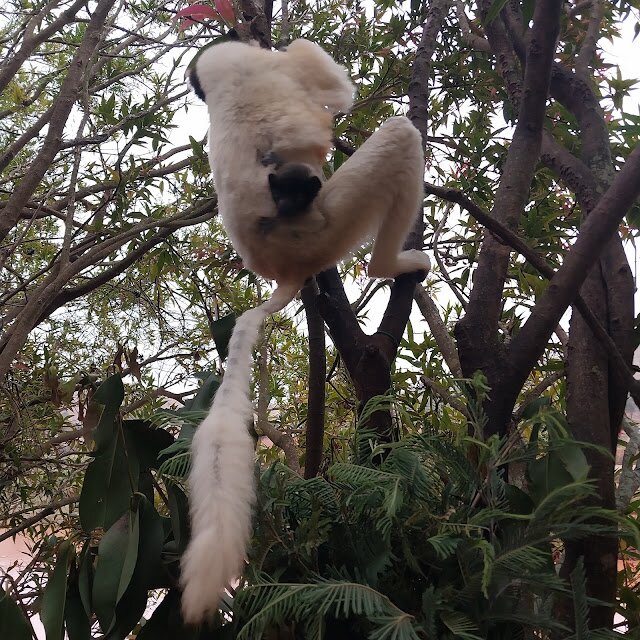
Daytime lemur watching tours cover eight species, of which Verreaux’s sifaka is the one visitors remember. It crosses open ground upright, bounding sideways with arms raised, which is where the dancing sifaka name comes from.
Red-fronted brown lemurs are the other reliable diurnal species. Because this is dry deciduous forest rather than rainforest, the canopy is only around fourteen metres and light reaches the floor, so photography is far easier here than in the eastern parks.
Many visitors stop only for a night walk on their way north. That misses a good deal. Day walks turn up birds, reptiles and the forest structure itself, and the lodge grounds repay a slow wander.
Reptile Spotting Tours and the Flat-Tailed Tortoise
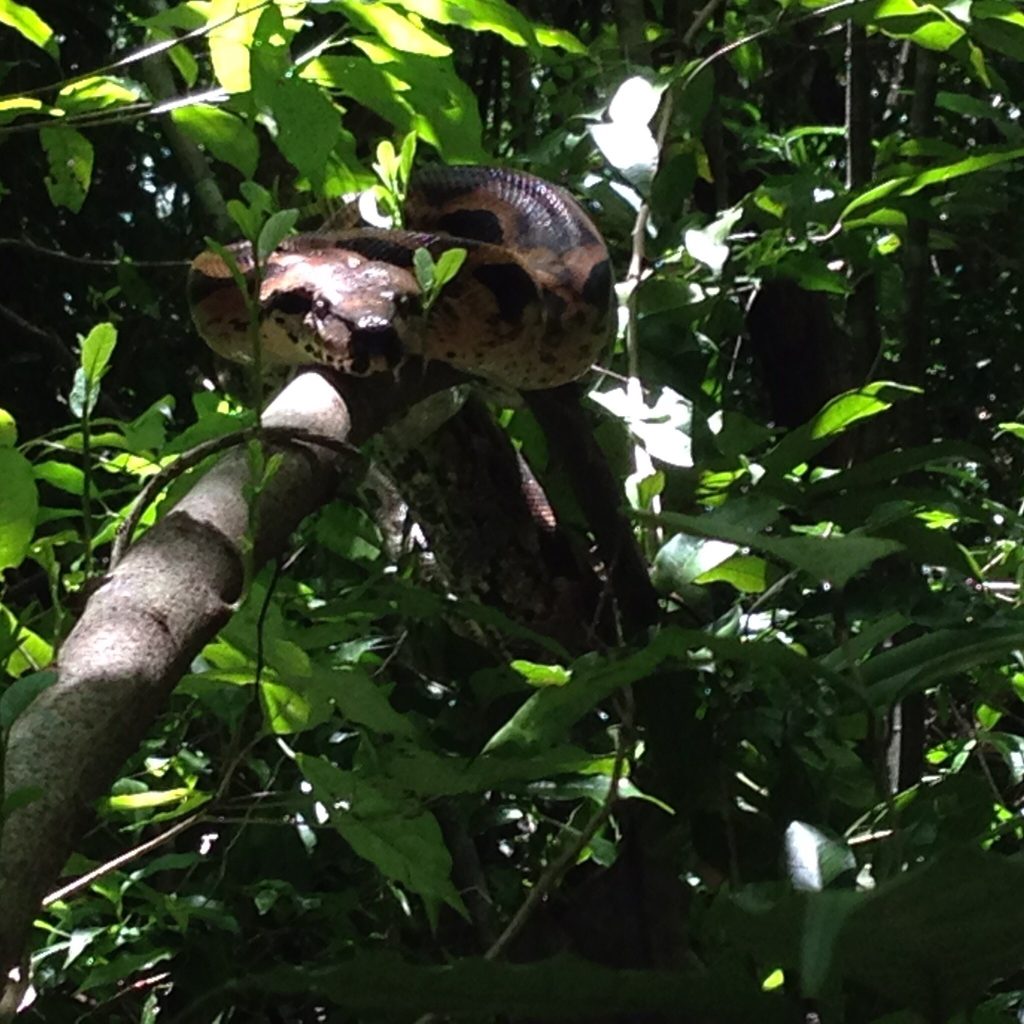
Reptile spotting tours here work a list of over 60 reptile and amphibian species. The flat-tailed tortoise is endemic to the Kirindy area and the subject of breeding efforts intended to hold the population steady.
Chameleons, geckos and snakes turn up on both day and night circuits, and the narrow-striped mongoose is another mammal worth asking your guide about. Seasonality matters considerably: through the cool dry months many reptiles and amphibians are inactive, while the rains bring them out in numbers.
Birding Tours in the Dry Deciduous Forest
Birding tours record around 55 species in the reserve. Ground rollers, vangas and endemic owls are the groups birders come for, and the open dry forest makes them considerably easier to see than their rainforest equivalents.
Early morning is the productive window, before the heat builds and activity drops away. Most visitors combine a dawn bird walk with the general day circuit rather than booking separately.
Baobab Walking Tours and the Forest Canopy
Walking tours through the forest take in some substantial baobabs, with Grandidier’s baobab the largest at up to thirty metres tall and three metres across. Local tradition holds that the gods planted baobabs first and put them in upside down, which is as good an explanation as any for how they look.
Kirindy has its own pair of intertwined trees, a smaller version of the Baobab Amoureux that sits further south toward Morondava. Ask your guide to route past it.
The forest itself is the point. Malagasy dry deciduous forest has been reduced to a small fraction of its original extent and ranks among the most threatened habitat types in the world. Kirindy is managed by a Swiss forestry organisation that has run selective logging research here alongside the conservation work.
Day visit from Morondava. Two hours each way on reasonable road, a daytime circuit, back the same day. Sees sifaka and forest but misses the fossa and everything nocturnal. What many group itineraries allow.
Overnight stay. One night at Kirindy Lodge inside the reserve or at nearby accommodation. Afternoon around camp for fossa, a night walk, and a morning circuit. The version that justifies the detour.
The Swiss Forest and Long-Term Research at Kirindy
Kirindy is known locally as the Swiss Forest, and the name explains a good deal about why the wildlife here behaves as it does. The reserve has been managed since the eighties by a Swiss forestry organisation running research into selective logging alongside conservation work, which means decades of continuous scientific presence in one patch of forest.

That continuity is why the fossa here are studied rather than merely seen, why Madame Berthe’s mouse lemur was rediscovered in this particular forest in the nineties, and why the giant jumping rat population is monitored closely enough to know how it is faring. Researchers have worked these trails for long enough that the animals treat human presence as background rather than threat.
Visitors benefit directly from that. Guides here carry knowledge accumulated across research seasons rather than assembled from a training course, and several have worked alongside the field teams. Ask about the studies running while you are there, because the answers tend to be specific.
Getting to Kirindy Forest Reserve from Morondava
The reserve lies roughly 50 to 60 km north of Morondava, about two hours on the dirt road heading toward Belo sur Tsiribihina and eventually Tsingy de Bemaraha. The Avenue of the Baobabs sits on the same route, so the two are almost always visited together.
Anyone travelling on to Tsingy passes the entrance anyway, which makes an overnight stop here easy to build in rather than a detour. A four-wheel drive is standard for the road.
Kirindy Lodge sits inside the reserve with basic but adequate bungalows and dormitory rooms, a restaurant and electricity. It is the only option that puts you in the forest after dark. Relais du Kirindy nearby offers more comfort including a pool. Camping is possible.
Best Time for a Kirindy Visit
This forest swings between extremes, with a long hot dry season and a short intense wet one, and the difference in what you see is dramatic.
April to June. Following the rains the forest is still green and reptiles remain active. Roads have dried out. Comfortable temperatures and relatively few visitors.
July to September. Cool dry season. Trees are bare, which improves visibility for lemurs, but many reptiles and amphibians are inactive and the forest looks stark. Reliable road access.
October and November. The strongest window. Fossa mating season makes sightings realistic rather than lucky, and the heat brings reptiles back out. Hot by midday.
Mid-January to late March. The reserve is unreachable in practice. Rain floods large parts of the forest and the road north from Morondava becomes impassable. Plan around it.
Frequently Asked Questions
How much does it cost to visit Kirindy Forest Reserve?
As a private reserve the fees differ from the national park schedule and are paid at the entrance, with separate charges for day walks and night walks and a compulsory guide. Accommodation at Kirindy Lodge is modest, with dormitory and bungalow options. Most visitors reach the reserve as part of a vehicle hire from Morondava, and that transport is the larger cost. Bring cash in Ariary.
Will I actually see a fossa?
Better odds here than anywhere else in Madagascar, but not a guarantee. Staying overnight is close to mandatory, since the animals most often appear around camp in the afternoon and evening. October and November are the strongest months. Visitors doing a quick day stop frequently miss them.
Can I do a night walk here?
Yes, and this is the main reason to come. Because Kirindy is private rather than a national park, night walking is permitted inside the reserve itself. You must be staying at the lodge or nearby, since the reserve is too far from Morondava for an evening return.
How long should I stay?
One night is enough for most visitors and covers an afternoon, a night walk and a morning circuit. Two nights suits photographers and anyone chasing the fossa in particular or the giant jumping rat. Longer stays are for researchers rather than travellers.
Is it suitable for children?
The walking is flat and easy, so terrain is not a problem. Night walks run late and involve uneven ground in the dark, which suits older children better. Accommodation is basic, with dormitory options, so families should check what is available before booking.
Can I combine it with the Avenue of the Baobabs?
Almost everyone does. The avenue sits on the same road between Morondava and Kirindy, so the standard pattern is baobabs at sunset on the way out or back. Travellers continuing to Tsingy de Bemaraha pass the reserve entrance regardless, making an overnight stop the obvious move.
How is it different from the eastern rainforest parks?
Completely. Dry deciduous forest is open and light where rainforest is dark and closed, which makes wildlife easier to see and photograph. The species are different too: fossa, giant jumping rat and sifaka rather than indri and diademed sifaka. The two habitat types are worth seeing on the same trip.
Planning Your Visit
The single decision that determines what you get from Kirindy is whether you sleep there. Day visitors see a pleasant dry forest and some sifaka. Anyone staying the night has a real chance at the three animals the reserve is known for, none of which appear on a lunchtime walk.
Booking Your Madagascar Trip
The safari companies and tour operators listed on this website put trips like this together for a living and know which camps, guides and routes actually deliver. We are an independent guide to Madagascar; we do not book or sell tours ourselves.
When you are ready, arrange your safari, tour or holiday with one of the recognised operators listed here. Tell them your dates and what matters most, and a real person, not a form, will handle the itinerary, park bookings and logistics for you.