Avenue of the Baobabs
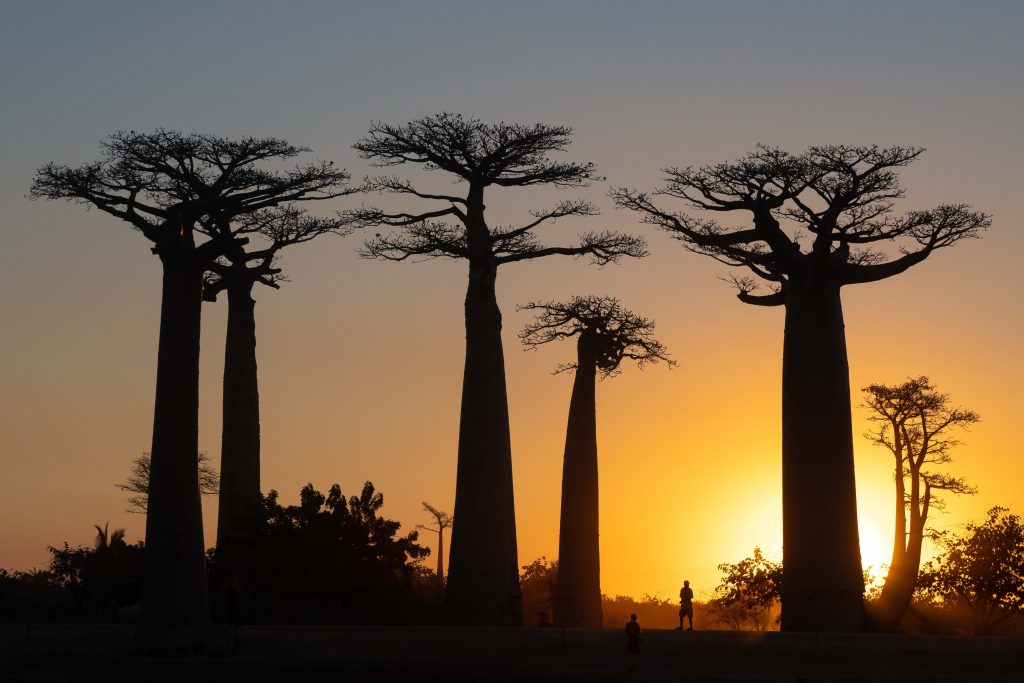
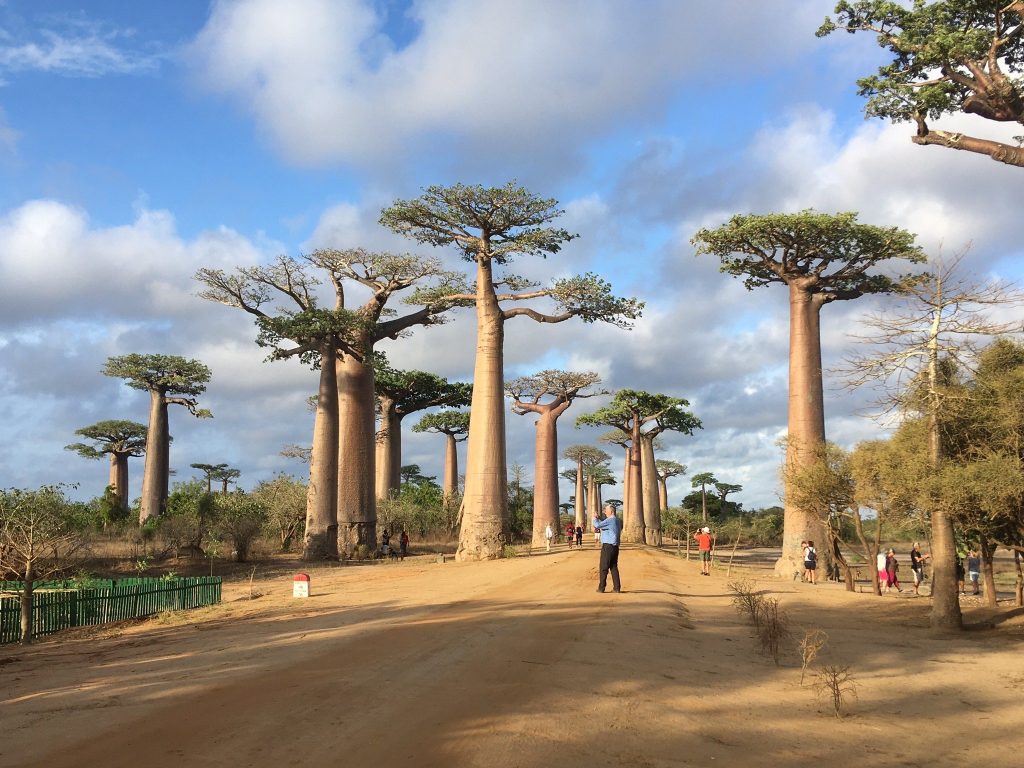
The Avenue of the Baobabs is Madagascar’s most photographed place, a 260-metre stretch of dirt road near Morondava lined with 20 to 25 Grandidier’s baobabs standing 30 metres tall. Most visitors come for sunrise or sunset and stay an hour or two. The site sits on the RN8 about 20 km northeast of Morondava in the Menabe region and was declared a natural monument after decades as an unprotected roadside.
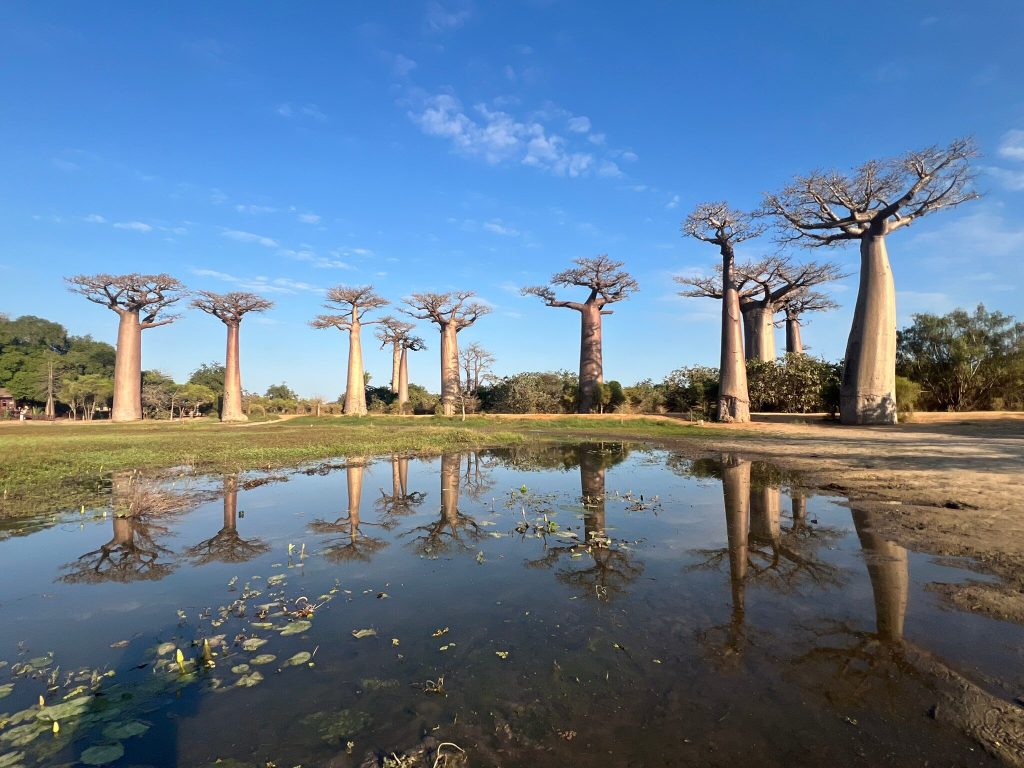
Sunset and Sunrise Photography Tours at the Avenue
Photography tours here are the whole point, and timing is everything. At midday the trees look like grey columns against a hot white sky. In the last hour of light the bark takes on a metallic sheen, the trunks turn copper, and the shadows stretch across the track.
Sunrise draws fewer people and gives you the avenue with ox-carts and villagers moving through it on their way to work, which is the more interesting picture. Sunset draws the crowds and the stronger colour. In July both fall at roughly five o’clock, morning and evening.
Arriving around three or four in the afternoon lets you walk the site before the vehicles arrive. Night skies here are dark and clear, and the avenue has become a target for astrophotography as well.
Two things visitors get wrong. There are no formal toilets at the avenue, so sort that in Morondava before you leave. And mosquitoes come out in force at exactly the moment the sunset light peaks, so apply repellent before you arrive rather than while you are trying to shoot.
Baobab Walking Tours and the Trees Themselves
Walking tours along the avenue take minutes rather than hours, but the trees repay the time. Adansonia grandidieri is the largest of Madagascar’s six endemic baobab species, with cylindrical trunks reaching three metres across and heights around 30 metres.
Age estimates vary wildly and should be treated with caution. Figures from 800 years to 2,800 circulate freely, and the truth is that dating baobabs is difficult because they lay down no reliable annual rings. What is certain is that these are very old trees.
The trunk is a water tank. Storing enough moisture to survive the long dry season is what gives the baobab its shape, and it is why the species persists in country this arid. Malagasy speakers call it reniala, mother of the forest.
These trees are not a planted avenue. They are what was left standing when the forest around them was cleared, because baobab wood is no use for building.
Baobab Amoureux Tours and the Lovers’ Trees
About 7 km from the main avenue stand two Adansonia za baobabs that have grown twisted around each other over centuries. Known as the Baobab Amoureux, the lovers’ baobabs, they are a standard addition to any avenue trip.
Local legend attaches a story of two young people from different villages forbidden to marry, and guides will tell it. The trees make a good photograph in their own right and take fifteen minutes.
Most drivers include the stop without being asked. If yours does not, ask, since it is a short detour from the main road.
Village and Ox-Cart Cultural Tours Around the Avenue
The avenue is a working road rather than a monument, and that is part of what makes it worth seeing. Cultural stops around the site take in the rice paddies and villages the baobabs now stand over.
Ox-carts pass along the track through the day, carrying goods between Morondava and the villages north. Children walk to school past trees older than any building in the country. A community-run facility at the southern entrance offers a café, restaurant and toilets, and the income goes locally.
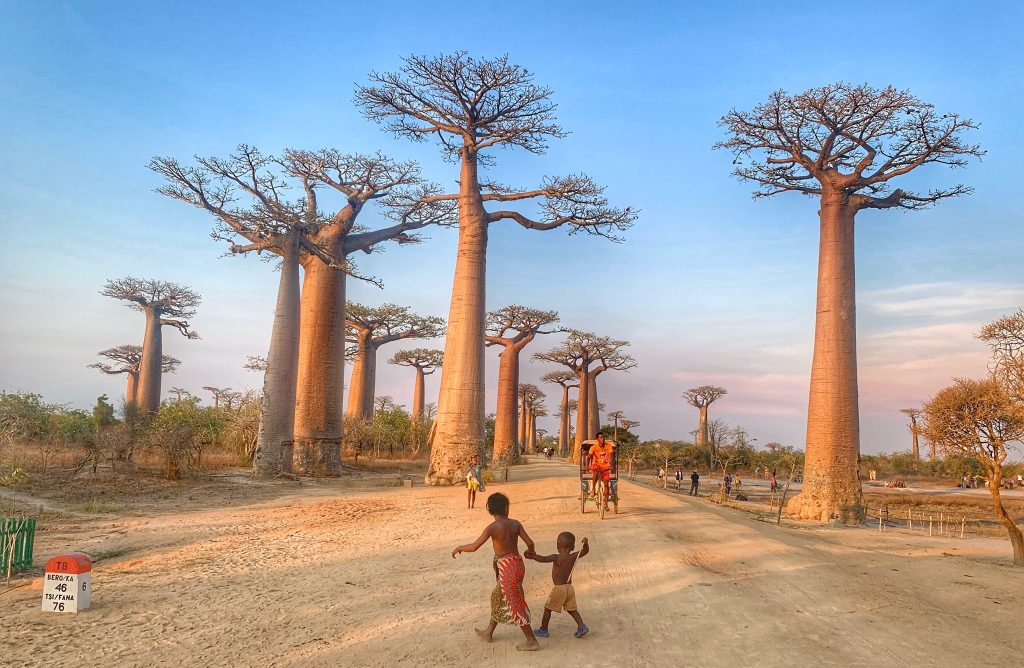
Ask before photographing people or their carts. This gets ignored a great deal and it should not be.
Conservation Tours and Why the Baobabs Stand Alone
Knowing what you are looking at changes the visit. These baobabs were never an avenue. They were part of dense dry deciduous forest that covered this whole region, and everything else was cleared for rice, pasture and charcoal across the last century.
The baobabs survived because their wood is spongy and useless for construction or fuel, so nobody bothered felling them. What stands today is the skeleton of a lost forest rather than a planted grove.
Adansonia grandidieri is classed as endangered. Regeneration is poor, because seedlings need forest conditions that no longer exist here, and the surviving trees are mostly old. The site received temporary protected status in 2007 and later became a natural monument, which was the first such designation in Madagascar.
The avenue itself. Twenty to twenty-five trees along 260 metres of road, with another twenty-odd in nearby paddies. Free to walk, small parking charge. One to two hours around sunrise or sunset.
Baobabs in natural forest. Kirindy Forest Reserve and Kirindy Mite National Park both hold grandidieri growing among other vegetation rather than isolated. A very different and less photographed sight, worth seeing if you want context.
Combining the Avenue with the Wider Menabe Circuit
The avenue sits at the southern end of a route that takes in most of what western Madagascar offers, and treating it as a standalone trip wastes the position. Heading north on the RN8 you reach Kirindy Forest Reserve after about an hour, then Belo sur Tsiribihina and eventually the tsingy at Bemaraha.
A common pattern runs four to five days: Morondava as the base, the avenue at sunset on the first evening, a night at Kirindy for the fossa and giant jumping rat, then two days up to Tsingy de Bemaraha and back, catching the avenue again at sunrise on the return. Anyone with less time does the avenue and Kirindy alone.
Timing matters more than distance on this route. The road north closes in the wet season, which takes Tsingy with it, so the whole circuit runs from roughly April to November. Travellers arriving in January will find the avenue itself reachable and everything beyond it shut.
Getting to the Avenue of the Baobabs from Morondava
The avenue lies about 20 km northeast of Morondava on the RN8 toward Belo sur Tsiribihina, roughly 40 to 45 minutes by road. The RN8 carries national highway status and is nonetheless unpaved and rough.
A private taxi from Morondava is the usual arrangement, with the driver waiting while you stay for the light and returning afterwards. Be aware of inflated quotes for what is a short trip. Four-wheel drive hire is faster and standard for anyone continuing north to Kirindy or Tsingy de Bemaraha.
Budget travellers can take a taxi-brousse heading toward Belo sur Tsiribihina, get out at the Marofototra junction after around 14 km, and cover the last 6 km on foot or by tuk-tuk. This works but leaves you with a transport problem after dark, which is exactly when you will want to leave.

Morondava has flights from Antananarivo and a reasonable range of hotels. Nearly everyone visiting the avenue bases there.
Best Time to Visit the Avenue of the Baobabs
The dry season from April to December is the practical window, though showers occur at any time. The bigger variable is the state of the road and how many other people are standing where you want to put your tripod.
April to June. Roads have dried after the rains, temperatures are comfortable and visitor numbers are still low. Green paddies around the trees make for better foreground than the parched version later in the year.
July to September. Peak season. Reliable weather, clear skies and the best road conditions, but sunset brings a queue of vehicles and a crowd along the track. Arrive early to claim a position.
October and November. Hot and dusty, with fewer visitors than midwinter. Light is strong and the haze can work in your favour at sunset. Good for anyone continuing to Tsingy before it closes.
December to March. Wet season. The RN8 deteriorates and access becomes unreliable, and Tsingy de Bemaraha further north closes entirely. The trees are still there, but the trip around them stops working.
Frequently Asked Questions
How much does it cost to visit the Avenue of the Baobabs?
The avenue is a public road, so there is no entrance fee, though parking runs around 2,000 Ariary. A return taxi from Morondava with waiting time costs roughly 50,000 Ariary, and you should be wary of quotes above 150,000 for what is a short run. Taxi-brousse to the Marofototra junction is a fraction of that but leaves you 6 km short. Bring cash in Ariary.
How long should I spend there?
An hour or two, timed around sunrise or sunset. The site is 260 metres long and there is no walking circuit. Most visitors stop on the way to or from Kirindy or Tsingy de Bemaraha rather than making a dedicated trip.
Sunrise or sunset?
Sunset gives stronger colour and draws a crowd. Sunrise is quieter and catches ox-carts and villagers moving along the road, which makes the more distinctive photograph. If you are staying two nights in Morondava, do both, since the light differs completely.
Do I need a guide?
No. This is a public road with no formal entrance or circuit. A driver is what you need rather than a guide. That said, local guides at the site can explain the trees and the conservation situation, and hiring one puts money into the community.
How old are the trees really?
Nobody knows precisely. Published figures range from 800 to 2,800 years, and baobabs are genuinely hard to date because they do not lay down reliable annual growth rings. Treat any confident single number with suspicion. They are certainly centuries old.
Can I climb the baobabs?
No. Climbing the trunks and carving the bark are both prohibited and locally offensive. These trees carry real cultural weight as reniala, the mother of the forest, and damaging an endangered species for a photograph is not a reasonable trade.
What else can I see nearby?
The Baobab Amoureux is 7 km away and takes fifteen minutes. Kirindy Forest Reserve, the best place in Madagascar for fossa, lies further north on the same road. Tsingy de Bemaraha is at the end of it. Kirindy Mite National Park sits south of Morondava. Most western itineraries string these together.
Planning Your Visit
The avenue takes an hour and is almost never a destination in itself. It sits at the start of the road to Kirindy and Tsingy de Bemaraha, which is why nearly everyone sees it either heading out or coming back, and why the timing question is really about how you sequence the wider western trip.
Booking Your Madagascar Trip
The safari companies and tour operators listed on this website put trips like this together for a living and know which camps, guides and routes actually deliver. We are an independent guide to Madagascar; we do not book or sell tours ourselves.
When you are ready, arrange your safari, tour or holiday with one of the recognised operators listed here. Tell them your dates and what matters most, and a real person, not a form, will handle the itinerary, park bookings and logistics for you.