Baobab Trees of Madagascar
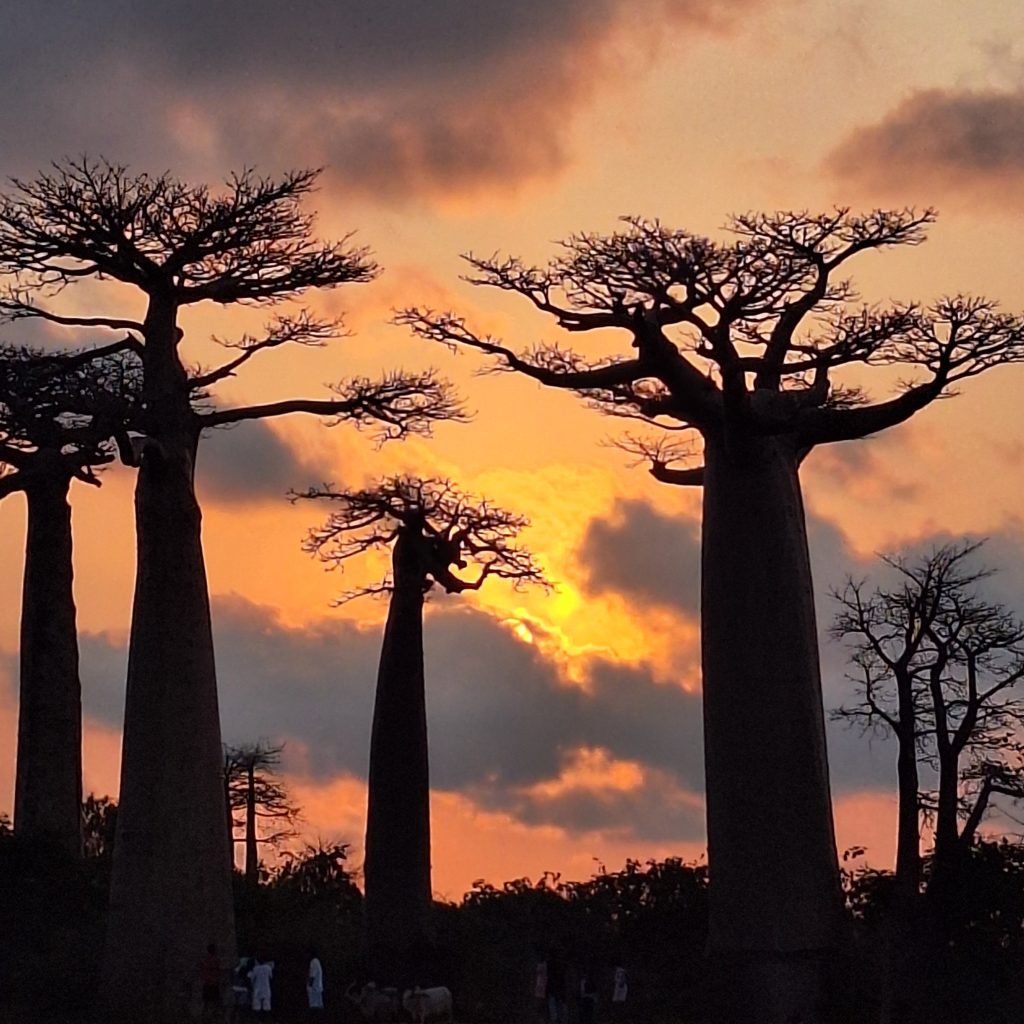
Madagascar holds six of the world’s eight baobab species and all six grow here and nowhere else. The largest is Adansonia grandidieri, the species lining the famous Avenue of the Baobabs near Morondava, reaching thirty metres with a trunk three metres across. The Malagasy name is renala, mother of the forest, and the name explains what these trees actually are.
The Six Malagasy Species
Eight baobab species exist worldwide. One grows across mainland Africa, one in Australia, and the remaining six are Malagasy endemics, which makes this island the centre of the genus.
Adansonia grandidieri is Grandidier’s baobab, the giant of the family and the one in every photograph, with a smooth cylindrical trunk and a flat crown of sparse branches. It grows in the west around Morondava and Kirindy Mite, where the population runs to something like half a million trees.
Adansonia za is the most widespread, found across the west and south, with a more irregular shape and a taper to the trunk. The Baobab Amoureux near Morondava, two trees twisted around each other, are of this species.
Adansonia rubrostipa, the fony baobab, is the one formed like a bottle, swollen at the base and tapering sharply, common in the south and southwest including Tsimanampetsotsa. Adansonia madagascariensis grows in the north and northwest at Ankarafantsika and Ankarana. Adansonia suarezensis is restricted to the far north around Diego Suarez, and Adansonia perrieri is the rarest of all, known from a handful of northern sites.
Six of the world’s eight baobab species grow only in Madagascar. The trees at the Avenue are not lining a road; the road was cut through what remained of the forest they stood inside.
Baobab Viewing Tours at the Avenue
The Avenue of the Baobabs is a 260-metre stretch of dirt road about 20 km northeast of Morondava, lined with twenty to twenty-five Grandidier’s baobabs. Entry is free and a visit takes an hour, and the whole thing depends on arriving at sunrise or sunset.
Under low light the trunks turn copper and the trees drop into silhouette. Under midday sun they flatten out completely, which is why travellers who stop briefly on a driving day so often come away unimpressed.
What the site actually shows is remnant forest. These trees stood inside dense woodland that covered the whole region, and the road and rice fields arrived around them after the clearance. A stand of adults with no young coming through is a population with a long fuse.
Baobabs in Natural Forest
For baobabs standing in functioning forest rather than on cleared ground, several parks deliver something the Avenue cannot.
Kirindy Mite National Park south of Morondava holds the largest Grandidier’s population anywhere alongside two other species, growing in dry deciduous forest rather than beside a road. Kirindy Forest Reserve north of the town has substantial trees including its own intertwined pair.
Ankarafantsika in the northwest has Adansonia madagascariensis along the canyon circuit at Ankarokaroka. Tsingy de Namoroka holds baobabs growing directly out of limestone. Tsimanampetsotsa in the south has fony baobabs including a much-visited three-stemmed tree known as the Grandmother.
Mikea National Park holds three species together, with the Grandidier’s there growing stunted compared with the Morondava giants, a response to poorer soils and lower rainfall.
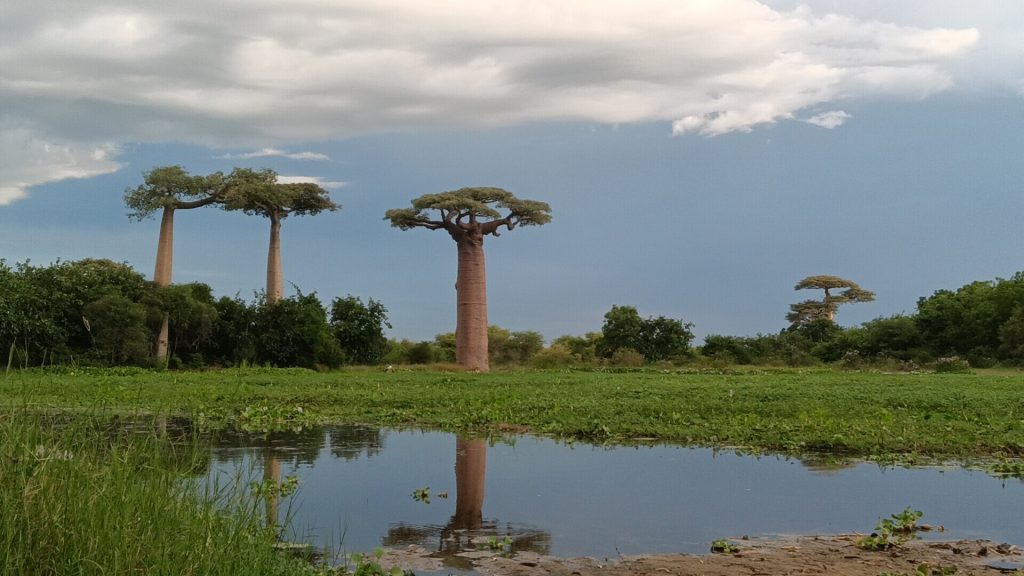
For the classic view. Avenue of the Baobabs near Morondava, free, an hour, sunrise or sunset only. The photograph everyone knows, and busy at dusk in high season.
For baobabs in forest. Kirindy Mite, Kirindy Forest, Ankarafantsika, Mikea and Tsimanampetsotsa. Fewer visitors, more species, and the trees in the habitat they belong to rather than on cleared ground.
How Baobabs Work
Baobabs store water in the trunk, which is why they swell and shrink with rainfall in a way you can measure. A large tree can hold hundreds of litres, and the wood is soft and fibrous rather than dense, closer to a giant succulent than a conventional hardwood.
That structure makes them hard to age. They lay down little woody tissue and growth rings are unreliable, so estimates vary enormously. Figures of a thousand years are common and claims of 2,800 circulate, while radiocarbon work on the oldest section of the Grandmother at Tsimanampetsotsa put that part of the tree closer to 1,600 years.
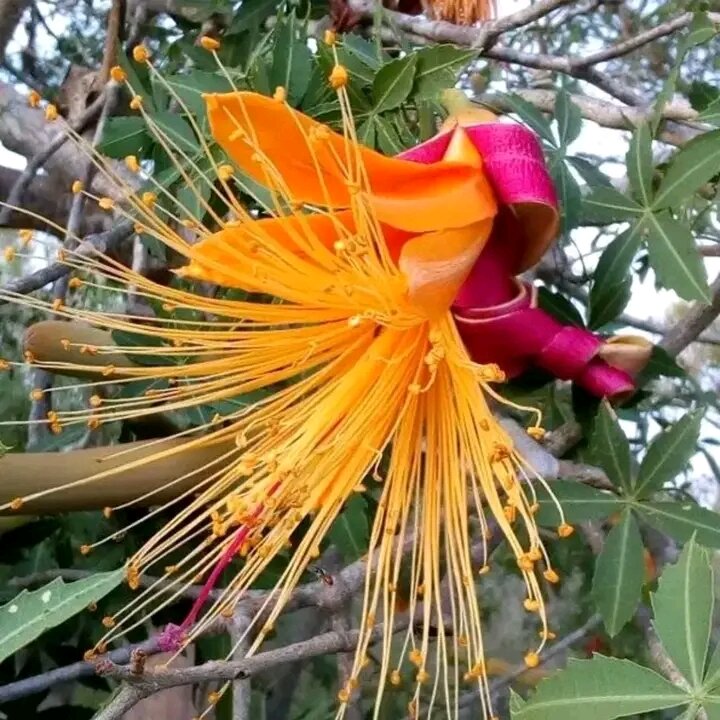
Flowering happens at night. Large white or cream flowers open after dark and are pollinated by nocturnal moths, bats and in some species lemurs, which is one of the few documented cases of primates pollinating a tree.
The upside-down appearance comes from the sparse branching at the crown, and Malagasy tradition explains it as the gods having planted them the wrong way up.

Sacred Baobabs and Cultural Significance
Baobabs carry spiritual weight across Madagascar, and specific trees receive offerings from surrounding communities. Guides at the Avenue will point out which trees are used this way, and villagers come to them to ask for blessings.
The name renala, mother of the forest, reflects a view of these trees as older and weightier than anything growing around them. Some are treated as ancestral sites with restrictions on how close you may go or whether you may photograph, and the usual advice applies: follow your guide rather than assuming.
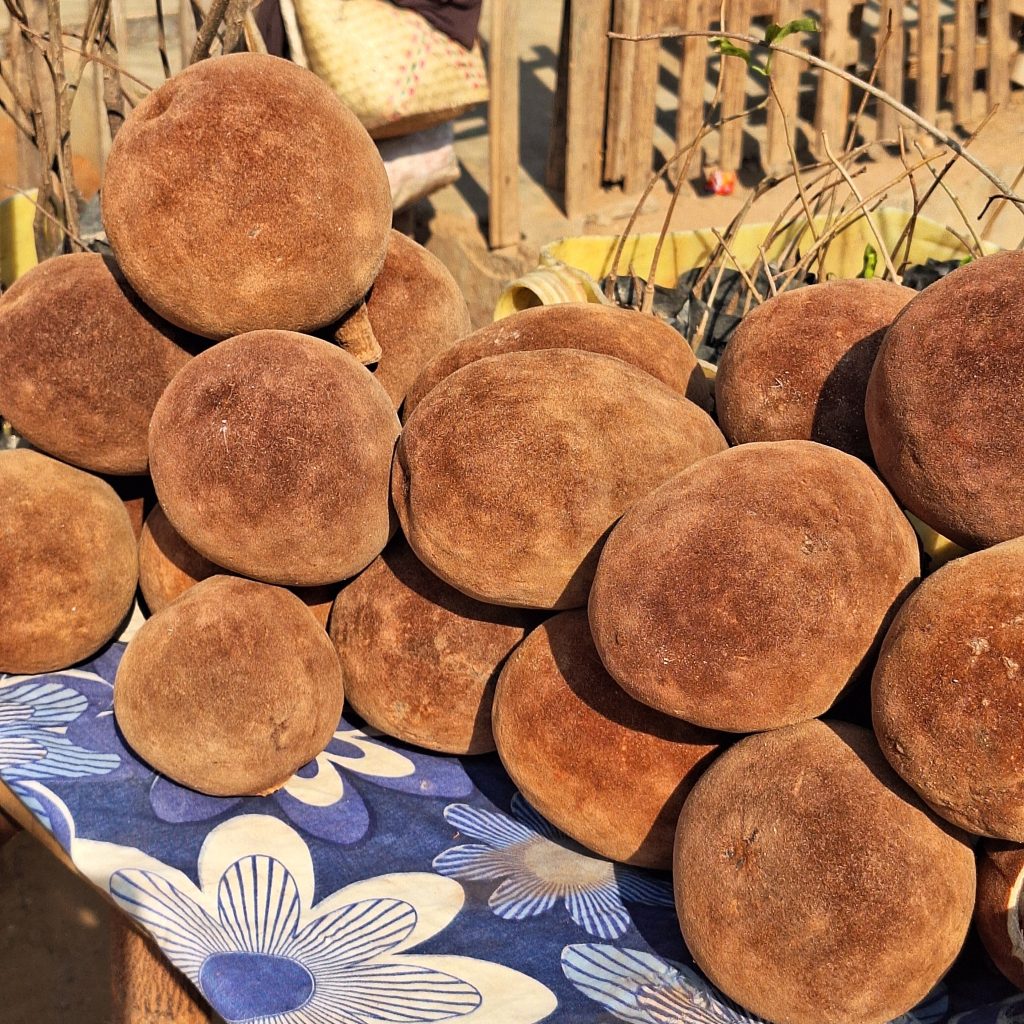
Practical uses run alongside the spiritual. Bark fibre is used for rope and roofing, the fruit is edible and rich in vitamin C, and the seeds yield oil. In drought years the water stored in trunks has kept livestock alive.
Do not climb baobabs or carve into the bark. The wood is soft and damages easily, and the trees at the Avenue are already under pressure from soil compaction around their roots caused by visitor numbers. Stay on the road and the marked tracks, and treat trees that guides identify as sacred with the restraint you would show at any other place of worship.
Conservation and Why Young Trees Are Missing
Grandidier’s baobab is classed as endangered, and the reason is not that mature trees are being felled. They stand for centuries and are largely left alone.
The problem is regeneration. Seedlings struggle to establish on open farmland where cattle graze and fires run through, so the standing populations are ageing without replacement. Country full of large baobabs and empty of young ones looks healthy and is not.

The Avenue went without formal protection for decades, even as it became the country’s best-known sight. Temporary reserve status arrived in 2007 and a Natural Monument designation followed in 2015. Adansonia perrieri and A. suarezensis, both with tiny northern ranges, are the most threatened of the six.
Visitor revenue and the community facilities at the Avenue’s southern entrance are part of what makes protection worth something locally, which is the practical argument for going through official channels rather than parking anywhere.
Photographing Baobabs
The Avenue rewards patience more than equipment. The hour before sunset and the hour after sunrise are the only times worth shooting, and photographers routinely stay past dark for the night sky, since the site never closes and the stars here are exceptional.
Zebu carts and villagers walking the road are part of the scene at both ends of the day and give scale that the trees alone do not. Walking out into the surrounding fields, where more baobabs stand, gets you away from the vehicles that line the road at dusk.
For baobabs in forest, Kirindy Mite and Ankarafantsika give cleaner compositions without the roadside crowd, and the trees at Tsingy de Namoroka growing from bare limestone are the most unusual setting available.
Frequently Asked Questions
How many baobab species are there in Madagascar?
Six, all endemic. Eight exist worldwide, with one in mainland Africa and one in Australia, which makes Madagascar the centre of the genus. Grandidier’s baobab is the largest and the species at the Avenue. Za is the most widespread, fony the bottle-formed southern species, and perrieri the rarest.
When should I visit the Avenue of the Baobabs?
An hour before sunset or before dawn. Entry is free, the site is a public road open at all hours, and the light is the entire reason to come. Midday visits are the commonest mistake travellers make there. The dry season from April to November gives the most reliable road access and the clearest skies.
How old are the baobabs?
Hard to say with confidence, since baobabs lay down little woody tissue and growth rings are unreliable. Estimates for the Avenue trees run from around a thousand years to claims of 2,800. Radiocarbon work on the oldest section of one much-visited tree at Tsimanampetsotsa put that part at closer to 1,600 years, which is old enough.
Where can I see baobabs other than the Avenue?
Kirindy Mite south of Morondava holds the largest Grandidier’s population in natural forest alongside two other species. Kirindy Forest, Ankarafantsika, Mikea, Tsimanampetsotsa and Tsingy de Namoroka all have baobabs, several with species you will not see in the west. Forest settings are quieter and show the trees in context.
Why do they look upside down?
The sparse branching at the crown resembles roots, and Malagasy tradition holds that the gods planted them the wrong way up. The functional explanation is that a water-storing trunk with minimal leaf area suits a climate with a long dry season, since leaves lose moisture the tree cannot spare.
Are baobabs endangered?
Grandidier’s baobab is classed as endangered and two northern species with tiny ranges are more threatened still. The issue is regeneration rather than felling, since seedlings fail to establish on grazed and burned farmland. Standing populations of mature trees are ageing without replacement, which disguises the problem.
Can I climb one or touch them?
Touching is fine on ordinary trees; climbing is not, since the wood is soft and damages easily. Some trees receive offerings and hold sacred status locally, so ask your guide before approaching closely. At the Avenue, staying on the road avoids compacting soil around root systems already under pressure from visitor numbers.
Is the fruit edible?
Yes. Baobab fruit has a dry powdery pulp rich in vitamin C, eaten locally and increasingly sold as a health product internationally. The seeds yield oil and the bark fibre is used for rope and roofing. In drought years the water stored in trunks has been used to keep livestock alive.
Planning Your Trip
Baobabs are easy to see and easy to see badly. The Avenue at midday is a row of trees beside a road; the Avenue at sunrise is the image that sells Madagascar. Building the timing into a western itinerary costs nothing, since anyone travelling north to Kirindy or Tsingy passes it twice.
Booking Your Madagascar Trip
The safari companies and tour operators listed on this website put trips like this together for a living and know which camps, guides and routes actually deliver. We are an independent guide to Madagascar; we do not book or sell tours ourselves.
When you are ready, arrange your safari, tour or holiday with one of the recognised operators listed here. Tell them your dates and what matters most, and a real person, not a form, will handle the itinerary, park bookings and logistics for you.