Kirindy Mite National Park
Kirindy Mite National Park puts dry forest, spiny thicket, mangrove, dune, sacred lakes and coral reef within a single day’s walking, and claims the highest density of primates anywhere on earth. Visitors walk three circuits from Belo sur Mer, add a pirogue trip through the estuary and snorkel off the offshore sandbars. The park covers 72,200 hectares south of Morondava in the Menabe region and sits at the core of a UNESCO Biosphere Reserve.
Verreaux’s Sifaka and Lemur Watching Tours
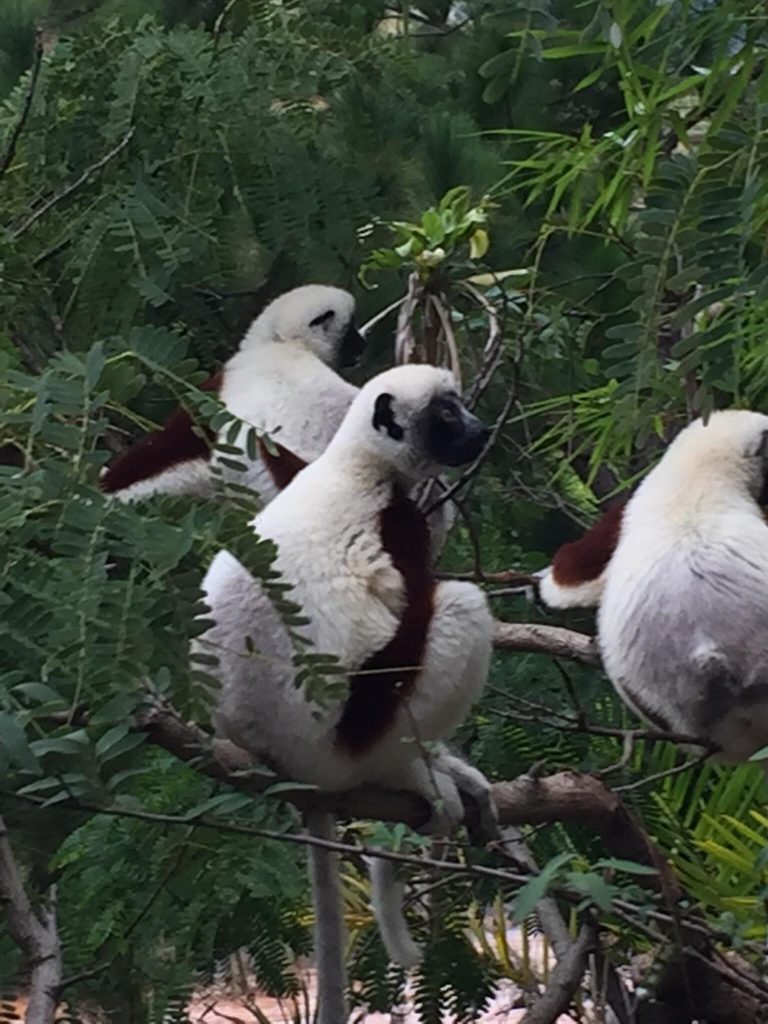
Lemur watching tours here cover nine species, though only three are readily seen in daylight: Verreaux’s sifaka, red-fronted brown lemur and the ring-tailed lemur. The sifaka is the one people photograph, white-furred and given to crossing open ground on two legs in a sideways bounding hop that has earned it the nickname dancing sifaka.
The claim about primate density comes from this convergence of habitats. Western and southern biotopes meet here, so species from both systems overlap in a way they do not elsewhere.
The nocturnal list is longer and includes Madame Berthe’s mouse lemur, the smallest primate in the world at around thirty grams. It is endangered and genuinely difficult to find. Fork-marked lemurs, grey mouse lemurs, Coquerel’s dwarf lemurs, fat-tailed dwarf lemurs and red-tailed sportive lemurs make up the rest.
Kirindy Mite is not the same place as the Kirindy Forest Reserve near Morondava, even though the names overlap. Kirindy Forest is a private reserve about 60 km north of the town and is where most fossa sightings are reported. Kirindy Mite is the national park 90 km south at Belo sur Mer. Operators and guidebooks confuse them constantly. Check which one your itinerary means.
Night Walk Tours for Fossa and Mouse Lemurs
Night walk tours are where most of the mammal list lives. Six of the nine lemur species are nocturnal, and after dark the forest becomes considerably more active than it appears at midday.
Fossa are present. Madagascar’s largest carnivore is rarely seen here, though October and November coincide with the mating season and improve the odds. Two carnivore species live in the park in total.
Flash photography around nocturnal animals is prohibited, and guides enforce it. Bring a red-filtered torch if you have one.
Baobab Walking Tours in the Dry Deciduous Forest
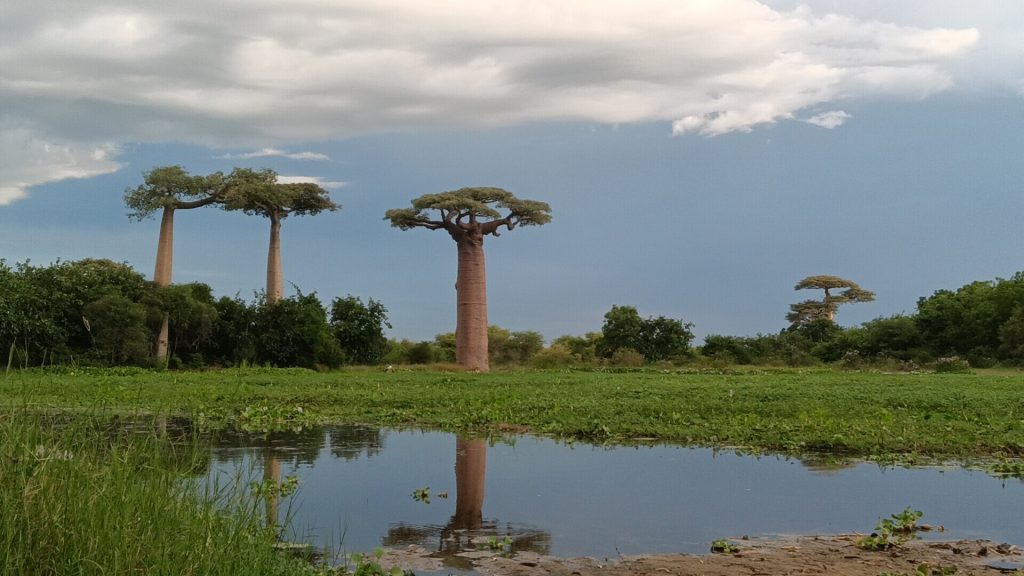
Walking tours through the dry forest take in three of Madagascar’s seven baobab species: Adansonia grandidieri, Adansonia za and Adansonia rubrostipa. The grandidieri population here is the largest anywhere, running to something like half a million trees.
That is the same species that lines the famous avenue near Morondava, but standing in natural forest rather than a cleared roadside, which is a different sight entirely and one very few visitors see.
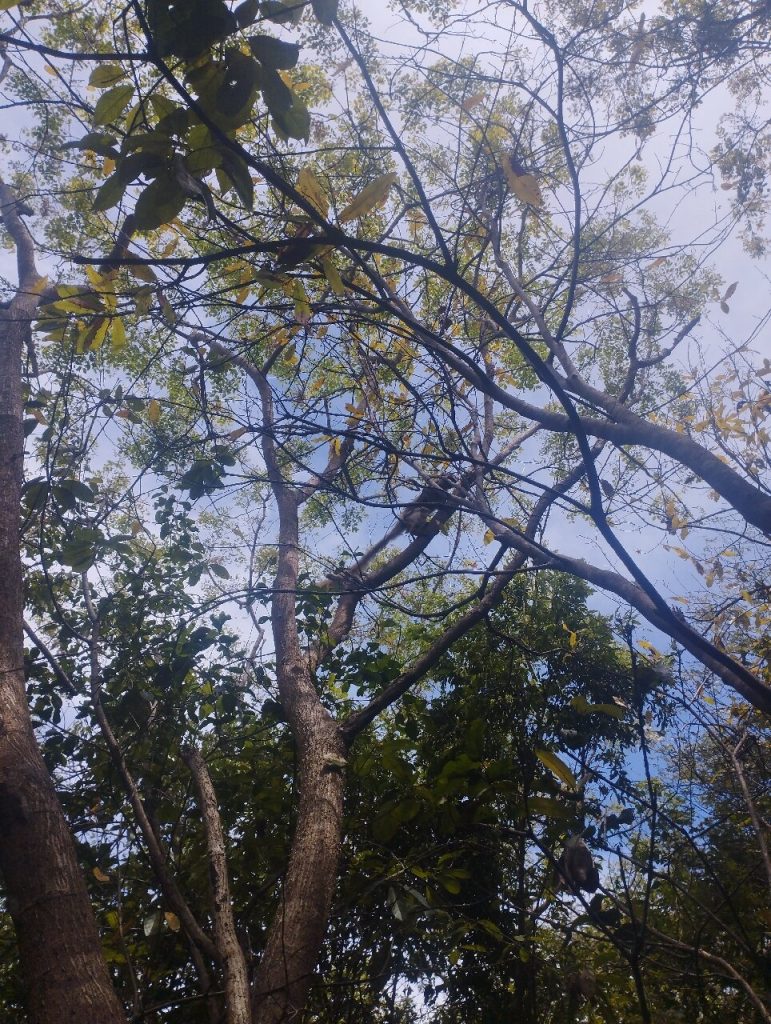
Dry deciduous forest is Madagascar’s most threatened habitat type, and Kirindy Mite protects one of the largest surviving blocks. Guides point out Madagascar rosewood, tamarind, Commiphora and the nato trees whose timber goes into the dhows built at Belo sur Mer.
Spiny thicket, dry forest, mangrove, dune, brackish lake and coral reef, all reachable in one day. Few parks anywhere stack that many systems into a single walk.
Sacred Lake Birding Tours in the Southern Park
Birding tours concentrate on the sacred lakes in the southern section, and the bird list is what draws specialists here. Estimates range from around 47 to 58 species with roughly a third endemic to the region.
Lesser flamingos use the two saline lakes, and those lakes carry local sacred status that guides will explain before you get close. Waterbirds, waders and dry-forest species fill out the rest.

The lakes also mark the point where the park stops being a forest destination and starts being a coastal one, which is the character that sets it apart from Ankarafantsika or Zombitse.
Mangrove Pirogue Trips and Flying Fox Roosts
Pirogue trips along the estuary and through the mangroves run one and a half to two and a half hours and are available year-round. They are the easiest way to see the coastal side of the park.
The mangroves host a large and extremely noisy roost of Madagascar flying foxes, Pteropus rufus, which is worth timing your paddle around. Wading birds work the channels and the tannes, the salt-crusted depressions behind the mangrove line.
Snorkelling Trips to the Offshore Islets
The park includes a marine section with seven small islands, and snorkelling trips out to the sandbars off Belo sur Mer are part of a proper visit. The reef here feeds humpback whales in season, along with dolphins, dugongs and marine turtles.
Facilities are minimal and this is not organised scuba. Boats are arranged locally at Belo sur Mer, and a degree of negotiation is normal. Agree the price and get a receipt before departing, since visitors have reported inflated quotes at the local office.
Forest circuits. Three hiking routes over flat sandy ground, easy walking. Baobabs, sifaka, dry forest botany and the sacred lakes. Half a day each.
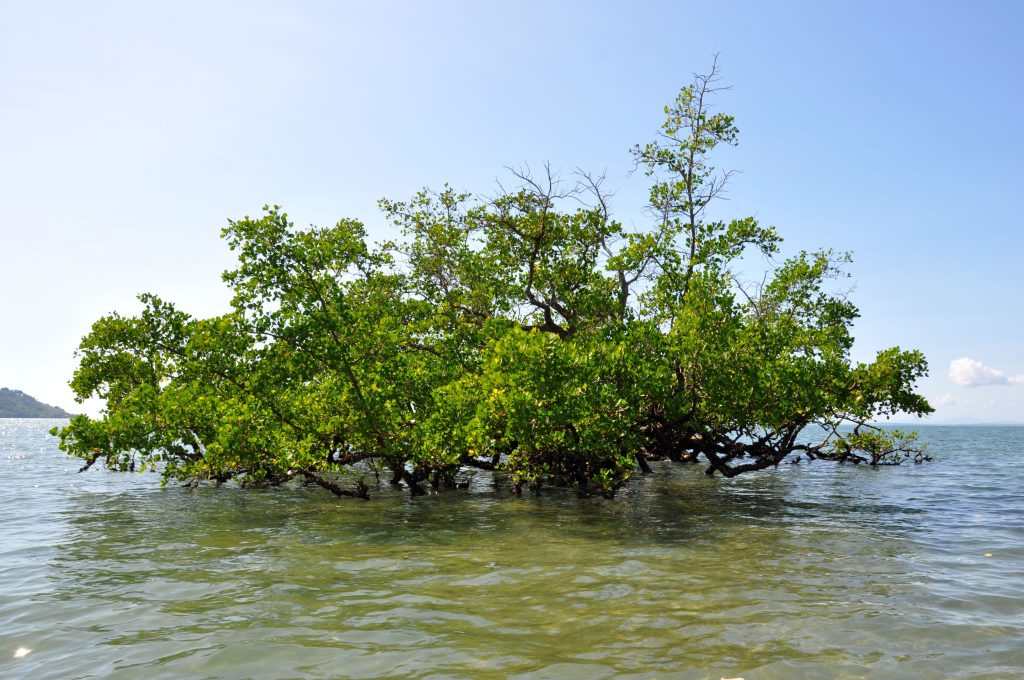
Water activities. Pirogue through the mangroves and estuary, or a boat out to the islets for snorkelling. One and a half to two and a half hours. Complements the walking rather than replacing it.
Sakalava Culture and the Dhow Builders of Belo sur Mer
Belo sur Mer is a working boatbuilding village and one of the more interesting places to stay on the west coast. The Vezo who live here construct wooden dhows on the beach using techniques their ancestors are said to have learned from European sailors centuries ago, and the hulls take shape in the open where anyone can watch.
The timber comes from the forest inside and around the park, including the nato trees your guide will point out on the walking circuits. That connection between the forest and the boats is the clearest illustration available of why dry deciduous forest matters to people who live beside it, and why protecting it is complicated.
The wider area sits in the old kingdom of Menabe, Sakalava country, and salt production and pelagic fishing remain the main livelihoods alongside boatbuilding. The park was declared in 1997 and only opened to visitors in 2006, which is why infrastructure remains thin and why you will meet very few other travellers.
Getting to Kirindy Mite National Park from Morondava
Belo sur Mer is the base, about 90 km south of Morondava. The road is unpaved and rough, taking three to four hours in a four-wheel drive, and conditions worsen considerably in the wet season. Speedboat transfers from Morondava are the alternative and often the faster option.
Taxi-brousse services run toward Belo sur Mer for independent travellers, though you will need to arrange onward transport from the drop-off. Most visitors book a package out of Morondava covering transport, fees and guiding.
The park office is in Morondava with a smaller office at Belo sur Mer, and you register and hire guides at either. Belo sur Mer itself has a handful of small hotels and ecolodges. Given the travel involved, four nights there is a sensible minimum, and camping inside the park is possible.
Best Time for a Kirindy Mite Visit
Western Madagascar runs hot and strongly seasonal, and road access is the constraint that matters most here.
April and May. Rains have ended and the track from Morondava dries out. Comfortable temperatures and green forest. One of the two best windows.
June to September. Dry, cooler and the most reliable for road access. Trees drop their leaves, which improves visibility for lemurs and birds. Humpback whales pass offshore through the middle of this period.
October and November. Hot, with wildlife at its most active. Fossa are mating, which is when sightings become realistic rather than lucky. The other strong window for a visit.
December to March. Wet season. The unpaved road south becomes very difficult and access is unreliable. The forest greens up and reptiles are active, but reaching the park is the problem.
Frequently Asked Questions
How much does it cost to visit Kirindy Mite National Park?
Park entry follows the standard rate of 45,000 Ariary per adult per day, with children under twelve at 25,000 Ariary, plus compulsory guide fees charged per group. A pirogue trip through the mangroves runs around 35,000 Ariary. Taxi-brousse from Morondava costs roughly 10,000 to 15,000 Ariary with onward local transport on top. Packaged day tours out of Morondava typically run 50 to 100 US dollars per person depending on inclusions. Agree boat prices in advance and ask for a receipt.
Is this the park where I see fossa?
Probably not. Fossa live here but are rarely seen. The reserve most visitors mean when they talk about fossa sightings is Kirindy Forest, a private reserve north of Morondava with a completely different name origin and a research station where the animals are habituated. Confirm which Kirindy your operator means.
How many days do I need?
Four nights at Belo sur Mer is the realistic minimum once travel is accounted for, which allows two or three days using the park properly across forest circuits, mangroves and the islets. A single day trip from Morondava spends most of its hours on the road.
How difficult is the walking?
Easy. The circuits run over flat sandy ground with no climbing. Heat is the limiting factor rather than terrain, so early starts and plenty of water matter more than fitness. Facilities inside the park are minimal, so carry everything you need.
Will I see Madame Berthe’s mouse lemur?
Unlikely. The world’s smallest primate is endangered, tiny and nocturnal, and even guides who know the forest well find it inconsistently. Treat a sighting as a bonus on a night walk rather than the reason to come.
Can I combine it with the Avenue of the Baobabs?
Yes, and most itineraries do. The avenue sits north of Morondava on the road toward Tsingy de Bemaraha, while Kirindy Mite lies south, so they are separate outings from the same base. Travellers heading to Tsingy often take in the avenue and Kirindy Forest going north and add Belo sur Mer either side.
Is snorkelling worth doing here?
It is a pleasant addition rather than a destination in itself. The islets are small sandbars and the setup is informal, with boats arranged locally rather than through a commercial operator. Travellers whose main interest is reefs are better served by Nosy Be or Ifaty.
Planning Your Visit
Kirindy Mite rewards travellers who commit to Belo sur Mer for several nights rather than treating the park as a day trip. The road south eats a large share of any shorter plan, and the point of coming is the range of habitats you can reach once you are settled there.
Booking Your Madagascar Trip
The safari companies and tour operators listed on this website put trips like this together for a living and know which camps, guides and routes actually deliver. We are an independent guide to Madagascar; we do not book or sell tours ourselves.
When you are ready, arrange your safari, tour or holiday with one of the recognised operators listed here. Tell them your dates and what matters most, and a real person, not a form, will handle the itinerary, park bookings and logistics for you.