Watersports and Boat Trips in Madagascar

Beyond snorkelling and diving, Madagascar’s coasts offer kitesurfing at Sakalava Bay, sea kayaking at Masoala and around the northern islands, deep-sea fishing from four separate coasts, and pirogue trips with Vezo crews who have sailed these waters for generations. Most activities are arranged locally rather than booked ahead, and sea conditions govern everything.
Kitesurfing and Windsurfing
Sakalava Bay near Diego Suarez is the best kitesurfing spot in Madagascar and one of the better ones in the Indian Ocean. The Varatraza trade wind blows reliably from May to November, with flat water inside the bay and waves on the reef outside giving the spot range for different abilities.
Schools and lodges operate directly at the bay, catering to beginners through to advanced riders, and equipment hire is available on site.
The Emerald Sea nearby offers twelve kilometres of flat lagoon for experienced riders doing downwinders, passing fishing villages with reef waves to surf at the far end. It is considerably less known than Sakalava and correspondingly emptier.
Ifaty and Anakao in the southwest also have wind, though the infrastructure is thinner. The trade-off across the north is that the wind that suits kiters makes the small open boats to the Emerald Sea wet and cold on the afternoon return.
The Varatraza trade wind blows from May to November and shapes the northern coast more than rainfall does. Kitesurfers and snorkellers want opposite dates.
Sea Kayaking and Pirogue Trips
Sea kayaking at Masoala is the most distinctive paddling in Madagascar, along a coast where rainforest meets granite boulders dropping into clear water, with jungle overhanging the sand.
The Emerald Sea and the Nosy Be archipelago both offer sheltered paddling suitable for reasonable beginners in calm conditions. At Île Sainte-Marie, some operators run whale watching by sea kayak between July and September, which puts you far lower to the water than a motorboat.
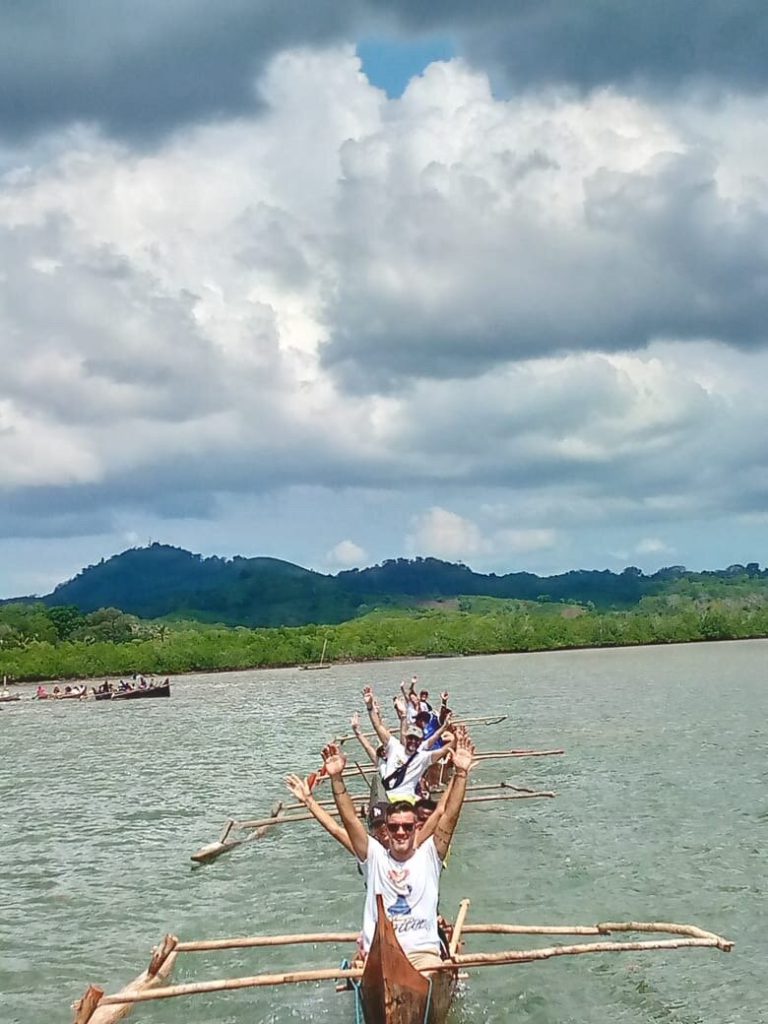
Pirogue trips are the traditional alternative and often the more interesting. The Vezo of the southwest coast build and sail outrigger canoes, and arranging a trip with a local crew from Ifaty, Anakao or Betania near Morondava is straightforward.
Short pirogue crossings are also how you reach several destinations: Lokobe on Nosy Be, Île aux Nattes off Sainte-Marie, and Betania across the channel from Morondava.
Deep-Sea Fishing
Charters run from four coasts for tuna, marlin, barracuda, dorado and sailfish, with operators concentrated at Nosy Be, Île Sainte-Marie, Toliara and Ifaty.
Some operators will prepare your catch for dinner, which is worth asking about when booking. Standards vary considerably between the established charter companies and informal arrangements made on a beach.
Inshore fishing in a pirogue with a local crew is the cheaper and slower alternative, and gives a better sense of how the coastal economy actually works than a charter does.
At Belo sur Mer and along the southwest, fishing remains the main livelihood, and crews will take passengers on request.
Wind sports. Sakalava Bay for kitesurfing from May to November, the Emerald Sea for downwinders, Ifaty and Anakao with thinner infrastructure. Vinanibe near Fort Dauphin for surfing.
Paddling. Sea kayaking at Masoala and around Nosy Be, kayak whale watching at Sainte-Marie in season, the Pangalanes canal on the east coast, and pirogue trips with Vezo crews in the southwest.
Boat excursions. The Emerald Sea from Ramena, Tanikely and Komba from Nosy Be, Nosy Iranja for the sandbar, the Manambolo gorge at Tsingy de Bemaraha, and sunset cruises from most beach destinations.
Surfing
Madagascar has surf and very little surf infrastructure, which suits travellers bringing their own boards and deters everyone else.
Vinanibe north of Fort Dauphin has a powerful swell and is where local surfers go. The southeast coast as a rule picks up Indian Ocean swell, and the humid microclimate keeps the surrounding country green year-round.
Foulpointe on the east coast offers surf lessons when conditions suit, and Mahambo further north has a reputation among surfers.
Board hire is limited across the country, so bringing your own is the practical answer. Conditions are best in the dry season, and local knowledge matters more than published breaks since almost nothing is documented.
Sunset Cruises and Boat Excursions
Boat trips are how most visitors spend their time on the water, and the standard excursions are well established.
The Emerald Sea from Ramena is the strongest value in Madagascar, a small sailing boat crossing to a lagoon where white sand turns the water green, with snorkelling and lunch cooked on an uninhabited islet.
From Nosy Be, the Tanikely and Komba combination is the default day out, with Nosy Iranja as the longer trip to the sandbar. Sunset cruises run from most beach destinations.
The Manambolo gorge at Tsingy de Bemaraha is poled dugout canoe beneath hundred-metre cliffs past Vazimba burial sites. The Pangalanes canal runs from Toamasina for a half day to several.
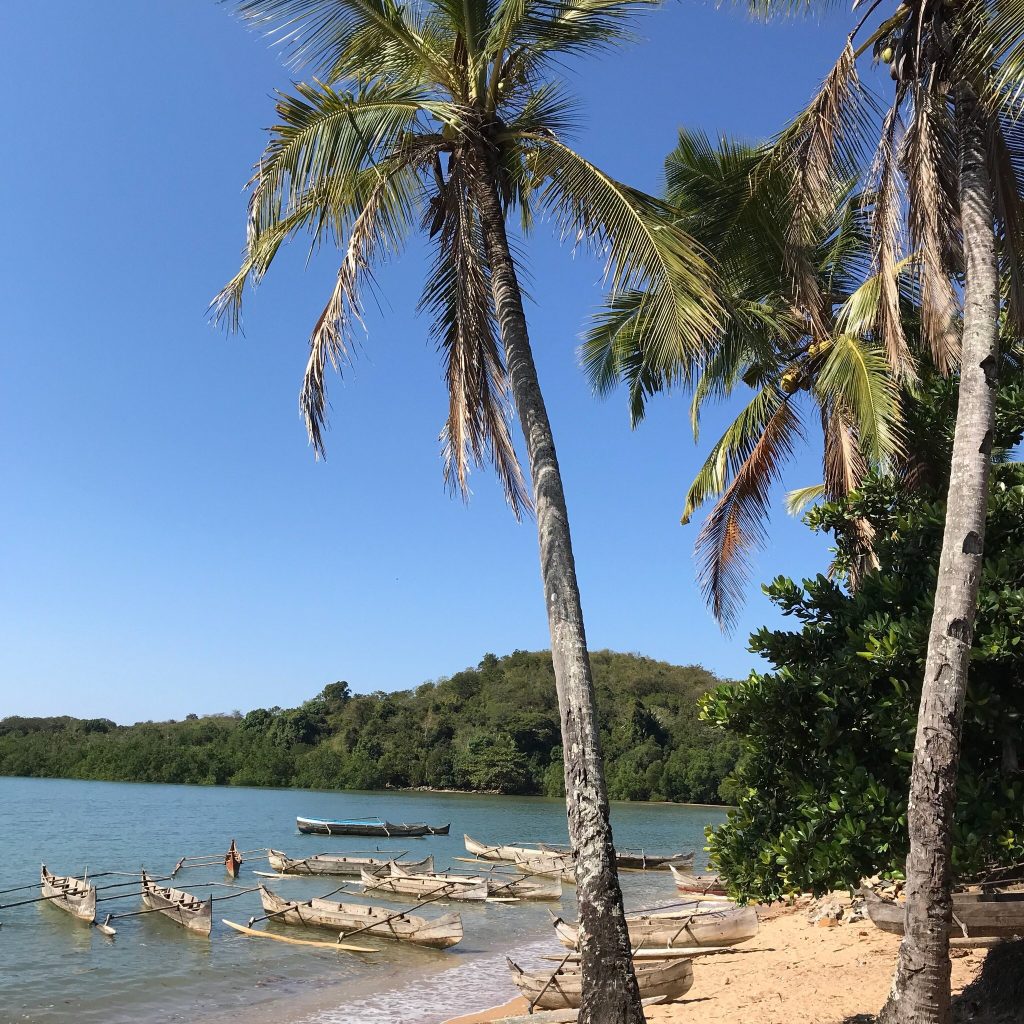
Betania across the channel from Morondava is a few minutes by pirogue, best in late afternoon when the outrigger fleet comes in with the catch.
Agree boat prices before departing rather than on return, and confirm what is included. This applies to everything from a pirogue crossing to a full-day charter. Crossings to Nosy Iranja, Sainte-Marie and Masoala all cancel in rough conditions, so book excursions early in a stay rather than at the end, and build a buffer day before any international departure.
Whale Watching from the Water
Humpback whales migrate to Madagascar between roughly July and September to breed and calve, and Île Sainte-Marie offers the most accessible viewing in the Indian Ocean.
The channel between the island and the mainland acts as a nursery, sheltered enough that mothers bring newborn calves there. Sightings are close to certain in season and whales are often visible from shore.
Nosy Be sees humpbacks passing along the coast through the mid-year months, less concentrated than at Sainte-Marie but combining easily with island excursions. Whale sharks appear off Nosy Be separately, from around September into December, and swimming with them is permitted.
Toliara and Ifaty in the southwest also run whale trips in season, with animals in transit rather than gathered, so sightings are less predictable.
Ask any operator how they handle distance and boat numbers before booking. Compliance with observation guidelines varies and it affects both the animals and what you see.

Sunset Cruises and Evening Boat Trips
Sunset trips run from most beach destinations and are the easiest thing to arrange on a Madagascar coast.
At Nosy Be operators run evening cruises from the west coast beaches, and at Nosy Iranja the bivouac package includes a sunset drink on the sandbank after the day boats have left.
Morondava is unusual in that the sunset happens on land rather than water: the Avenue of the Baobabs an hour before dusk is the reason people come to that coast at all, though the beach at Nosy Kely draws the whole town in the evening.
At Diego Suarez, boats returning from the Emerald Sea catch the light across the bay with Nosy Lonjo silhouetted, which is the standard photograph of that city.
Prices for evening cruises are negotiated locally and vary considerably. Agreeing what is included, particularly drinks, prevents the usual friction.

Safety on the Water
Sea conditions are the main variable and cancellations are common outside the calm months, particularly on the eastern crossings.
Boats to the Emerald Sea are small and open, and between May and November the trade winds make the afternoon return wet and cold. Bring a dry bag for anything electronic and a windproof layer.
Shark risk exists in specific places rather than across the board. The Bay of Antongil around Masoala has a reputation and guides direct where swimming is safe. Toamasina’s city beaches are unsafe for swimming, with sharks among several reasons.
Nile crocodiles occur in rivers and lakes rather than the sea, including the Manambolo and Lac Ravelobe. Take local advice at every new location rather than assuming.
Life jackets are not universally provided on informal arrangements. Anyone uncomfortable with that should book through an established operator.
Frequently Asked Questions
Where is the best kitesurfing in Madagascar?
Sakalava Bay near Diego Suarez, with flat water inside and reef waves outside, driven by the Varatraza trade wind from May to November. Schools and lodges operate at the bay for all levels. The Emerald Sea offers twelve kilometres of lagoon for experienced riders doing downwinders and is far less crowded.
Can I go sea kayaking?
Yes, at Masoala along a coast where rainforest meets clear water, around the Nosy Be archipelago, and on the Emerald Sea. At Île Sainte-Marie some operators run whale watching by kayak between July and September, which puts you much lower to the water than a motorboat.
What do boat trips cost?
Emerald Sea transfers from Ramena run roughly 40,000 to 55,000 Ariary per person, with packages including lunch commonly around 25 euros. Nosy Be day excursions covering Tanikely and Komba run around 300,000 Ariary including boat, guide and lunch. Local pirogue crossings cost a few thousand Ariary. Agree prices before departing.
Is there good surfing?
Vinanibe north of Fort Dauphin has the best-known break with powerful swell, and Mahambo on the east coast has a reputation among surfers. Foulpointe offers lessons when conditions suit. Board hire is limited across the country, so bring your own, and local knowledge matters since almost nothing is documented.
When is whale season?
Roughly July to September for humpbacks, with Île Sainte-Marie the most reliable viewing since the channel there acts as a breeding and calving nursery. Nosy Be sees them passing along the coast. Whale sharks are separate, appearing off Nosy Be from around September into December, and swimming with those is permitted.
Are the crossings safe?
Boats to Nosy Iranja, Île Sainte-Marie and Masoala all cancel in rough conditions, which is the main safety mechanism. The Emerald Sea boats are small and open, and the afternoon return is wet and cold from May to November. Life jackets are not universally provided on informal arrangements, so book through established operators if that matters.
Can I fish?
Charters run from Nosy Be, Île Sainte-Marie, Toliara and Ifaty for tuna, marlin, barracuda and dorado, with some operators preparing your catch for dinner. Inshore pirogue fishing with a local Vezo crew is cheaper, slower and gives a better sense of the coastal economy.
What should I bring?
A dry bag for anything electronic, since crossings get wet. Reef-safe sunscreen for the marine parks. A windproof layer for the northern boat trips between May and November. Your own mask if you have one, since rental quality is inconsistent. Cash in Ariary, as boats and beach operators do not take cards.
Planning Your Trip
Watersports in Madagascar are arranged locally and governed by sea conditions rather than by booking systems. The two decisions that matter are travelling in the right season for what you want, since kitesurfers and snorkellers need opposite dates in the north, and booking excursions early in a stay so a cancelled crossing can be rescheduled.
Booking Your Madagascar Trip
The safari companies and tour operators listed on this website put trips like this together for a living and know which camps, guides and routes actually deliver. We are an independent guide to Madagascar; we do not book or sell tours ourselves.
When you are ready, arrange your safari, tour or holiday with one of the recognised operators listed here. Tell them your dates and what matters most, and a real person, not a form, will handle the itinerary, park bookings and logistics for you.