Nosy Komba

Nosy Komba is a rainforest-covered volcanic island between Nosy Be and the mainland, known for habituated black lemurs, woodcarving workshops and hiking trails to a 622-metre peak. Most visitors come on a day trip from Nosy Be, though the island rewards staying a few nights. There are no roads and no cars, and the proper Malagasy name is Nosy Ambariovato.
Black Lemur Watching Tours at Ampangorina
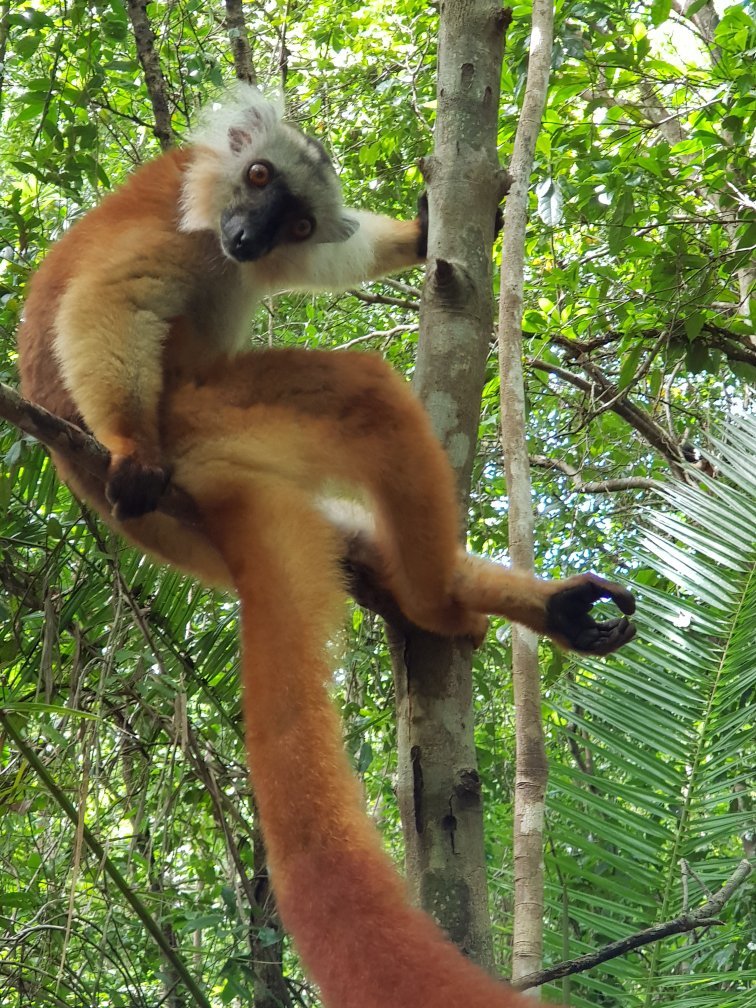
Black lemur watching tours at the community reserve above Ampangorina village are the standard excursion, and they need discussing honestly. The lemurs here are wild but heavily habituated, and guides call them down with bananas. They will climb onto shoulders if you let them.
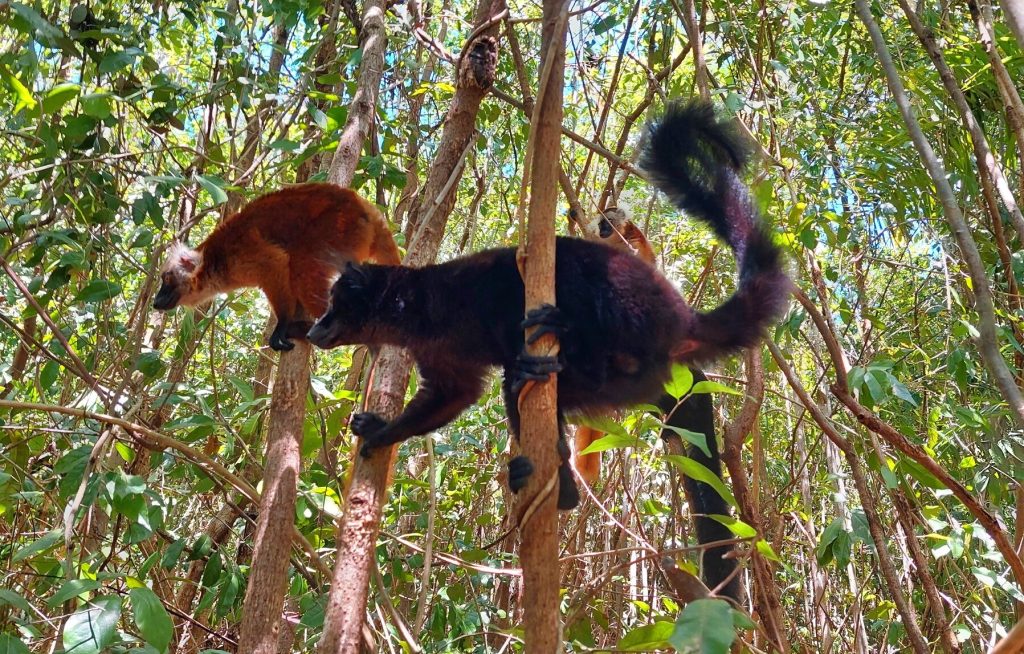
Eulemur macaco is the species, males near-black and females chestnut with white ear tufts. The animals are protected by local fady, the system of taboos that governs conduct across Malagasy communities, and that protection long predates tourism.
Opinion divides sharply on the feeding. Some visitors rate the reserve among the better-managed lemur sites in Madagascar and report animals in good condition. Others find the banana routine leaves a sour aftertaste. You can decline having lemurs placed on you, and guides accept that without fuss. The revenue does fund the community that protects the forest, which is the argument in its favour.

If you want wild rather than habituated lemur viewing on this trip, the Lokobe reserve on Nosy Be is the alternative. There, feeding and touching are prohibited and the animals behave accordingly. Nosy Komba is the easier and more social experience; Lokobe is the more honest one. Doing both on separate days makes the contrast clear.
Hiking Tours to the Nosy Komba Peak
Hiking tours take trails inland from the coastal villages and up toward the summit at 622 metres. The climb takes a few hours and the view from the top runs across Nosy Be, the mainland at Ankify and the scatter of smaller islands between.
The interior is rainforest, and wild lemurs live in it well away from the reserve. So do panther chameleons, snakes and endemic birds, and a guide who knows the trails will find things you would walk straight past.
Because most visitors never leave Ampangorina, the hiking trails are quiet. This is the part of Nosy Komba that justifies staying overnight rather than arriving at ten and leaving at four.
Woodcarving and Craft Market Tours in the Village
Ampangorina is a working village with pedestrian paths, wooden houses and a small pier, and the craft market along the path to the lemur reserve is widely rated the best place in the Nosy Be area to buy.
Woodcarvers work ebony and other hardwoods in clusters of open workshops, and watching a piece move from log to finished carving is worth the time on its own. Embroidered tablecloths, raffia work, bags and lambas fill the rest of the stalls.
Buying here puts money directly with the maker rather than through a shop in Hell-Ville. Prices are negotiated, politely and without much drama.
No roads, no cars, and in much of the island no mains electricity. Nosy Komba runs at a pace that Nosy Be gave up some time ago.
Beach and Snorkelling Trips Around Nosy Komba
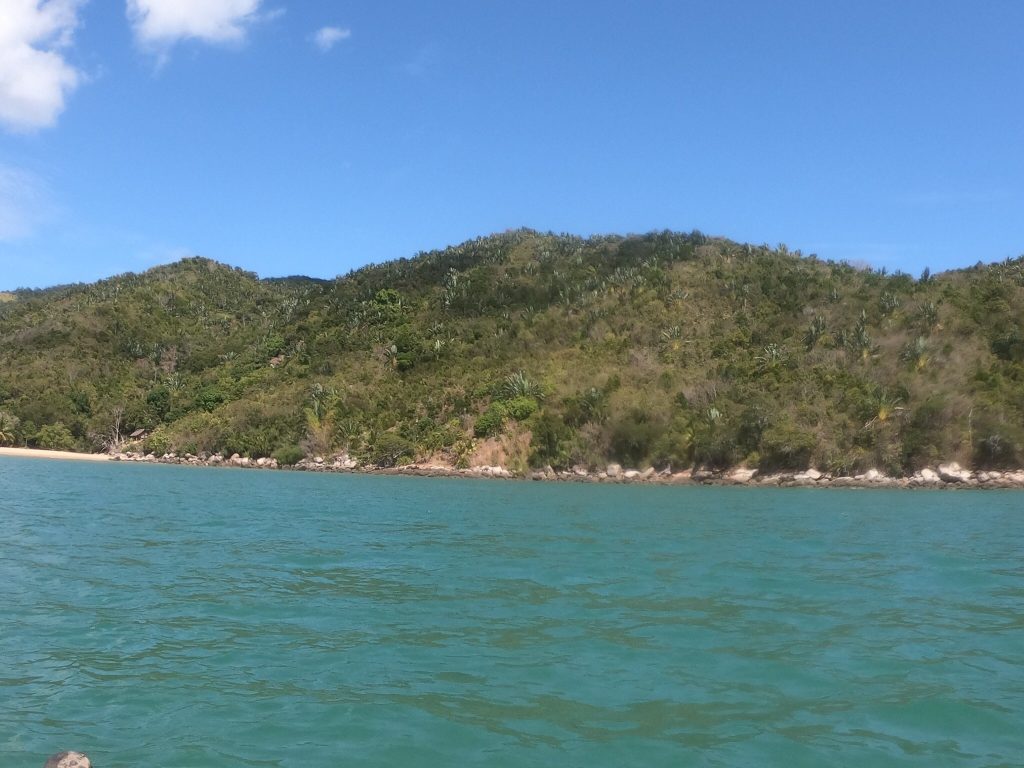
The island has both golden and black sand beaches, the black ones a reminder that this is volcanic ground. Quiet white-sand coves sit away from the village and are reachable on foot or by boat.
Snorkelling trips run to sites around the island, and Nosy Tanikely marine reserve is a short hop away, which is why most operators combine the two into a single day. Dive centres operate on the island.
Dolphins are seen offshore year-round, and humpback whales pass through between July and September, sometimes visible from the boat crossing itself.
Village Tours and Island Life on Nosy Komba
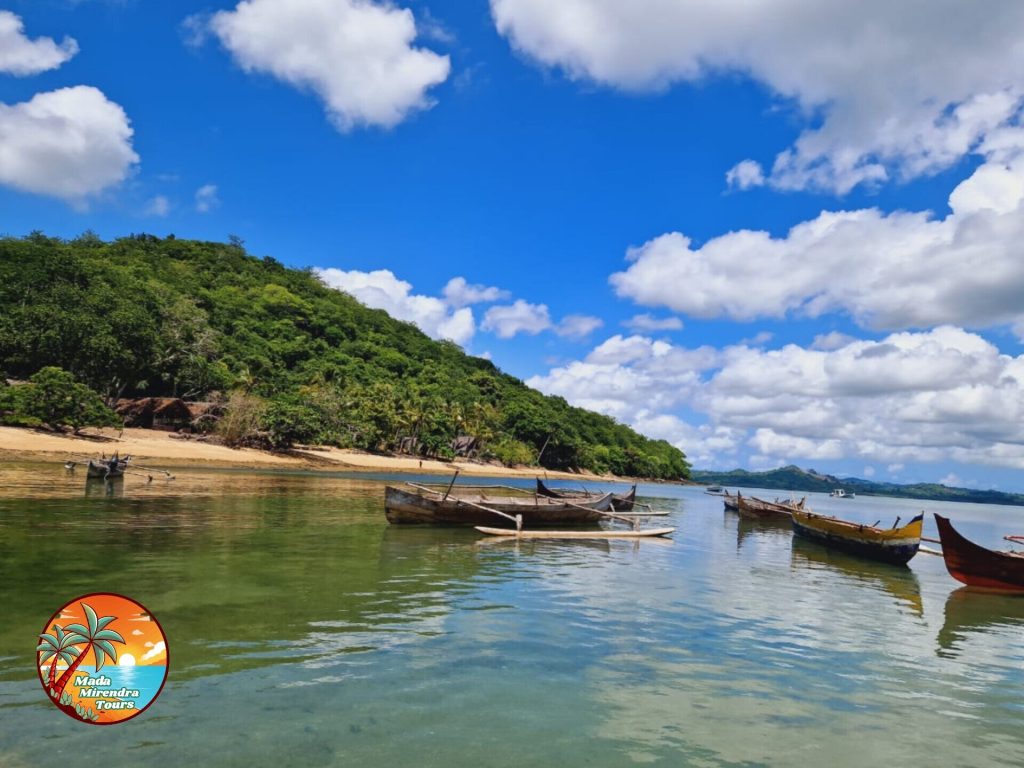
Traditional fishing villages sit around the coast and can be visited by boat. Morning at the village harbour, when the pirogues land and the fish market runs, is the best hour of the day for anyone interested in how the island actually works.
Community-organised cultural activities include traditional dance and cooking workshops, arranged through the ecolodges. Vanilla grows on the island, and plantation walks are a common addition to the standard tour.
What visitors notice most is the absence of vehicles. Everything moves on foot or by boat, which changes the character of the place entirely compared with the resort strips across the water.
Day trip from Nosy Be. Six hours or so, usually combined with Nosy Tanikely. Village, craft market, lemur reserve, lunch, snorkelling. What the overwhelming majority of visitors do.
Two to four nights. Ecolodges and guesthouses on the island. Adds the summit hike, the quiet beaches, the fishing villages and evenings without day-trippers. A different island entirely.
Fady, Sacred Sites and Community Conservation
The black lemurs on Nosy Komba were protected long before anyone sold a day trip. Fady, the system of ancestral taboos that governs conduct in Malagasy communities, forbids harming them here, and that prohibition is why a habituated population survives on an island this small and this settled.
Fady varies from village to village and is not written down anywhere. It might attach to a particular grove, a spring, a species, a day of the week or a direction of travel. Guides brief visitors on anything relevant, and the rules are usually simple to follow once you know them. Ignoring them causes real offence in a way that is easy to avoid.
The community reserve above Ampangorina operates on the same logic, run by villagers rather than by a national agency, with entry revenue funding the protection of the forest patch the lemurs live in. It is a smaller and less formal arrangement than Anja on the mainland, but the model is the same: the people who live beside the wildlife are the ones managing it and the ones benefiting.
That is the strongest argument for visiting even if the banana feeding sits badly with you. The alternative to a community earning from the forest is usually the community clearing it.
Getting to Nosy Komba from Nosy Be and Ankify
Boats leave from Hell-Ville and from the west coast beaches on Nosy Be, taking roughly thirty to forty-five minutes depending on the craft and the sea. Most visitors travel as part of an organised excursion with the transfer included.
Coming from the mainland, boats run from Ankify, which makes Nosy Komba a practical stop for anyone travelling overland rather than flying into Nosy Be. Check sea conditions if you are prone to seasickness, since the crossing is open water and can be choppy.
Accommodation is mostly ecolodges and guesthouses, simple rather than luxurious, employing local staff and built into the surroundings. There is no bank on the island, so bring cash with you. Boat timing matters if you have a flight to connect with, and leaving the transfer tight is a mistake people make.
Best Time to Visit Nosy Komba
The island shares the climate of Nosy Be, warm year-round with a clear wet and dry split.
April to June. Rains have ended, the forest is green and the sea is settling. Comfortable temperatures and fewer visitors than peak season. Good for the summit hike.
July to September. Dry season, busiest period, calmest crossings. Humpback whales pass offshore and are sometimes seen on the boat transfer. Book excursions ahead.
October and November. Warm and dry with the best underwater visibility. Quieter than mid-year. A strong window for combining Komba with Tanikely.
December to March. Wet season with cyclone exposure. Rough seas cancel crossings and the trails turn muddy. Prices drop and the island empties.
Frequently Asked Questions
How much does a Nosy Komba day trip cost?
Organised full-day excursions from Nosy Be run at around 300,000 Ariary per person, typically covering the boat transfer, guiding, lunch and often a stop at Nosy Tanikely. The lemur reserve charges its own entry on top at some operators. Crafts, drinks and tips are extra. Carry cash in Ariary, since the island has no bank and card payment is not available.
Is the lemur feeding ethical?
It is contested, and worth deciding for yourself. The animals are wild and free-ranging but heavily conditioned to expect bananas, and some visitors find the interaction uncomfortable. Others report the reserve is among the better-run lemur sites in the country with animals in visibly good condition. You can decline to have lemurs placed on you. If it troubles you, visit Lokobe on Nosy Be instead, where handling and feeding are prohibited.
Can I stay on the island rather than day-tripping?
Yes, and it is the better option if you have the time. Ecolodges and guesthouses operate around the coast, and two to four nights gives you the summit hike, the quiet beaches and the villages without day-trip crowds. Accommodation is simple and mostly locally staffed.
How does it compare with Nosy Tanikely?
They complement each other, which is why operators combine them. Tanikely is a marine reserve with snorkelling straight off the beach and no village. Komba has the lemurs, the crafts, the hiking and a working community. A day covering both is the standard and sensible arrangement.
Are there cars on the island?
No. There are no roads and no vehicles. Everything moves on foot or by boat, and much of the island has no mains electricity. That is a large part of what makes it feel different from Nosy Be.
What should I bring?
Light clothing, sun protection, insect repellent and a dry bag for anything electronic on the crossing. Cash in Ariary. Closed shoes if you plan to walk inland, since the trails are steep and humid. Modest dress in the village, as this is a lived-in place rather than a resort.
Is it worth visiting if I have already seen lemurs elsewhere?
Yes, for the village, the crafts and the hiking rather than the reserve. Travellers who have already walked the mainland parks often find Ampangorina’s habituated lemurs the least interesting part of the day and the woodcarvers and the summit trail the most.
Planning Your Visit
The choice with Nosy Komba is whether you treat it as a stop on a boat excursion or as somewhere to stay. As a day trip it delivers lemurs, crafts and lunch and gets you back to your hotel by late afternoon. As a base for a few nights it gives you an island with no cars, quiet beaches and a rainforest peak to climb.
Booking Your Madagascar Trip
The safari companies and tour operators listed on this website put trips like this together for a living and know which camps, guides and routes actually deliver. We are an independent guide to Madagascar; we do not book or sell tours ourselves.
When you are ready, arrange your safari, tour or holiday with one of the recognised operators listed here. Tell them your dates and what matters most, and a real person, not a form, will handle the itinerary, park bookings and logistics for you.