Adventure Travel in Madagascar
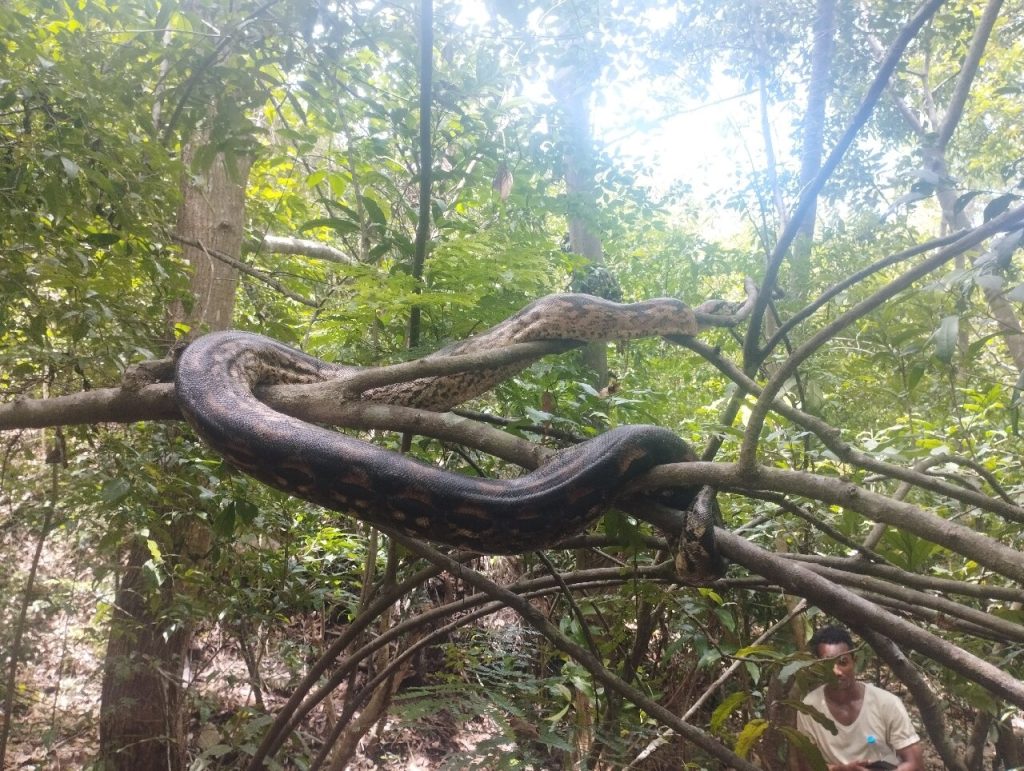
Madagascar rewards travellers willing to work for it. The via ferrata at Tsingy de Bemaraha, the summit of Pic Boby at 2,658 metres, the four-day trek to the silky sifaka at Marojejy and the Tsiribihina river descent are the genuine adventures here, and all of them sit behind travel that is itself demanding. This is a country where getting there is frequently the hard part.

What Adventure Means in Madagascar
The adventure is rarely technical. There is no serious climbing, no whitewater to speak of, and the summits require no rope work. What Madagascar demands instead is tolerance: for long rough drives, for rain, for basic camps and for plans that change when a ferry does not run.
That said, several routes are genuinely physical. The Grand Tsingy via ferrata involves vertical ladders and suspension bridges over long drops. Marojejy’s camps are reached only on foot across river crossings that run high after rain. Andringitra‘s plateau freezes at night.
The other thing worth knowing is that guides are compulsory in every national park. This is not a constraint on adventure so much as a feature of it, since the trails are often unmarked and local knowledge is what makes the harder routes possible at all.
The hardest part of most Madagascar adventures is the road to the trailhead. Six hours to Bekopaka, two days to Zahamena, a flight and a boat to Masoala.
Via Ferrata at Tsingy de Bemaraha
The Grand Tsingy circuit at Tsingy de Bemaraha is the most distinctive adventure route in Madagascar, roughly 5.6 km over four to six hours through the largest limestone pinnacle field on earth.
You start at the base of the massif, thread through tunnels and crevices at ground level, then climb vertical ladders bolted into the rock until you emerge on top of the pinnacles. Fixed steel cables run the exposed sections and you stay clipped throughout. Suspension bridges span the gaps between rock towers.
No technical skill is required, but a head for heights and comfort in enclosed spaces are. Anyone unsure should take the Petit Tsingy instead, which delivers the formations without the exposure.
The rock is sharp enough to open a hand that grabs it bare, and gloves are compulsory. Metal ladders get hot enough to burn by late morning, which is one more argument for early starts.
Getting there is the commitment: six to ten hours from Morondava over unsealed track with two river ferries, and the route closes from roughly December through March.
Trekking Pic Boby and Andringitra
Andringitra National Park holds the best mountain trekking in Madagascar. The Imarivolanitra circuit runs about 28 km over three days, crossing high grassland and climbing Pic Boby at 2,658 metres, the highest summit ordinary walkers can reach in the country.
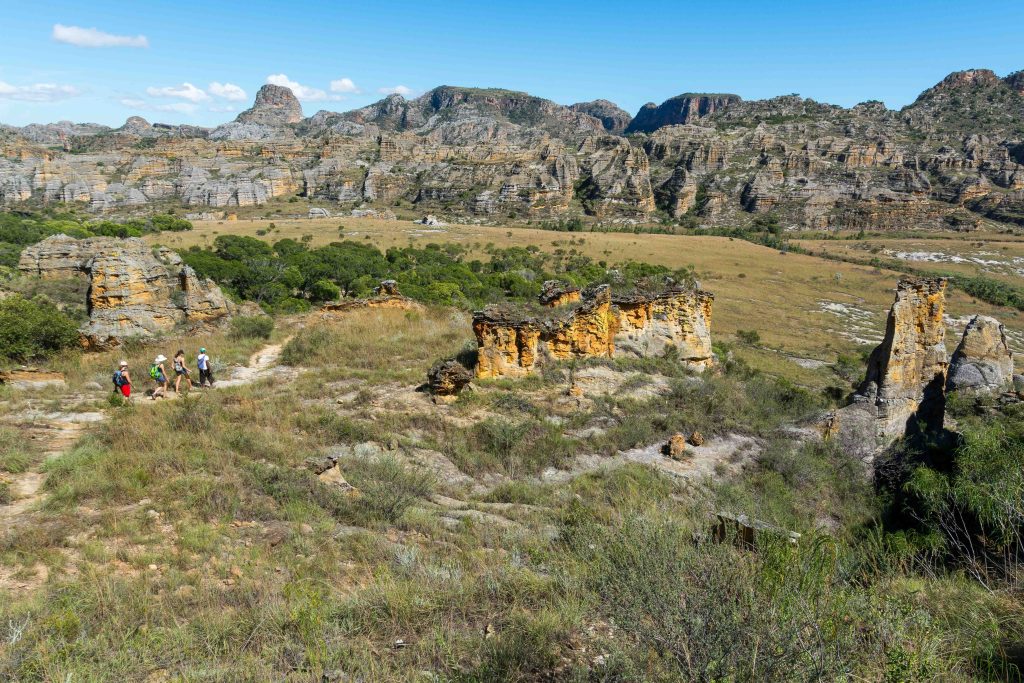
The climb itself is straightforward, two to three hours from the plateau camp on rock and grass with no technical sections. Summit day starts around three in the morning to be on top for sunrise, since cloud builds through the day.
What catches people out is the cold. This is the lowest-temperature ground in Madagascar, with nights below freezing and frost normal on the plateau. Proper sleeping bags, insulated layers and gloves are needed, and travellers who packed for a tropical island have a memorable night for the wrong reasons.
Four-day versions slow the pace and finish in the Tsaranoro Valley, where sheer granite faces draw international big-wall climbers.
The Marojejy Trek and the Silky Sifaka
Marojejy National Park is the hardest trek in this guide and the one with the clearest reward. There is no road in and no day visit: you walk between three mountain camps and sleep in the forest.
The Simpona trek takes three to four days and reaches Camp Marojejia at 775 metres, where sightings of the silky sifaka happen. Fewer than two thousand of these animals survive, in this forest and one neighbouring reserve, and hiring the park’s specialist tracker alongside your guide is the difference between seeing one and not.
The summit trek adds Camp Simpona at around 1,250 metres and the peak at 2,132 metres, taking four to five days through cloud forest.
Distances are short and gradients severe. The stretch between the first two camps is barely 2 km and takes one to two hours on stone that turns treacherous when wet. Porters carry the loads and camps have cabins with beds rather than requiring tents.
Technical-feeling but accessible. Grand Tsingy via ferrata at Bemaraha, four to six hours with cables and ladders. Ankarana‘s Moyen Circuit at 20 km with suspension bridges. Both need nerve rather than skill.
Endurance treks. Pic Boby at Andringitra over three days, Marojejy to the silky sifaka over three or four, the summit route over four or five. Real hill fitness, porters, and cold or wet conditions.
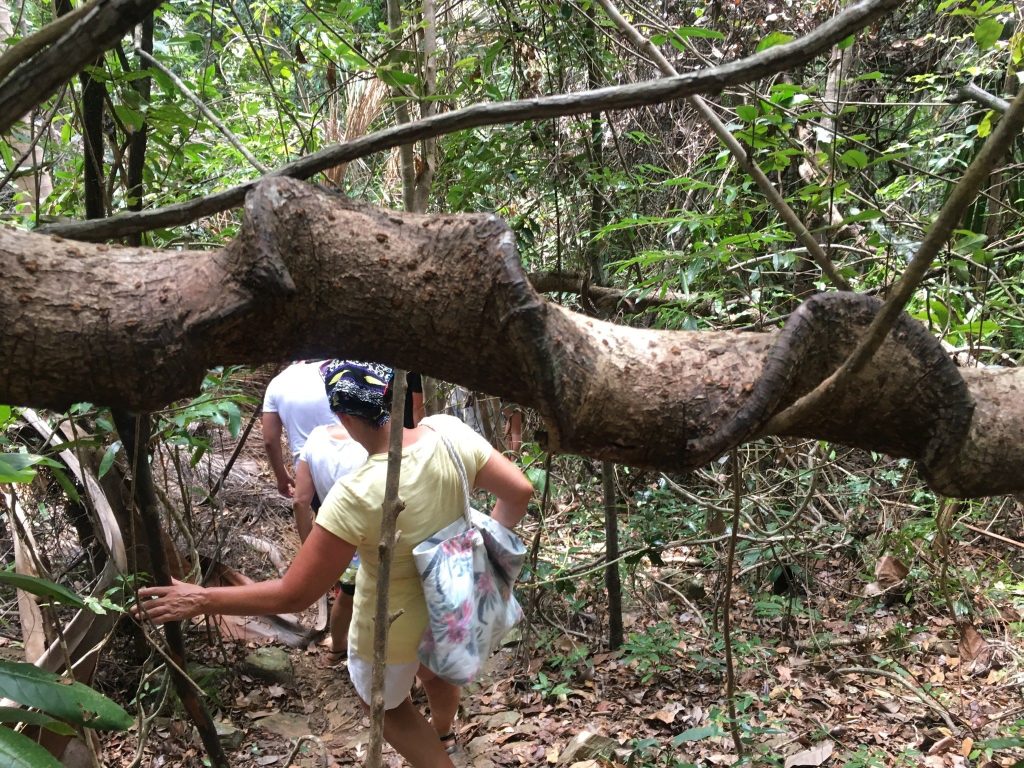
Expedition travel. The Tsiribihina river descent, the Makay massif, Zahamena’s self-supported camping, and Namoroka’s multi-day tsingy circuits. Days of travel to reach, minimal infrastructure.
River Descents and Water Adventures
The Tsiribihina river descent is one of the classic Madagascar trips, two or three days by pirogue from Miandrivazo down to Belo sur Tsiribihina, camping on sandbanks and passing villages reachable no other way.
It is not whitewater. The appeal is the pace, the isolation and the scenery, and it suits travellers who want an expedition without physical strain.
Sea kayaking works at Masoala along a coast where rainforest meets granite boulders and clear water, and around the Nosy Be archipelago. The Emerald Sea near Diego Suarez offers twelve kilometres of flat lagoon for experienced kitesurfers doing downwinders.
Sakalava Bay is the best kitesurfing spot in Madagascar, driven by the Varatraza trade wind that blows reliably from May to November, with flat water inside and reef waves outside.
Caving, Canyons and Remote Country
Ankarana Special Reserve sits above the longest cave system in Africa, mapped at over 100 km, with underground rivers and blind cave fish. The larger systems at Andrafiabe and Mandresy need lamps and time, and the reserve’s western sector opens only July to November.
Tsingy de Namoroka in the remote northwest offers multi-day tsingy circuits with scrambling and rope bridges, above the 113 km Marosakabe cave network, and sees fewer than five hundred visitors a year.
Isalo has multi-day plateau routes, with the Teniky caves a minimum of two days walking each way past an old royal village and Bara tomb sites.
The Makay massif inland from Morondava is a maze of sandstone canyons that remained largely unexplored until recent scientific expeditions. Reaching it is measured in days and only a handful of operators run it.

Adventure travel here is constrained by season more than by ability. Tsingy de Bemaraha and Namoroka close from roughly December to March, Ankarana’s caves shut through the rains and its western sector opens only July to November, and Marojejy’s river crossings run dangerously high after heavy rain. The window for serious trekking is May to October, and building an itinerary outside it means dropping most of this list.
Fitness, Preparation and Logistics
Boots with real grip matter more than any other item. Rainforest trails run on wet clay and roots, and tsingy limestone cuts through thin soles.
For multi-day treks the team is hired at the trailhead: a guide, porters at roughly one per trekker, a cook, and at Marojejy a tracker if the sifaka is the goal. Everything is cash in Ariary and there are no banks past the gateway towns, so calculate the full requirement before leaving the last one.
Camps vary. Marojejy has cabins with beds and mattresses, Andringitra has dry toilets and no showers, Zahamena has a pit latrine and a roofed area. Isalo’s sites have running water and sanitary blocks. Most need your own tent, hireable in gateway towns.
Evacuation insurance is worth buying rather than considering. At Marojejy, Masoala, Namoroka and Zahamena the nearest hospital is many hours away by rough road or boat, with no phone signal en route. Check that a policy covers trekking at the altitudes involved.
Best Time for Adventure Travel
April to June. Rains ending, river crossings dropping to safe levels, trails firming up. The western tsingy routes reopen somewhere in this window. Quiet and good value.
July to September. The core season. Driest conditions, firmest ground, clearest summit views and the only reliable window for Namoroka, Baie de Baly and Ankarana’s western sector. Cold nights at altitude.
October and November. Still open and warmer, with wildlife at its most active. Fossa mating at Kirindy. Exposed tsingy and plateau walking becomes hard work by midday.
December to March. Most of this list closes. Western tsingy parks shut, rainforest trails turn to deep mud, Marojejy’s rivers run high and cyclones hit the east. Not the season for trekking anywhere in Madagascar.
Frequently Asked Questions
What is the hardest trek in Madagascar?
Marojejy’s summit route over four to five days, combining severe gradients, near-constant rain, river crossings and camps at altitude. The Simpona trek to the silky sifaka is three to four days and only slightly easier. Andringitra’s Pic Boby circuit is more comfortable but colder, with nights below freezing on the plateau.
Do I need technical climbing skills?
No. The Grand Tsingy via ferrata uses fixed cables, ladders and rungs throughout, so no rope work or climbing technique is needed, though a head for heights and comfort in tight spaces are. Pic Boby is a walk on rock and grass. Tsaranoro Valley has genuine big-wall routes for climbers who bring their own skills.
What does an adventure trip cost?
Park entry runs 45,000 Ariary per adult per day at most parks, 55,000 plus a 5,000 helmet fee at Tsingy de Bemaraha and around 65,000 at Namoroka. Guides are charged per group by circuit, with porters, cooks and trackers extra on multi-day routes. The dominant costs are four-wheel drive hire and domestic flights to reach trailheads.
How fit do I need to be?
For the via ferrata and Ankarana’s circuits, moderately fit and steady on ladders. For Pic Boby, comfortable with five to six hours of walking daily over three days with repeated 500-metre ascents. For Marojejy, properly fit and tolerant of consecutive days of steep climbing in wet conditions. Porters carry the loads throughout, which makes a substantial difference.
When can I do these routes?
May to October for anything serious. Tsingy de Bemaraha and Namoroka close from roughly December to March, Ankarana’s caves shut through the rains, and Marojejy’s river crossings become dangerous after heavy rain. Building an adventure itinerary outside that window means dropping most of the good routes.
Is there whitewater or serious climbing?
Not really. The Tsiribihina descent is flat-water pirogue travel rather than rapids. The Tsaranoro Valley below Andringitra is the one genuine climbing destination, with sheer granite faces that draw international big-wall climbers, though it sits outside the national park boundary.
Can I do multi-day treks independently?
Guides are compulsory in every national park, so no route is walked alone. Beyond that, porters and cooks are arranged at the trailhead rather than booked in advance for most parks, and camps need booking at Isalo and Marojejy. Reaching the trailheads is the part that usually requires an operator.
What about safety and rescue?
There is no rescue infrastructure worth the name at the remote parks. At Marojejy, Masoala, Namoroka and Zahamena the nearest hospital is many hours away with no phone signal en route. Evacuation insurance is necessary rather than optional, and policies should be checked for altitude and activity exclusions before departure.
Planning Your Trip
Adventure travel in Madagascar is limited by season and logistics rather than by difficulty. The routes are achievable for reasonably fit walkers; reaching them is what takes planning, and half of them are closed for a third of the year.
Booking Your Madagascar Trip
The safari companies and tour operators listed on this website put trips like this together for a living and know which camps, guides and routes actually deliver. We are an independent guide to Madagascar; we do not book or sell tours ourselves.
When you are ready, arrange your safari, tour or holiday with one of the recognised operators listed here. Tell them your dates and what matters most, and a real person, not a form, will handle the itinerary, park bookings and logistics for you.