Restaurants and Eating Out in Madagascar
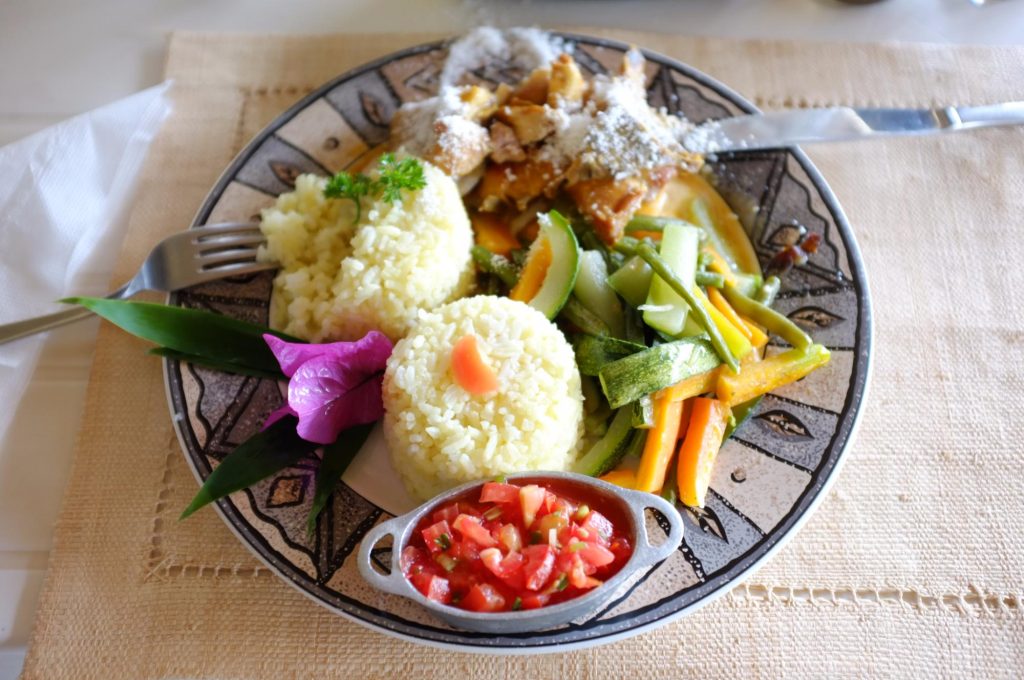
Eating out in Madagascar is inexpensive and better than most visitors expect, with Antananarivo holding the widest range thanks to ingredients arriving from every region and a lasting French influence on the upper end. Coastal towns eat well on seafood, and Mahajanga has the most interesting mix in the country. The catch is remote lodges with compulsory half board, where the room rate and the food are the same decision.
Where to Eat in Antananarivo
The capital has the country’s best restaurant scene by some margin, because produce arrives here from every region and the French left a genuine culinary legacy.
Good bakeries and patisseries operate across the city, which comes as a surprise after weeks in the parks. Wine lists are better than anywhere else in Madagascar, drawing on imports rather than the local production.
Zebu steak appears on most menus and is reliably good, leaner and more strongly flavoured than European beef. French-influenced kitchens handle it well.
For Malagasy cooking, look for rice with laoka in the local eateries around Analakely and the Haute-Ville. A meal costs a few dollars and the portions of rice are larger than most visitors expect.
Street food is worth trying where it is cooked in front of you: mofo gasy from morning stalls, samosas, grilled zebu skewers and fried snacks through the day.
Antananarivo eats better than any other Malagasy city because everything arrives here first. Mahajanga eats more interestingly because of who settled there.
Coastal Eating and Seafood
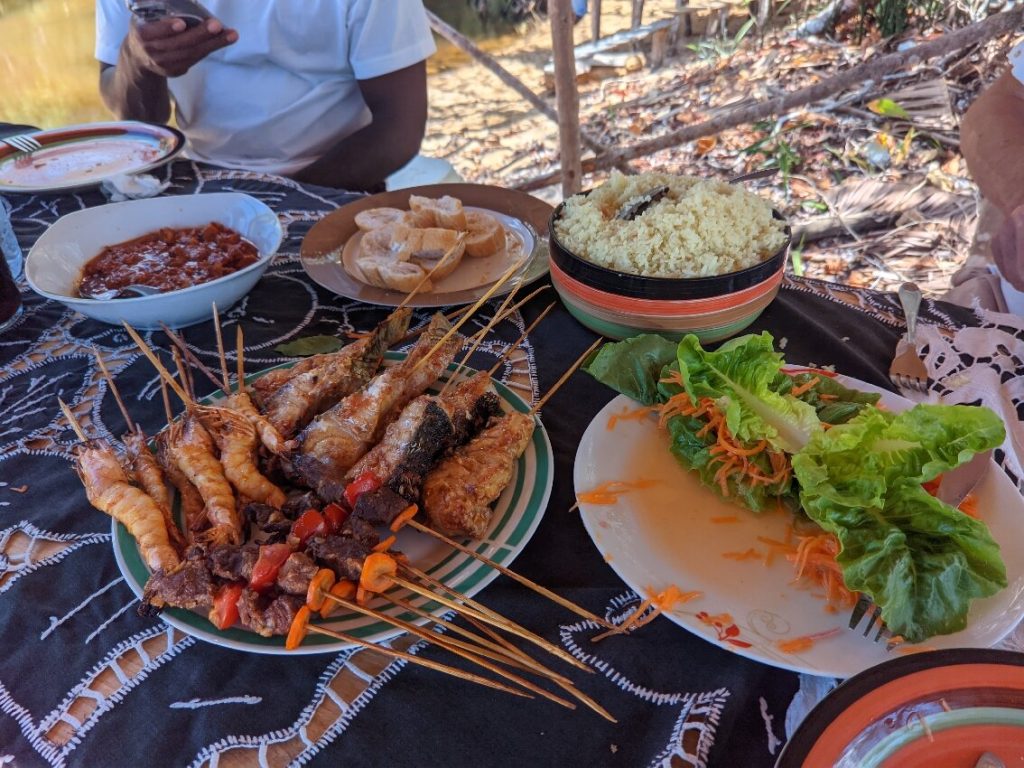
The coasts are where Madagascar’s food gets genuinely good value. Prawns, crab, lobster, tuna and octopus are abundant and inexpensive, and grilled fish with rice is the standard meal.
Mahajanga has the most interesting food in the country, with Comorian, Indian and Arab kitchens alongside Malagasy cooking and seafood landed daily. Samosas here are closer to the Indian original than the version found inland, and the Indian community supports proper curry houses, which is unusual outside the capital.
Nosy Be has the widest choice of restaurants on any island, concentrated around Ambatoloaka and the west coast beaches, at the highest prices in Madagascar.
Toliara and Ifaty in the southwest serve the reef catch, and Anakao and Belo sur Mer are working Vezo fishing villages where the fish arrives the same morning.
Diego Suarez reflects Indian Ocean trade in its cooking, with more spice and coconut milk than the highlands use.
Highland Eating and Regional Differences
Highland cooking differs from the coast in ways that reflect climate and history.
The cool climate supports vegetables that do not grow in the lowlands: potatoes, carrots, leeks, green beans and peas fill the markets at Antsirabe and Fianarantsoa, and the harvest months make them cheap.
Antsirabe is unusual for dairy, a legacy of Norwegian missionary agriculture, so yoghurt and cheese are available there in a way they are not elsewhere. The dairy cooperative opposite the cathedral serves fresh milk boiled in front of you.
Fianarantsoa sits near the Sahambavy tea estate and Madagascar’s small wine region, both of which appear on local menus.
La Gare at Antsirabe, the old railway station converted into a restaurant, is the atmospheric place to eat on the RN7, and there are decent French-influenced kitchens across the highland towns.
Best range. Antananarivo, with produce from every region, French-influenced restaurants, proper bakeries and the widest choice of Malagasy cooking. Nosy Be has the most restaurants on any island at the highest prices.
Most interesting. Mahajanga, where Comorian, Indian and Arab kitchens sit alongside Malagasy cooking with daily seafood. Diego Suarez for the same Indian Ocean influences on a smaller scale.
Best value. Local eateries anywhere serving rice with laoka for a few dollars, street food stalls, and the coastal fishing villages where the catch arrives the same morning.
Compulsory Half Board at Remote Lodges
This is the practical issue that affects budgets more than anything else on the menu.
Several remote lodges include compulsory half or full board because there is genuinely nowhere else to eat within reach. Setam Lodge at Ranomafana and the Masoala peninsula properties both operate this way.
When comparing prices, a cheaper room with obligatory meals can total more than a dearer room in a town with restaurants. Factor the food into the room rate rather than treating them separately.
The same applies at Bekopaka near Tsingy de Bemaraha, at Ampijoroa inside Ankarafantsika, and at the trekking camps where you either carry food or eat what the cook prepares.
Quality at these places is usually decent and the arrangement is not a scam, it is a consequence of location. Everything arrived by boat or over a bad road, which is also why the prices look high for the comfort delivered.
Vegetarian and Special Diets
Vegetarian eating is workable with some persistence. Malagasy families eat vegetarian food at home most days because meat is expensive, but restaurants assume anyone eating out wants meat, which creates an odd gap.
Ravitoto with coconut milk rather than pork is the most reliable vegetarian dish. Vegetable laoka, lasary and rice with beans appear on most menus, and the highlands have abundant fresh vegetables.
Vegan eating is harder, since many dishes are cooked with meat stock or fat even when they contain no visible meat. Coconut milk helps on the coast.
Explaining requirements clearly at lodges in advance works considerably better than negotiating at the table, particularly at remote places with fixed menus where the kitchen has bought in for the week.
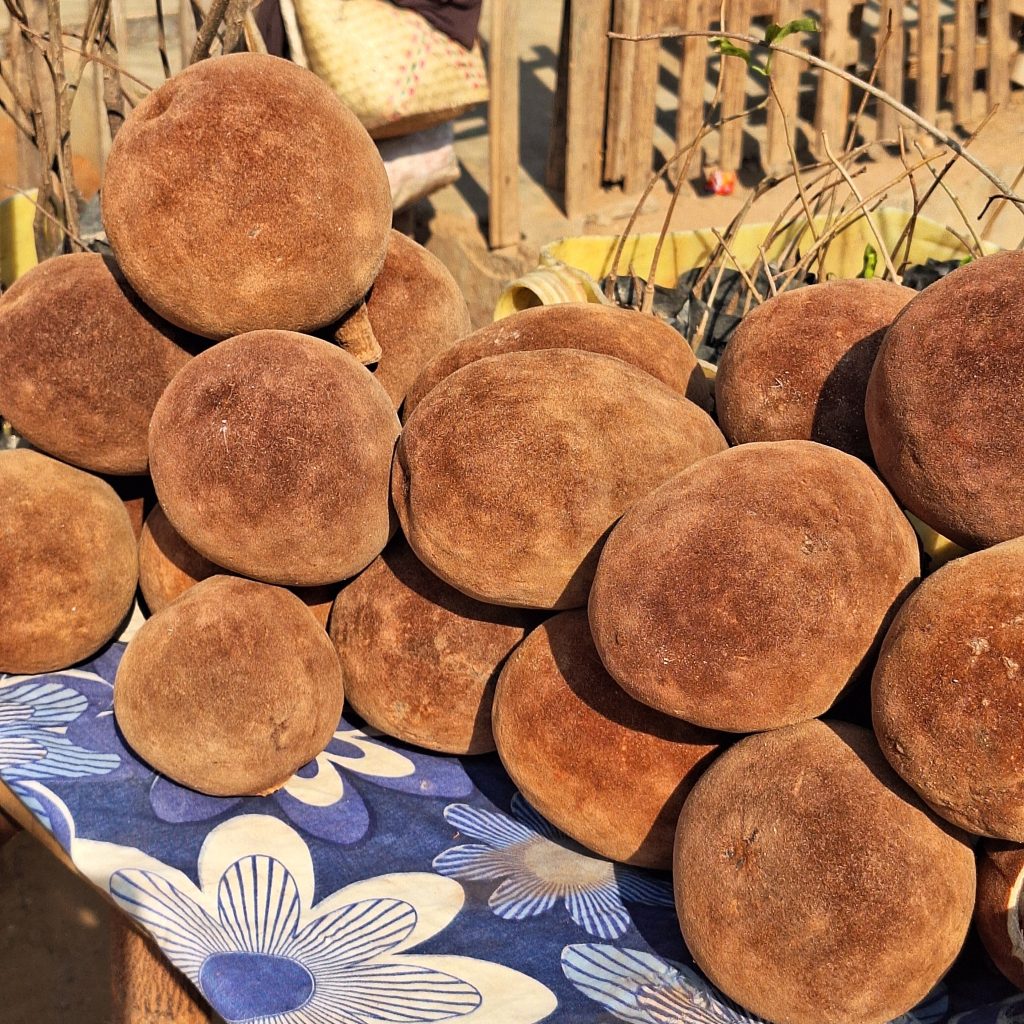
Drink bottled or treated water throughout, including for brushing teeth, and be cautious with ice unless you know it was made from treated water. Food cooked and served hot is reliably fine, including street food prepared in front of you. Raw salads, unpeeled fruit and anything sitting at ambient temperature are the usual sources of trouble.
Drinks and Where to Find Them
Three Horses Beer, universally called THB, is the national lager, brewed at Antsirabe and available everywhere. It is what most people drink with a meal.
Rhum arrangé is the local spirit worth trying, rum steeped with vanilla, fruit, spices or ginger, varying by house and served at most bars and restaurants.
Ranovola, water boiled in the pan with the toasted rice crust left after cooking, is served free with meals in many local restaurants. It sits somewhere between tea and broth and is worth trying once.
Madagascar makes wine in the hills around Fianarantsoa. It is sweeter and more rustic than European bottles, and the local grey wine is the curiosity most visitors remember. Treat it as cultural interest rather than connoisseurship.
Fresh fruit juice is cheap and everywhere, and coffee is grown on the east coast.
Eating on the Road and at the Parks
Long driving days are where food planning matters, since roadside stops thin out considerably outside the towns.
Buy fruit, bread and snacks at markets before setting off. Antsirabe, Fianarantsoa and Ambalavao on the RN7 all have good markets, and the highland vegetable season makes them cheap.
Roadside stalls sell fried snacks, samosas and grilled skewers where the road passes through villages, and these are fine when cooked in front of you. Mokary rice cakes are sold warm on market mornings.
At the parks, options are what the lodge provides. Andasibe and Ranomafana have village restaurants nearby, while Bekopaka, Manantenina and the trekking camps have nothing beyond the lodge or what you carry.
On multi-day treks at Marojejy, Andringitra and Zahamena a cook is hired with the guide and porters, and food is bought in the gateway town before setting out. Sambava, Ambalavao and Ambatondrazaka are the last places to provision.
Practical Points for Eating Out
Cash is needed almost everywhere. Cards work at larger hotels and some restaurants in the main cities and almost nowhere else.
Service runs at Malagasy pace, which is slower than most visitors expect. Mora mora applies in restaurants as much as anywhere, and a meal takes as long as it takes.
Tipping in restaurants is modest compared with the guides and drivers, but appreciated.
At remote parks, plan meals around what the lodge provides rather than assuming alternatives exist. At Bekopaka, Manantenina and the trekking camps there is no other option.
Markets are where to buy fruit, snacks and anything for a long drive. Bring a cloth bag, since plastic bags were banned in 2017.

Frequently Asked Questions
How much does eating out cost?
Very little by international standards. Meals at local eateries cost a few US dollars, street food less, and restaurant dining in Antananarivo or Nosy Be rarely reaches European prices. Where costs rise is at remote lodges with compulsory half board, where meals are built into the room rate.
Where is the best food in Madagascar?
Antananarivo has the widest range, with produce from every region and a lasting French influence on bakeries and restaurants. Mahajanga is the most interesting, with Comorian, Indian and Arab kitchens alongside Malagasy cooking and daily seafood. The coastal fishing villages offer the best value seafood.
Is the street food safe?
Food cooked in front of you and served hot is reliably fine, and mofo gasy, samosas, grilled skewers and fried snacks are all worth trying. Avoid anything sitting at ambient temperature, raw salads and unpeeled fruit. Drink bottled or treated water throughout and be cautious with ice.
What is compulsory half board?
Several remote lodges include meals in the rate because there is nowhere else to eat within reach, including Setam Lodge at Ranomafana and the Masoala peninsula properties. When comparing prices, a cheaper room with obligatory meals can total more than a dearer room in a town with restaurants.
Can vegetarians eat well?
With some effort. Ravitoto with coconut milk rather than pork is the most reliable dish, and vegetable laoka, lasary and rice with beans are widely available. Restaurants assume diners want meat even though families eat vegetarian at home most days. Explain requirements to lodges in advance rather than at the table.
What should I drink?
THB, the national lager brewed at Antsirabe, is what most people order with a meal. Rhum arrangé, rum steeped with vanilla, fruit or spices, is the local spirit worth trying. Ranovola, toasted rice water, is served free in local restaurants. Malagasy wine from around Fianarantsoa is interesting rather than good.
Can I pay by card?
At larger hotels and some restaurants in the main cities, yes. Almost nowhere else. Local eateries, street stalls, markets and everything at the parks are cash in Ariary. Draw money in towns with banks before heading anywhere remote.
Is the service slow?
Slower than most visitors expect, and this is cultural rather than a failing. Mora mora, slowly slowly, applies in restaurants as much as anywhere else in Madagascar. A meal takes as long as it takes, and treating that as part of the experience makes for a better trip than fighting it.
Planning Your Trip
Eating in Madagascar is cheap, decent and occasionally surprising, and the only real planning decision is around the remote lodges where half board is compulsory. Everywhere else, the local eateries serving rice with laoka cost a few dollars and are the better choice anyway.
Booking Your Madagascar Trip
The safari companies and tour operators listed on this website put trips like this together for a living and know which camps, guides and routes actually deliver. We are an independent guide to Madagascar; we do not book or sell tours ourselves.
When you are ready, arrange your safari, tour or holiday with one of the recognised operators listed here. Tell them your dates and what matters most, and a real person, not a form, will handle the itinerary, park bookings and logistics for you.