14-Day Madagascar Itinerary

A 14-day Madagascar itinerary is the most popular length of trip and the first that lets you combine a full circuit with something else. Two weeks covers the RN7 south with a proper coastal finish, or the RN7 plus the western baobabs, or the northern circuit with islands. It is also the point at which Madagascar stops feeling rushed.

What Two Weeks Adds Over Ten Days
Ten days covers one circuit properly. Fourteen adds a second element without compromising the first, and the difference is larger than the four days suggest.
On the RN7, those extra days mean two nights at Ranomafana rather than one, time at Andringitra or the Zombitse forest, and three or four days on the coast at the end rather than a single night before flying out.
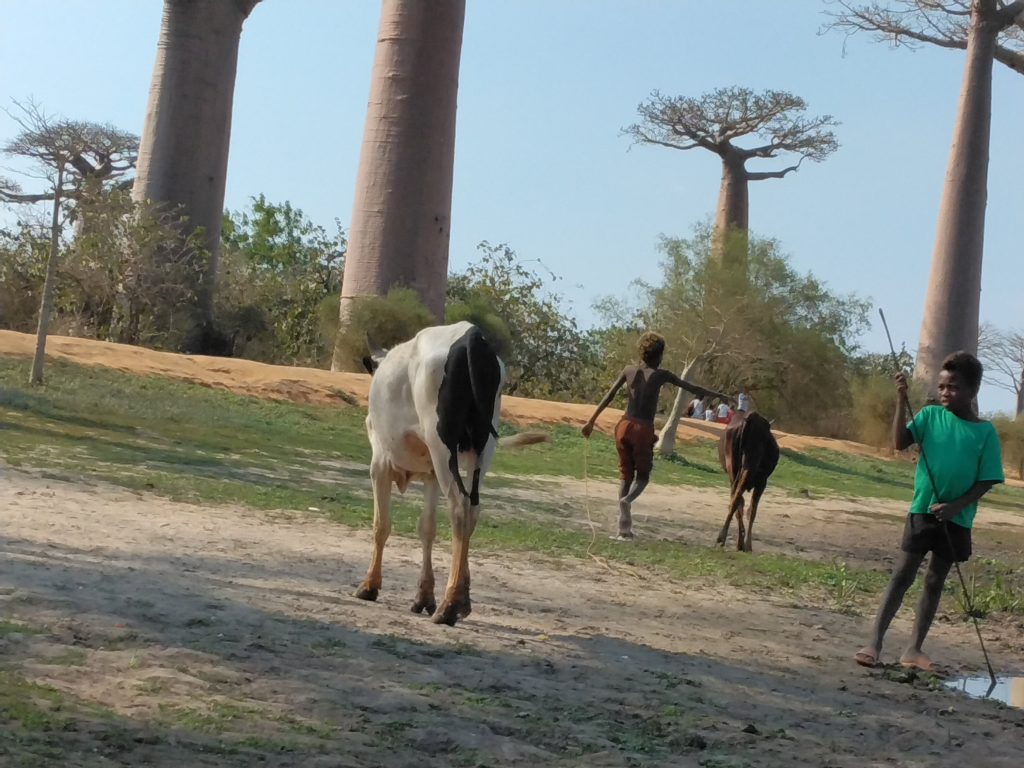
Alternatively they buy you a whole second region, most commonly the western baobabs and Kirindy reached by flying to Morondava, or Nosy Be and the northern parks. Both work in two weeks; neither works in ten days alongside the RN7.
Fourteen days is where Madagascar starts to make sense. It is the shortest trip that fits a full circuit and a coast, or two regions, without the driving swallowing the wildlife.
The Classic Two-Week RN7 Route
Days 1 to 3. Antananarivo, then east to Andasibe-Mantadia for two nights. Morning trek for indri, a night walk in the community forest, and Mantadia on the second day for diademed sifaka and ground-rollers.
Days 4 and 5. South on the RN7 to Antsirabe for a night, with the pousse-pousse tour, artisan workshops and Lake Tritriva. Continue toward Ranomafana, stopping at Ambositra for Zafimaniry woodcarving.
Days 6 and 7. Two nights at Ranomafana. A full-day circuit for twelve lemur species including golden bamboo lemur, plus a night walk along the park periphery. The thermal pool in the village is the reward.
Days 8 and 9. Fianarantsoa for the best-preserved old town in Madagascar and the Sahambavy tea estate. Then Ambalavao for Antemoro paper and the zebu market, and Anja Community Reserve for ring-tailed lemurs at the highest density in the country.
Days 10 and 11. Isalo National Park for two nights. The Piscine Naturelle circuit, the Namaza gorge, Bara cliff tombs and sunset at the Fenêtre de l’Isalo.

Days 12 to 14. Zombitse-Vohibasia on the drive west, then Toliara and straight out to Ifaty or Mangily for three nights on the reef. Fly back to the capital from Toliara.
Two Weeks Combining RN7 and the Western Baobabs
The alternative shape uses flights to fit two regions. It costs more and delivers greater variety.
Days 1 to 3. Andasibe-Mantadia for indri, as above.
Days 4 to 7. Fly to Morondava. Avenue of the Baobabs at sunset, an overnight at Kirindy Forest for fossa and the giant jumping rat, and the long drive north to Tsingy de Bemaraha with two river ferries. Two nights at Bekopaka for the Grand Tsingy via ferrata and the Manambolo gorge.
Days 8 to 14. Fly back to Antananarivo and drive the RN7 as far as Isalo, or fly to Toliara and work north. This compresses the southern circuit, so choose either Ranomafana or Isalo rather than both.
The western leg only works from roughly April to November. The road north from Morondava floods in the wet season and Tsingy de Bemaraha closes in practice from December through March. If your two weeks fall in the southern hemisphere summer, use the RN7 and coast version instead.
Two Weeks in the North with Islands
The third shape avoids long drives entirely and suits travellers who want beaches as much as forest.
Days 1 to 5. Fly to Diego Suarez. The Emerald Sea, the Three Bays, Montagne des Français, Amber Mountain National Park for montane rainforest, then south to the Red Tsingy and Ankarana for limestone caves and crowned lemurs.
Days 6 to 10. Cross to Nosy Be via Ankify. Lokobe rainforest for black lemurs, Nosy Tanikely for snorkelling, Nosy Komba for the village and crafts, Nosy Iranja for the sandbar and turtles.
Days 11 to 14. Fly to Antananarivo and add Andasibe for indri, which is the one thing the north cannot offer. Two nights there before flying home completes the trip.
RN7 plus coast. One flight at the end. Sealed roads, four parks, ring-tailed lemurs, canyons and reef. Simplest to arrange and the best value. No baobabs or tsingy.
RN7 plus west. Two flights. Adds baobabs, fossa and the most dramatic scenery in Madagascar. Dry season only, and compresses the southern parks. The most varied option.
North plus islands. Two or three flights. Shortest driving distances, best beaches, tsingy and rainforest in one region. Add Andasibe at the end for indri. Best for families and mixed-interest groups.
Zombitse, Andringitra and the Optional RN7 Stops
Two weeks on the RN7 opens up stops that ten days forces you to skip, and two are worth building in.
Zombitse-Vohibasia National Park sits directly on the road between Isalo and Toliara and takes only an hour or two. It protects transitional forest between the humid east and the spiny south, and holds Appert’s tetraka, a bird found in this forest and almost nowhere else. Verreaux’s sifaka and several coua species turn up on the short circuits. It costs almost no time and adds a habitat the rest of the route misses.
Andringitra National Park is the more serious addition, reached from Ambalavao on rough tracks needing a four-wheel drive. It holds Pic Boby at 2,658 metres, the highest summit in Madagascar that ordinary walkers can reach, along with ring-tailed lemurs living above the treeline at 2,520 metres in country that frosts at night. The classic circuit takes three days, so adding it means dropping something else. Day walks from the Namoly valley are the compromise.
The Sahambavy tea estate near Fianarantsoa and the Antemoro paper workshop at Ambalavao are both short stops that break up long driving days without costing much time.
Realistic Pacing Over Two Weeks
The commonest error in fourteen-day itineraries is treating every stop as a single night. Driving days on the RN7 run six to eight hours between the southern parks, and arriving at dusk to leave at dawn means seeing almost nothing.
Build two nights into the parks that repay it: Andasibe, Ranomafana and Isalo all justify a full day rather than a morning. Single nights work at Antsirabe, Fianarantsoa and Ambalavao, which are stops rather than destinations.

Leave the last night before an international flight in Antananarivo rather than upcountry. Domestic flights reschedule, and a buffer day protects the connection.
Travelling the RN7 Independently
The southern circuit is the one route in Madagascar that works without an operator, and travellers on a budget do it regularly.
Taxi-brousse minibuses connect every town on the RN7, departing when full rather than to a schedule and costing a fraction of private hire. They are crowded, slow and how most Malagasy people travel. The main constraint is reaching the parks themselves, since Ranomafana sits on the RN25 east of Fianarantsoa and Anja needs a short hop from Ambalavao.
Guesthouses in the towns rarely need booking outside July to October, and park guides are arranged at the gate on arrival. Fees are cash in Ariary throughout, so draw money in Antananarivo, Antsirabe and Fianarantsoa, which have the most reliable banks on the route.
What independent travel costs you is time and flexibility. Reaching a park entrance from a taxi-brousse drop-off often means a further taxi or a long walk, and returning after a full-day circuit can be awkward. Travellers who hire a vehicle for the park legs and use public transport between towns get most of the saving without the worst of the friction.
What Still Gets Left Out
Even two weeks misses a great deal. The northeast is the largest omission: Marojejy for the silky sifaka, Masoala for red ruffed lemurs and the Nosy Mangabe aye-ayes, both requiring flights to Sambava or Maroantsetra plus multi-day treks or boat crossings.
Île Sainte-Marie and its whale season fall outside all three routes. So do the remote northwest parks at Namoroka and Baie de Baly, and Fort Dauphin with Berenty and Andohahela in the far south.
Three weeks covers two circuits comfortably. A month is what travellers who have done it recommend for seeing the country properly, and even then most report leaving things undone.
Frequently Asked Questions
Is two weeks enough for Madagascar?
It is the most popular trip length and the first that feels unhurried. Two weeks covers a full circuit plus a coast, or two regions linked by flights. It does not cover the whole country, and travellers wanting the northeast, the far south and the west as well need three weeks or a month.
What does a fourteen-day trip cost?
Aggregated traveller data puts two weeks at roughly 1,550 US dollars per person for accommodation, food, local transport and sightseeing, excluding international flights. Park fees run 45,000 Ariary per adult per day with guides charged separately per group. Operator-arranged trips with a private vehicle and driver commonly run 150 to 280 dollars per person per day. Domestic flights add several hundred dollars per leg.
Which of the three routes is best?
RN7 plus coast for a first visit, best value and simplest logistics. RN7 plus west if you want baobabs and tsingy and are travelling in the dry season. North plus islands if beaches matter and you would rather fly than drive. All three work; the wrong one is the one that fights your dates.
How many nights should I spend at each park?
Two at Andasibe, Ranomafana and Isalo, which all repay a full day plus a night walk. One is enough at Antsirabe, Fianarantsoa and Ambalavao, which are stops rather than destinations. At Tsingy de Bemaraha, two nights minimum given the drive to reach it.
When should I travel?
April to November. October is strongest for wildlife, with infant lemurs and active reptiles. July and August are coolest and busiest. If your dates fall between December and March, take the RN7 and coast version, since the western circuit closes and eastern travel becomes unreliable.
Can I do this independently?
The RN7 version, yes. Taxi-brousse connects the towns, guesthouses are inexpensive and parks arrange guides on arrival. The western circuit is much harder independently because of the road to Bemaraha and the ferries. The northern circuit sits between the two, workable with hired vehicles for the park runs.
What should I book first?
Domestic flights, which run at limited frequency and constrain itineraries more than accommodation does. Then lodges at the popular parks, which fill months ahead from July to October, and the small properties at Bekopaka and Ampijoroa, which have very few rooms.
Should I add Nosy Be or Sainte-Marie?
Nosy Be if you want island excursions and reliable weather, since it has its own airport and a wide choice of boat trips. Sainte-Marie between July and September for humpback whales, which is the one thing no other destination in Madagascar offers as reliably. Both add three or four nights to a route.
Planning Your Trip
Two weeks is where Madagascar stops being a series of compromises. The decision that matters is which second element you add to the core circuit, and that depends more on your dates than your preferences, since the western route closes for a third of the year.
Booking Your Madagascar Trip
The safari companies and tour operators listed on this website put trips like this together for a living and know which camps, guides and routes actually deliver. We are an independent guide to Madagascar; we do not book or sell tours ourselves.
When you are ready, arrange your safari, tour or holiday with one of the recognised operators listed here. Tell them your dates and what matters most, and a real person, not a form, will handle the itinerary, park bookings and logistics for you.