Three to Four Week Madagascar Itinerary
A three to four week Madagascar itinerary is what the country actually needs, covering two or three circuits with the remote parks that shorter trips leave out. Three weeks links the RN7, the western baobabs and the north. Four weeks adds the northeast rainforests or the far south. Travellers who have done it consistently report leaving things undone even then.
What a Month Buys You
The difference between two weeks and a month in Madagascar is not simply more places. It is access to a different category of destination.
Two weeks confines you to places reachable by sealed road or a short flight. A month opens Marojejy and its silky sifaka, Masoala and the red ruffed lemur, the Tsingy de Namoroka and Baie de Baly in the remote northwest, and the Mandrare valley in the deep south. These need multi-day treks, boat crossings or two-day drives, and no shorter trip can absorb them.
It also changes the pace. Three nights at a park rather than two, buffer days for weather and mechanical trouble, and rest days on a coast between long overland legs. Travellers on month-long trips report the pacing mattering as much as the extra destinations.
One traveller covering 23 days managed the north, the west and the full RN7 and still reported leaving out most of what they wanted to see. Madagascar absorbs time the way few countries do.
The Three-Week Grand Circuit
This is the standard shape, linking three regions with two domestic flights.
Days 1 to 4: the east. Antananarivo, then Andasibe-Mantadia for two or three nights. Indri at dawn, night walks in the community forests, Mantadia for diademed sifaka and ground-rollers.
Days 5 to 12: the RN7 south. Antsirabe for the highlands, Ranomafana for two nights of rainforest, Fianarantsoa for the old town and tea estate, Ambalavao for Antemoro paper and the zebu market, Anja for ring-tailed lemurs, Isalo for two nights of canyon walking, then Zombitse and out to the coast at Ifaty or Anakao.
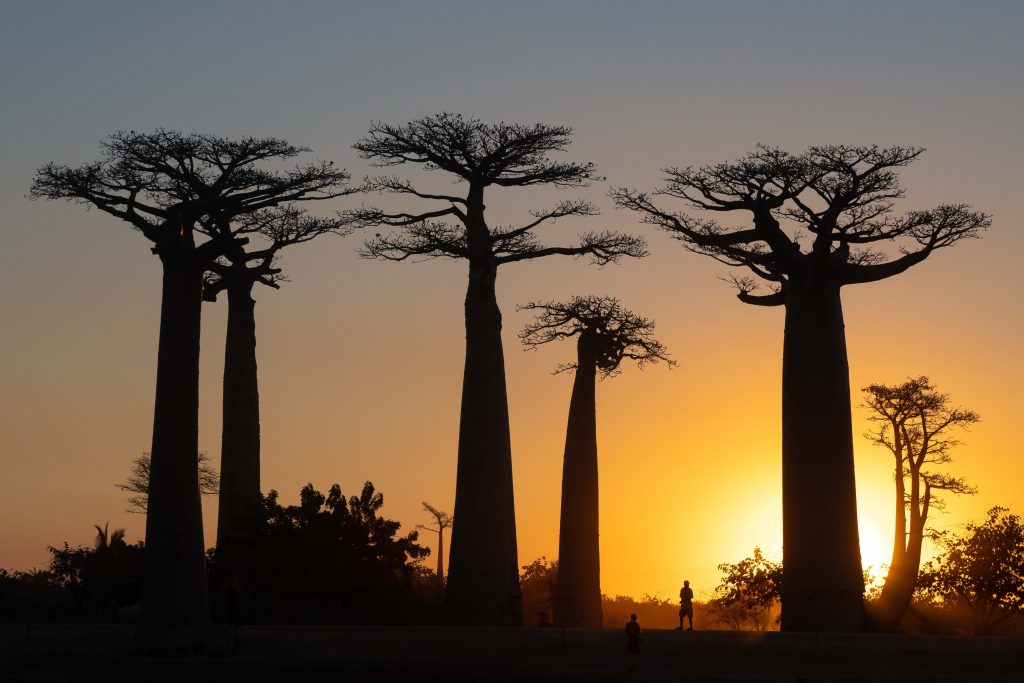
Days 13 to 17: the west. Fly Toliara to Antananarivo and on to Morondava, or drive the coastal route if you have the days. Avenue of the Baobabs at sunset, Kirindy Forest overnight for fossa, then the long drive north to Tsingy de Bemaraha for two nights.
Days 18 to 21: the north or a coast. Fly to Diego Suarez for Amber Mountain, the Red Tsingy and Ankarana, or to Nosy Be for a beach finish. Either works; the north gives more wildlife, Nosy Be more rest.

The Four-Week Route with the Northeast
A month lets you add the hardest and most rewarding region in Madagascar.
Weeks one and two follow the grand circuit above through the east and the RN7.
Week three: the northeast. Fly to Sambava for Marojejy, where the silky sifaka survives in only two forests on earth and reaching it means three to four days of trekking between mountain camps. Then fly or travel on to Maroantsetra for Masoala, the largest protected area in the country, with red ruffed lemurs, coastal rainforest and reefs you can snorkel off the beach.
Week four: the west or the north. Fly back through Antananarivo to Morondava for the baobabs and Tsingy de Bemaraha, or to Diego Suarez for the northern circuit and a finish on Nosy Be.
The northeast is weather-dependent in a way the rest of the country is not. Masoala depends entirely on boat crossings that cancel in rough seas, and Marojejy’s river crossings run high after rain. Build two or three buffer days into any month-long itinerary that includes them, and do not schedule an international departure within two days of leaving either.
The Four-Week Route with the Deep South
The alternative fourth week heads to Fort Dauphin rather than the northeast, and suits travellers more interested in habitat contrast than in remote trekking.
Fly from Toliara or Antananarivo to Fort Dauphin. Berenty Private Reserve offers the closest ring-tailed lemur viewing anywhere, in tamarind gallery forest surrounded by sisal. Andohahela National Park holds rainforest, spiny desert and transition forest across three separate parcels, which exists nowhere else in Madagascar.
The Mandrare valley camps near Ifotaka provide a wilder alternative to Berenty, with Antandroy guides walking gallery and spiny forest. Nahampoana closer to town and Pic Saint Louis behind it fill the remaining days.
This week is easier logistically than the northeast and delivers less novelty for anyone who has already walked the RN7 parks, since several species overlap.
Three weeks. East, RN7 and one of west or north. Two domestic flights. Covers indri, ring-tailed lemurs, canyons, coast and either baobabs and tsingy or the northern circuit. The most common long-trip shape.
Four weeks with the northeast. Adds Marojejy and Masoala. The rarest lemurs in Madagascar and the least visited rainforest. Demanding, weather-dependent and expensive in flights. For serious naturalists.
Four weeks with the deep south. Adds Fort Dauphin, Berenty and Andohahela. Easier logistics, three habitats in one park, the closest lemur viewing in the country. Better for photographers than for trekkers.
Managing Domestic Flights on a Long Trip
Long itineraries live or die on aviation. Routes to Sambava, Maroantsetra, Morondava, Fort Dauphin, Toliara, Nosy Be and Diego Suarez run at limited frequency, and a month-long trip may use four or five of them.
Book the whole sequence as early as possible. Capacity constrains what is possible far more than accommodation does, and a sold-out leg can force a complete replan. Almost every route transits Antananarivo, so allow for that rather than assuming point-to-point connections exist.
Rescheduling happens. Build a buffer day before any onward flight that matters, and never plan an international departure on the same day as a domestic arrival. Travellers who lose a day to a moved flight on a month-long trip absorb it; those on tight schedules do not.

Pacing, Rest Days and Avoiding Burnout
The commonest complaint from long Madagascar trips is not that people saw too little but that they drove too much. Road days on this island are genuinely tiring, and stacking six of them consecutively produces travellers who stop noticing what they came for.
Build rest into the structure rather than hoping for it. A coast is the natural place: three or four nights at Ifaty, Anakao, Nosy Be or Sainte-Marie between overland legs restores the appetite for the next region.
Three nights at the major parks rather than two also changes things. At Ranomafana, Marojejy and Masoala the wildlife rewards patience, and a third morning frequently produces what the first two missed. On a month-long trip that margin exists.
Combining Seasons Across a Long Trip
A month is long enough that the season can shift underneath you, and long enough that regional differences matter more than the national picture.
A trip starting in late April may find the western road to Tsingy de Bemaraha still closed and reopening only as you reach it. One running through November into December will see the eastern rainforests turn wet while the south stays dry.
The safest long-trip windows are May to October, when every region is accessible and the remote northwest parks at Namoroka and Baie de Baly are open. Trips spanning the shoulder into November work well, with reptiles and amphibians becoming active. Anything running into January should drop the west entirely.

Frequently Asked Questions
Is a month too long for Madagascar?
No. Travellers who have spent three or four weeks consistently report leaving things undone. One documented 23-day trip covered the north, the west and the full RN7 and still missed most of what the traveller wanted. The country is large, the roads are slow and the regions are genuinely distinct.
What does a month cost?
Aggregated data puts two weeks at roughly 1,550 US dollars per person excluding international flights, so a month runs proportionally higher, though daily costs fall on longer trips as you travel more slowly. The variables are domestic flights, which a month-long route may use four or five times, and vehicle days. One four-week trip for two recorded about £3,454 on vehicle hire against £675 on accommodation, which shows where the money goes.
Can I do a month independently?
The RN7 and the north, yes, using taxi-brousse and hired vehicles for park legs. The west to Tsingy de Bemaraha is difficult independently because of the road and ferries. The northeast is harder still, since Marojejy needs a full trekking team hired at Manantenina and Masoala depends on boat charters. Most month-long travellers mix independent stretches with operator-arranged legs.
Which region should I drop if I only have three weeks?
The northeast, since Marojejy and Masoala need a week between them and are the hardest to reach. Three weeks works best as east, RN7 and one of west or north. Adding the northeast to three weeks means rushing everything else.
When should a long trip run?
May to October covers every region with all parks open, including the remote northwest which is accessible only in that window. Trips extending into November work well. Avoid January to March entirely for a long itinerary, since the west closes, the east floods and cyclones disrupt flights.
How many buffer days should I build in?
At least three across a month, and more if the northeast is included. Boat crossings to Masoala cancel in rough seas, Marojejy’s rivers run high after rain, and domestic flights reschedule. Buffer days also serve as rest days if nothing goes wrong, which is never wasted on a trip this long.
Is it worth combining Madagascar with another country?
Some travellers pair it with Réunion or Mauritius, which have direct connections and offer a comfortable finish. Others add mainland Africa for conventional big-game safari, since Madagascar offers nothing comparable. On a month-long trip there is enough in Madagascar alone, and splitting the time usually means doing neither properly.
What is the single biggest mistake on long trips?
Stacking driving days. Travellers who plan six consecutive road days between regions arrive at the next park too tired to use it. Break long overland legs with a coastal stay, and treat a rest day as part of the itinerary rather than a failure to fit something in.
Planning Your Trip
A month in Madagascar is the trip the country deserves and the one that needs most planning, because the flight sequence, the seasonal closures and the pacing all have to work together across four weeks rather than two.
Booking Your Madagascar Trip
The safari companies and tour operators listed on this website put trips like this together for a living and know which camps, guides and routes actually deliver. We are an independent guide to Madagascar; we do not book or sell tours ourselves.
When you are ready, arrange your safari, tour or holiday with one of the recognised operators listed here. Tell them your dates and what matters most, and a real person, not a form, will handle the itinerary, park bookings and logistics for you.