Reptiles and Snakes of Madagascar
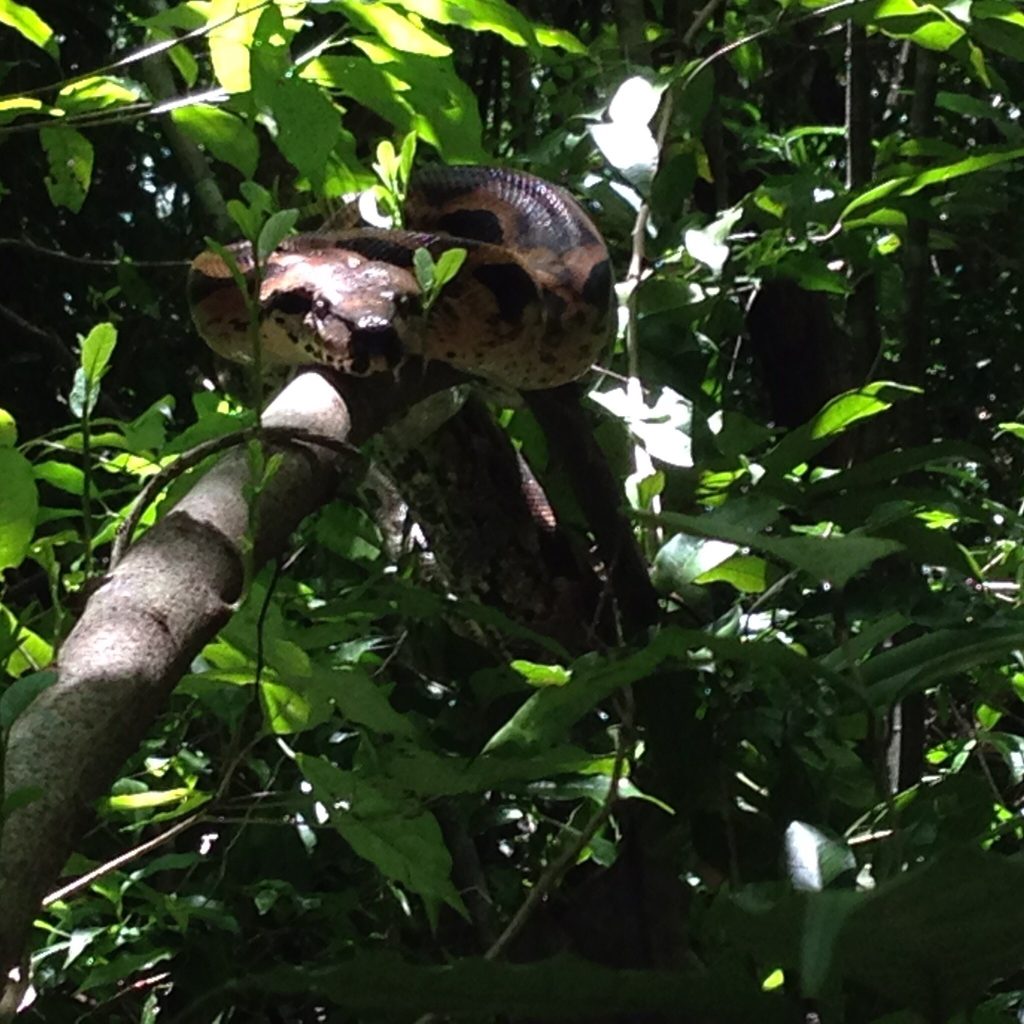
Madagascar holds over 400 reptile species with more than nine in ten found nowhere else, and none of the snakes is dangerous to humans. The headline groups are the leaf-tailed geckos, whose camouflage is the best in the natural world, the bright green day geckos, the boas and the critically endangered tortoises. Night walks are where most of them appear.
Why Madagascar Has No Dangerous Snakes
This is the first thing worth knowing and the fact that surprises visitors most. Madagascar has around eighty snake species and not one presents a serious threat to people.
The reason is isolation. Vipers, cobras and the other front-fanged families that dominate mainland Africa never reached the island. What arrived instead were colubrid ancestors, and they radiated into the available niches without evolving dangerous venom.
Some Malagasy snakes are rear-fanged and mildly venomous, capable of subduing a lizard and producing at most local swelling in a person. Guides handle them without concern and walkers need none.
This changes how walking in Madagascar feels compared with mainland Africa. Combined with the absence of large predators, it means the practical hazards on any trail here are terrain, heat and slippery ground rather than anything living.
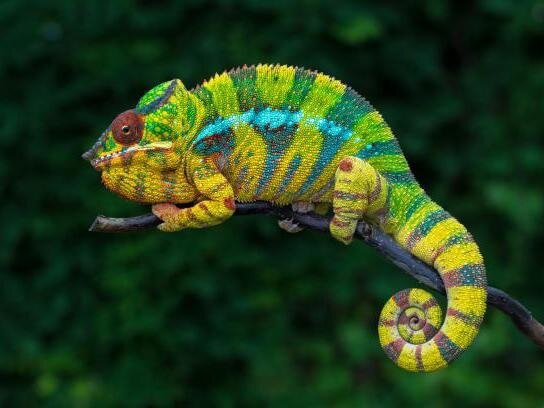
Eighty snake species and not one that can seriously hurt you. Madagascar is among the few tropical countries where a walker has nothing to fear from what lives in the grass.
Leaf-Tailed Gecko Spotting Tours
The Uroplatus leaf-tailed geckos are the reptiles that stop people mid-trail, and they are the strongest argument for hiring a good guide.
They press flat against bark with a fringe of skin along the body eliminating any shadow, and even once a guide has pointed at the exact spot it can take a minute to resolve the animal from the tree. The satanic leaf-tailed gecko at Ranomafana looks precisely like a curled dead leaf, complete with what appear to be insect holes and decay marks.
Giant leaf-tailed geckos reach thirty centimetres and are the largest of the group, found at Andasibe, Ranomafana, Masoala and Nosy Mangabe, where the density is unusually high. Uroplatus guentheri at Ankarafantsika is the scarce one.
They are nocturnal, so night walks are when they move and become findable. By day a guide has to know individual trees.
Day Geckos and the Bright Reptiles
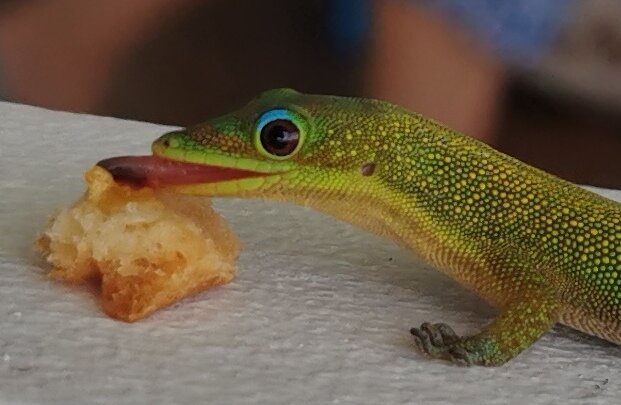
The Phelsuma day geckos are the opposite of the leaf-tails in every respect: brilliant green, often marked with red or gold, and active in daylight on trunks and buildings.
They are among the easiest reptiles to see in Madagascar, turning up on lodge walls and roadside trees without any searching. Koch’s day gecko at Ankarafantsika appears on almost every tree near the forest station, and Madagascar day geckos are common across the east.
Beyond geckos, the plated lizards and skinks work the ground and rocks. The Madagascar plated lizard turns up at Anja and across the drier regions. Three-eyed lizards, named for the light-sensitive parietal organ on the head, occur in the south.

Boas and the Snakes You Will Actually See
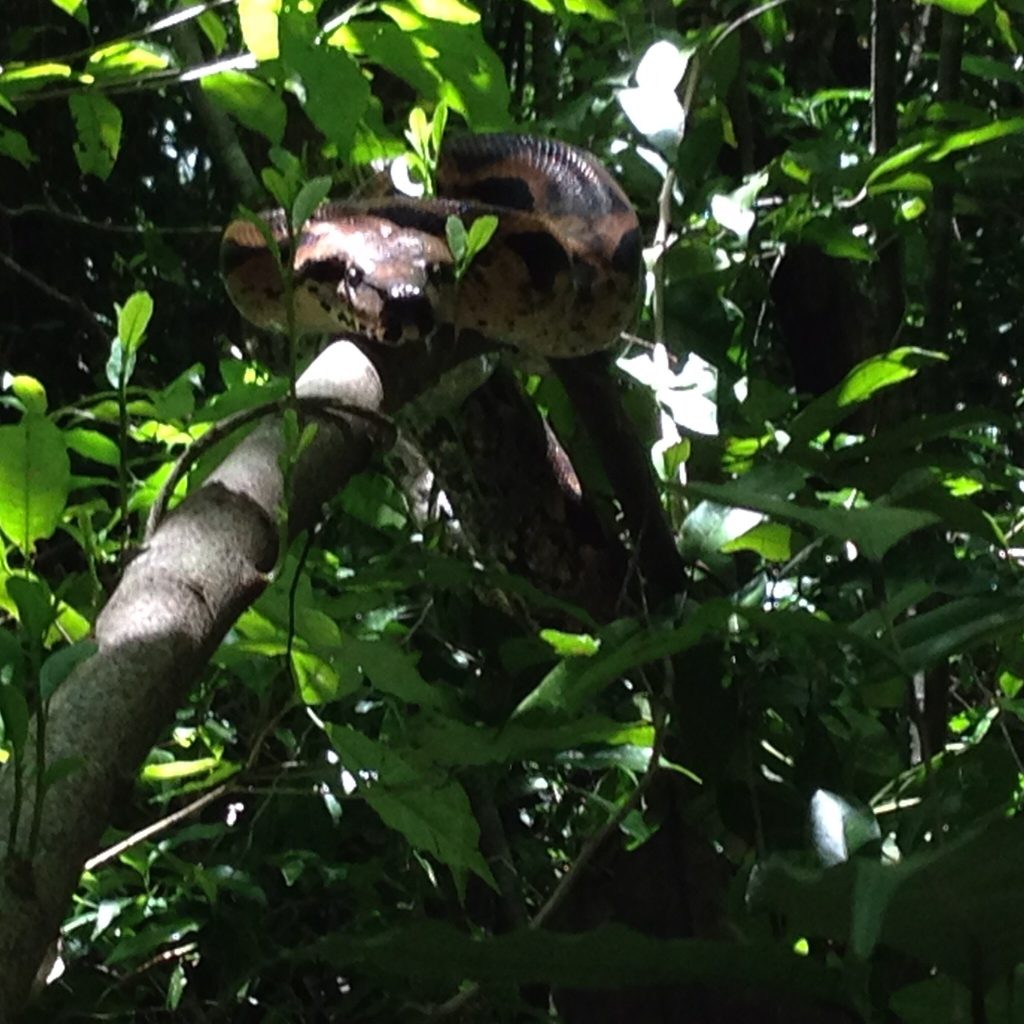
Madagascar’s three boa species are the snakes visitors most often meet, and all are harmless constrictors.
The Madagascar tree boa drapes along branches in eastern rainforest, green in juveniles and browner with age, and is regularly found on night walks at Andasibe and Ranomafana. The Madagascar ground boa is the largest snake on the island, reaching around three metres, found in drier western and southern forest including Kirindy and Ankarafantsika.
The Dumeril’s boa occupies the south and southwest. Their closest relatives are in South America rather than Africa, which is one of the pieces of evidence for Madagascar’s Gondwanan history.
Among the colubrids, the giant Malagasy hognose snake is common on western trails, and the leaf-nosed snake in the dry forests has a bizarre appendage on the snout, formed like a spade in females and pointed in males, whose function remains debated.
Tortoises and the Conservation Emergency
Madagascar’s tortoises are the reptiles in the most serious trouble, and the pressure is collection for the international pet trade rather than habitat loss alone.
The ploughshare tortoise, known locally as angonoka, survives in the wild only around Baie de Baly in the northwest. Its high domed shell has made it among the most valuable tortoises in the illegal trade, and conservationists now engrave identifying numbers into shells to destroy their collector value. Marked animals still surface in Asian markets.
The radiated tortoise of the south is critically endangered and heavily poached, with Tsimanampetsotsa among its important remaining strongholds. The spider tortoise occurs in the same region.
The Madagascar big-headed turtle is a freshwater species dependent on lake and river systems, found at Ankarafantsika and Baie de Baly, and also critically endangered.
Buying anything derived from Malagasy reptiles, or attempting to export a live animal, is illegal and prosecuted. Tortoises in particular are trafficked at scale and any offer to sell one to a visitor is part of that trade. The same applies to shells, and to coral and sand taken from marine parks. Photograph and leave.
Where to See Reptiles Across Madagascar
Eastern rainforest. Leaf-tailed geckos including the satanic species, tree boas, Parson’s chameleon and a long frog list. Andasibe, Ranomafana, Masoala, Marojejy. Night walks are the productive time.
Western and northern dry forest. Ground boas, hognose snakes, day geckos, Oustalet’s chameleon and the rhinoceros chameleon. Ankarafantsika, Kirindy, Ankarana. Open vegetation makes searching far easier.
South and spiny forest. Radiated tortoises, spider tortoises, Dumeril’s boa, three-eyed lizards and Furcifer antimena. Tsimanampetsotsa, Mikea, Berenty and the Ifaty reserves. Mikea holds 65 species, the richest dry forest anywhere for reptiles.
Mikea National Park deserves particular mention. Sixty-five reptile and amphibian species have been recorded there, making it the most herpetologically diverse dry forest known, with at least one Liophidium snake still undescribed.
Frogs and Amphibians
Madagascar’s amphibians run to over 300 described species with more being named regularly, and and all but a handful are endemic.
The mantellas are the ones people photograph, small brightly coloured frogs in orange, gold, green and black that fill the ecological role of poison dart frogs in South America though they are unrelated. The painted mantella at Ranomafana and the climbing mantella at Marojejy are the accessible species.
Tomato frogs are the other headline, bright red and found in the northeast around Maroantsetra, secreting a sticky irritant when threatened.
The Malagasy rainbow frog lives in the canyon crevices at Isalo, marked in red, black and green, and is among the more sought-after finds in the park. Boophis tree frogs occur across the eastern forests in numbers that make night walks loud in the wet months.
Amphibians peak from November through March, when the rains bring them out. A July night walk turns up a fraction of what a December one does.
Nile Crocodiles and the Larger Reptiles
Madagascar has one crocodile species, the Nile crocodile, present in rivers, lakes and coastal areas across much of the island. Populations are far reduced from historical levels but they persist, and in places they are protected by local custom rather than by law.
Lake Ravelobe at Ankarafantsika holds a breeding population left entirely undisturbed, since the lake is a doany, a place of worship, and the crocodiles carry sacred status. Swimming there is not permitted for obvious reasons. The Manambolo river at Tsingy de Bemaraha holds them too, watched for by the boatmen on pirogue trips.
Attacks on people occur in Madagascar, mostly involving rural communities using rivers for washing and water collection rather than visitors. Follow guide instructions on where swimming is safe, which in practice means the natural rock pools at Isalo and Tsingy de Namoroka rather than open rivers and lakes.
The extinct fauna is worth mentioning. Subfossil remains from the caves at Ankarana include giant tortoises alongside sloth lemurs and Megaladapis, all lost within the last two thousand years.
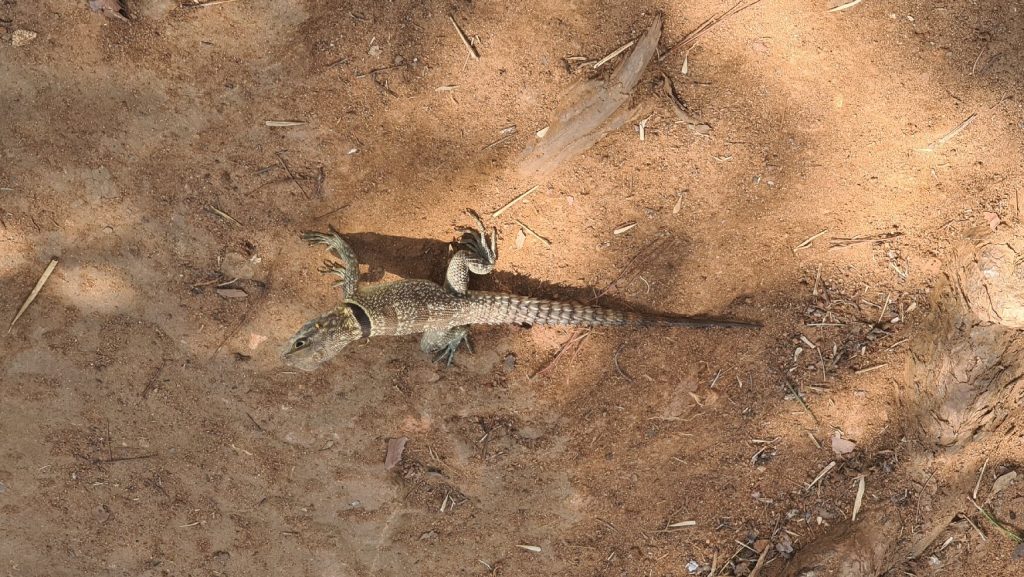
Seasonality and Finding Reptiles
Season matters more for reptiles than for any other Madagascar wildlife. The warm wet months from November through March are when they are active, breeding and visible.
In the cool dry season from June to August, particularly at altitude and in the highlands, many species become sluggish or stay hidden entirely. Travellers visiting Ranomafana or Amber Mountain in July will see considerably fewer reptiles than the same route in November.
Night walks are the other variable. Most of the reptile and amphibian list is nocturnal or easier to find asleep, and parks that seem quiet by day become productive after dark. Since national park gates close in the afternoon, this happens in the community and private reserves next door.
Frequently Asked Questions
Are there dangerous snakes in Madagascar?
No. Around eighty species occur and none presents a serious threat to people. The front-fanged families that dominate mainland Africa never reached the island, so what evolved here are colubrids and boas. Some are rear-fanged and mildly venomous, capable of producing local swelling at most. Guides handle them without concern.
How many reptile species does Madagascar have?
Over 400 described, with more than nine in ten found nowhere else and new species still being named. Chameleons account for a large share, with roughly half the world’s species living here. Geckos, skinks, plated lizards, boas, colubrid snakes, tortoises and crocodiles fill out the list.
Where is the best place to see reptiles?
Ranomafana and Andasibe for eastern rainforest species including leaf-tailed geckos and tree boas. Ankarafantsika for dry-forest species in open vegetation that makes searching easier. Mikea holds 65 species and is the richest dry forest anywhere for reptiles, though it is difficult to reach.
When should I visit for reptiles?
November to March, when warm wet conditions make them active and visible. Many species become sluggish or hidden in the cool dry season from June to August, particularly at altitude. April and May are a reasonable compromise, with the rains easing and the animals still out.
Do I need a guide to find them?
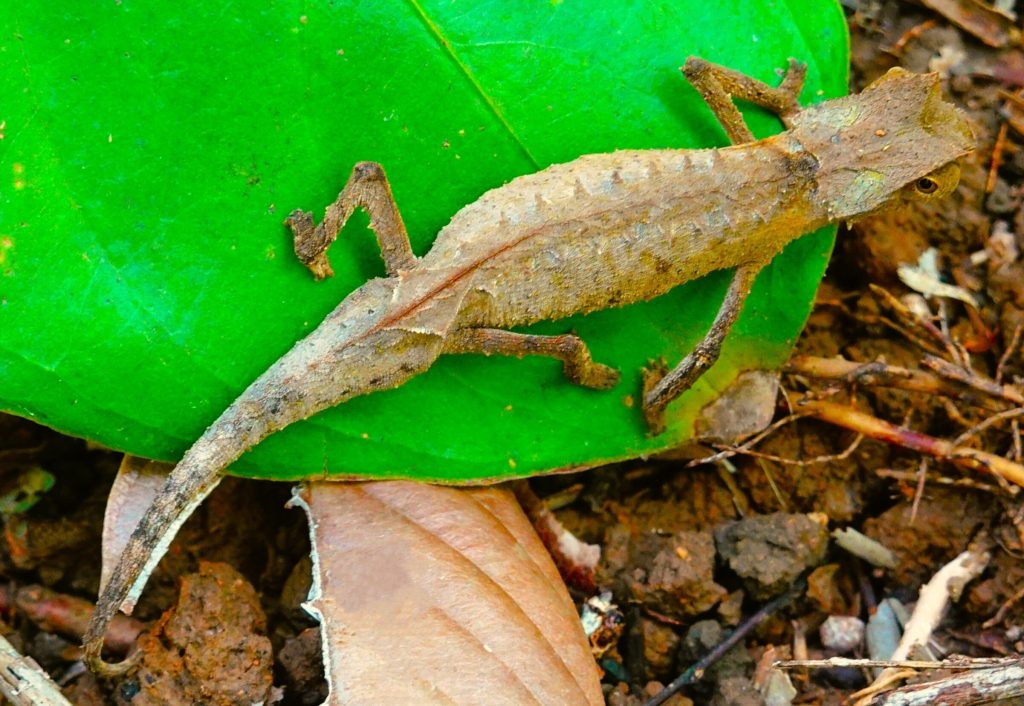
Yes, and guides are compulsory in the parks anyway. Leaf-tailed geckos are close to invisible against bark, and Brookesia chameleons in the leaf litter are harder still. Guides locate animals a metre from a trail that an entire group has just walked past. Night walks in particular need someone who knows the ground.
Are the tortoises safe to see?
Radiated tortoises at Tsimanampetsotsa and Berenty and the ploughshare tortoise at Baie de Baly are all viewable with guides. All are critically endangered and heavily trafficked, which is why the ploughshare has identifying numbers engraved into its shell. Buying or exporting any tortoise is illegal and prosecuted.
What are the frogs like?
Over 300 species, and all but a handful endemic. The mantellas are the bright ones, filling the poison dart frog role though they are unrelated. Tomato frogs in the northeast are red and unmistakable, and the Malagasy rainbow frog lives in the Isalo canyons. Amphibians peak from November to March, when night walks become loud with them.
Can I handle reptiles?
No, and reputable guides do not pick animals up or encourage visitors to. Handling stresses chameleons visibly and risks injury to smaller species. Photograph without touching, use flash sparingly, and move on rather than crowding an animal for repeated shots.
Planning Your Trip
Reptiles reward the same two decisions as chameleons: travelling in the warmer months and building night walks into every park stop. Both cost little and transform how much of Madagascar’s herpetofauna you actually see.
Booking Your Madagascar Trip
The safari companies and tour operators listed on this website put trips like this together for a living and know which camps, guides and routes actually deliver. We are an independent guide to Madagascar; we do not book or sell tours ourselves.
When you are ready, arrange your safari, tour or holiday with one of the recognised operators listed here. Tell them your dates and what matters most, and a real person, not a form, will handle the itinerary, park bookings and logistics for you.