Solo Travel in Madagascar
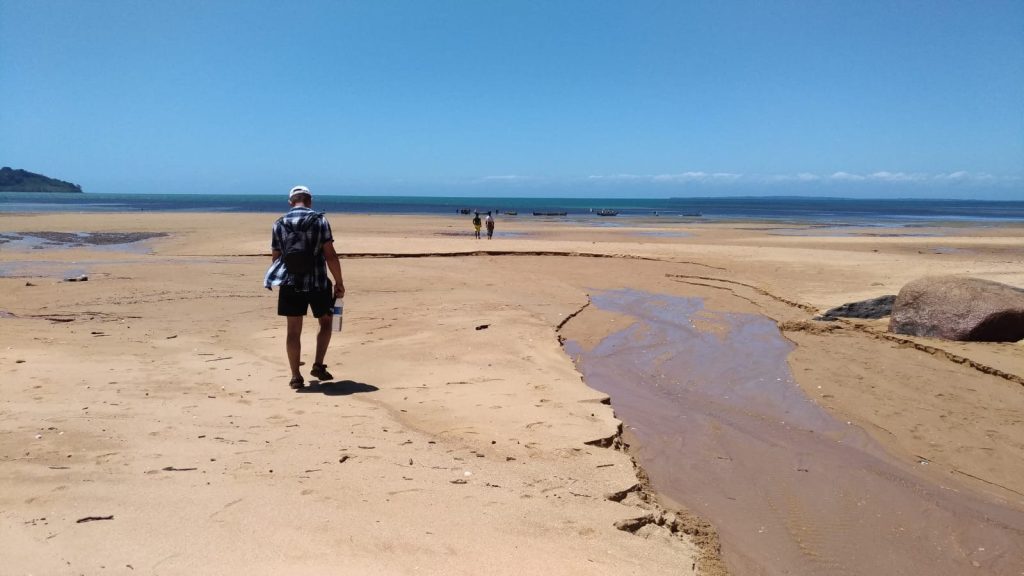
Solo travel in Madagascar works, and the structure of the country helps more than most destinations. Guides are compulsory in every national park, so you are rarely walking alone in remote forest. The practical difficulties are guide fees charged per group rather than per person, which penalises single travellers, and the usual city precautions in Antananarivo. The RN7 is where most solo travellers go.
Why Solo Travel Works Here
Two features of Madagascar suit independent travellers. The first is the compulsory guiding system: every national park requires an accredited guide, so a solo visitor is accompanied by someone who knows the ground on every walk.
The second is the absence of danger from wildlife. No large predators, no venomous snakes, nothing on the trails that requires the vigilance a mainland African park demands. The hazards are terrain, heat and slippery ground rather than anything living.
Taxi-brousse connects the towns cheaply and is how Malagasy people travel, which makes independent movement on the main corridors straightforward. Guesthouses rarely need booking outside the July to October peak.
Guides are compulsory in every park, so a solo traveller is never alone in the forest. Many report the requirement as a benefit rather than a constraint.
The Cost Problem for Single Travellers
The main financial penalty is guide fees. These are charged per group rather than per person, so a fee of 30,000 Ariary costs a solo traveller the full amount and a group of four a quarter each.
Teaming up at the park office is the standard solution and is common. Other travellers arrive at the same gates, and combining into a group of four or five reduces the cost substantially without affecting the walk. Guides are used to arranging this.
Vehicle hire carries the same problem more severely, since a four-wheel drive with driver is priced per day regardless of occupancy. Solo travellers on the RN7 use taxi-brousse for this reason, and those wanting the western circuit often join an organised group rather than hiring alone.
Single supplements at accommodation are less of an issue, since most guesthouses charge per room at rates low enough that the penalty is modest.
Where Solo Travellers Go
The RN7 is the backbone of independent travel in Madagascar and the route most solo visitors take. One sealed road links Antsirabe, Ranomafana, Ambalavao, Anja and Isalo, with frequent taxi-brousse and guesthouses throughout.
Andasibe on the RN2 east is the other easy option, three to four hours from the capital with near-certain indri sightings and no flight needed.
The northern circuit around Diego Suarez works well for solo travellers who fly in, since driving distances are short and excursions to the Emerald Sea and Amber Mountain are sold per person rather than per vehicle.
What is harder alone is the west and the northeast. Tsingy de Bemaraha requires a four-wheel drive whose cost falls entirely on one person, and Marojejy and Masoala need trekking teams or boat charters. Solo travellers wanting these usually join a group.
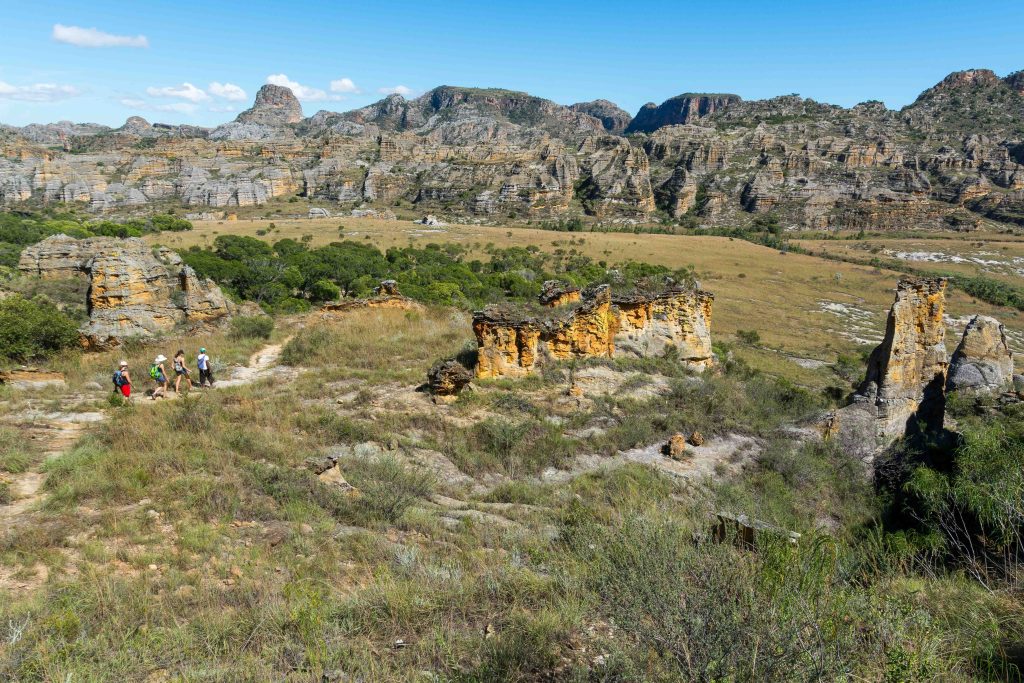
Straightforward alone. RN7 corridor, Andasibe, Ankarafantsika, the northern circuit, Nosy Be and Île Sainte-Marie. Public transport works, excursions are priced per person, and other travellers are around to share guide costs.
Difficult or expensive alone. Tsingy de Bemaraha, Masoala, Marojejy, Namoroka, Baie de Baly. Vehicle hire, boat charters and trekking teams all fall on one budget. Joining an organised group is usually the better option.
Meeting People and Sharing Costs
Solo travellers in Madagascar cross paths repeatedly, because everybody follows the same handful of routes.
Park offices at Andasibe, Ranomafana, Isalo and Ankarafantsika are the natural places to team up for guide fees. Guesthouses on the RN7 see the same travellers moving in the same direction over consecutive days.
Organised excursions from Nosy Be and Diego Suarez are sold per person and fill with other visitors, which makes the island and northern circuits sociable without any effort.
For the harder routes, joining a small group tour for a specific leg is common. Several operators run scheduled departures to Tsingy de Bemaraha, which spreads the vehicle cost across a group.
Safety for Solo Travellers
The realistic risks are the ordinary ones, and they are concentrated in Antananarivo rather than spread across the country.
Pickpocketing and bag-snatching occur around Analakely market, transport hubs and busy areas of the capital. Carry money in two separate pockets with small notes accessible, use a bag that closes properly, and keep phones away when not in use.
Do not walk around Lac Anosy alone, particularly after dark. Use hotel-arranged taxis at night rather than walking or hailing on the street. This is the single most repeated piece of local advice.
Arrive in new towns during daylight, share your route with someone, and register with your embassy if that service is offered. Several governments currently advise a high degree of caution for Madagascar, so check current official guidance before booking.
Solo Female Travel
Women travel independently in Madagascar and report it as manageable with the precautions that apply widely rather than anything specific to the country.
Dressing modestly away from beaches reduces unwanted attention and is expected in villages regardless. Walking alone after dark is the situation to avoid, in Antananarivo particularly.
The compulsory guiding in parks means solo women are not alone in remote forest, which several travellers cite as reassuring. Choosing accredited guides at the official park office rather than informal offers outside the gate is worth doing.
Some official advice notes that opportunistic attacks on tourists have occurred at beaches in the north, with the recommendation to take local advice before visiting isolated stretches. Guesthouse staff will tell you which beaches are used and which are not.
Arrange your first transfer from Ivato airport in advance through your accommodation. Taxi fares in Madagascar are negotiated rather than metered, and arriving alone after a long-haul flight is not the moment to start bargaining. It costs little and removes the least pleasant part of arriving.
Practicalities for Travelling Alone
Cash is the constant. Park fees, guides, taxi-brousse, markets and small guesthouses are all cash in Ariary, and there are no ATMs at most park gates. Carry more than feels comfortable and keep it in separate places.
Phone coverage follows the main roads and disappears entirely at Marojejy, Masoala, Zahamena and across much of the western circuit. Tell someone your route before heading anywhere remote, since you will be uncontactable.
A local SIM card is cheap and worth buying at the airport or in any town for data, though coverage limitations apply. Madagascar uses Type C and E plugs at 220 volts, and many lodges run generators for limited hours only.
Book domestic flights early, since limited frequency constrains itineraries more than accommodation does and sold-out legs force replanning that is harder to absorb alone.

Language and Communication Alone
Malagasy is the national language and French is widely spoken, particularly in the towns, in hotels and by guides. English is less common outside the tourism trade, which affects independent travellers more than those on arranged trips.
A few words of French go a long way with taxi-brousse drivers, market traders and guesthouse staff. Park guides frequently speak English, and at the larger parks including Andasibe, Ranomafana and Ankarafantsika you can ask for an English speaker at the office.
Basic Malagasy is appreciated well out of proportion to the effort. Manao ahoana for hello, misaotra for thank you, and mora mora, meaning slowly slowly, which is the phrase you will hear most often and which describes the pace of the country accurately.
Numbers matter more than conversation for a solo traveller, since fares and prices are negotiated. Learning to say and hear prices in Ariary saves confusion, particularly given that older traders sometimes quote in the obsolete Malagasy franc at five to the Ariary.
Frequently Asked Questions
Is Madagascar safe for solo travellers?
For most travellers taking normal precautions, yes. The wildlife poses no threat and compulsory guiding means you are not alone in the parks. Petty theft in Antananarivo is the common problem. Several governments currently advise a high degree of caution, so check your own government’s current guidance before booking.
How much does solo travel cost?
Around 45 to 60 US dollars a day on a shoestring using taxi-brousse and guesthouses, and 100 to 150 for mid-range independent travel. The penalty is guide fees, charged per group at 15,000 to 40,000 Ariary regardless of numbers, and vehicle hire priced per day. Teaming up at park offices is the main saving available.
Where should a solo traveller go first?
The RN7, which is sealed the whole way with frequent taxi-brousse, guesthouses in every town and parks that arrange guides on arrival. Andasibe on the RN2 east is the other easy option. Both work without hiring a vehicle and both put you among other travellers to share guide costs with.
Can I team up with other travellers?
Easily, and it is the standard way to reduce guide fees. Park offices at Andasibe, Ranomafana, Isalo and Ankarafantsika all see travellers arriving at the same times, and guides are used to combining parties. Everyone follows the same few routes, so you cross paths repeatedly.
Is it safe for solo women?
Many travel independently without incident, using precautions that apply widely: dress modestly away from beaches, avoid walking alone after dark, arrange transport through accommodation, and share your route. Compulsory guiding in parks means you are rarely alone in remote forest. Take local advice before visiting isolated beaches in the north.
What about the remote parks?
Tsingy de Bemaraha, Masoala, Marojejy and the northwest parks are difficult and expensive alone, since vehicle hire, boat charters and trekking teams all fall on one budget. Joining a small group tour for those specific legs while travelling independently elsewhere is what most solo visitors do.
Will I be able to stay in contact?
On the main roads and in the cities, yes, with a cheap local SIM. Coverage disappears entirely at Marojejy, Masoala, Zahamena and across much of the western circuit. Tell someone your route before heading anywhere remote, since you will be uncontactable for days.
Should I book ahead or travel loosely?
Book domestic flights early regardless, since limited frequency constrains what is possible. Accommodation on the RN7 rarely needs booking outside July to October. Park guides are arranged on arrival and cannot be booked in advance. Loose travel works well on the main corridors and badly anywhere remote.
Planning Your Trip
Solo travel in Madagascar is more straightforward than the country’s reputation suggests, provided you stay on the routes where public transport works. The RN7 and the eastern corridor carry independent travellers constantly, and the compulsory guiding system removes most of the risk from being alone in unfamiliar forest.
Booking Your Madagascar Trip
The safari companies and tour operators listed on this website put trips like this together for a living and know which camps, guides and routes actually deliver. We are an independent guide to Madagascar; we do not book or sell tours ourselves.
When you are ready, arrange your safari, tour or holiday with one of the recognised operators listed here. Tell them your dates and what matters most, and a real person, not a form, will handle the itinerary, park bookings and logistics for you.