Madagascar Packing List
Packing for Madagascar means preparing for three climates in one trip: humid rainforest where it rains in every month, highlands that drop near freezing at night, and arid southwest heat. The items that matter most are a waterproof jacket, boots with real grip, a strong headlamp for night walks and enough cash in Ariary, since cards are useless outside the main cities and hotels.
The Ten Things That Actually Matter
Most packing lists run to eighty items. In practice a small number make a genuine difference to a Madagascar trip and the rest are ordinary travel kit.
A waterproof jacket regardless of season. The eastern rainforest records rain on roughly 210 days a year, and Ranomafana receives between 1,600 and 4,000 mm annually. Dry season here means less rain, not none.
Boots with grip. Rainforest trails run on wet clay and exposed roots, and the limestone at Ankarana and Bemaraha is sharp enough to open skin. Trainers turn a walk into a slow negotiation.
A headlamp with spare batteries. Night walks are where half the lemur species live, and there is no mains electricity at most park camps.
Cash in Ariary. Park offices, guides, porters, taxi-brousse and small guesthouses take nothing else. There are no ATMs at Bekopaka, Soalala, Manantenina or most park gates.
Binoculars. Indri sit forty metres up and much of the bird list is in the canopy. This is the item travellers most often wish they had brought.
Warm layers for the highlands, dry bags for cameras and documents, insect repellent with DEET, reef-safe sunscreen for the marine parks, and a reusable water bottle, since plastic bags were banned in Madagascar in 2017 and tap water is not drinkable.
Rain falls on roughly 210 days a year at Andasibe. Whatever month you book, the waterproof jacket is not optional.
Clothing for Rainforest Walking Tours
Quick-drying fabrics matter more than warmth. Cotton does not dry in humidity above 90 percent, which is normal at Ranomafana and Masoala, and a wet cotton shirt stays wet for days.
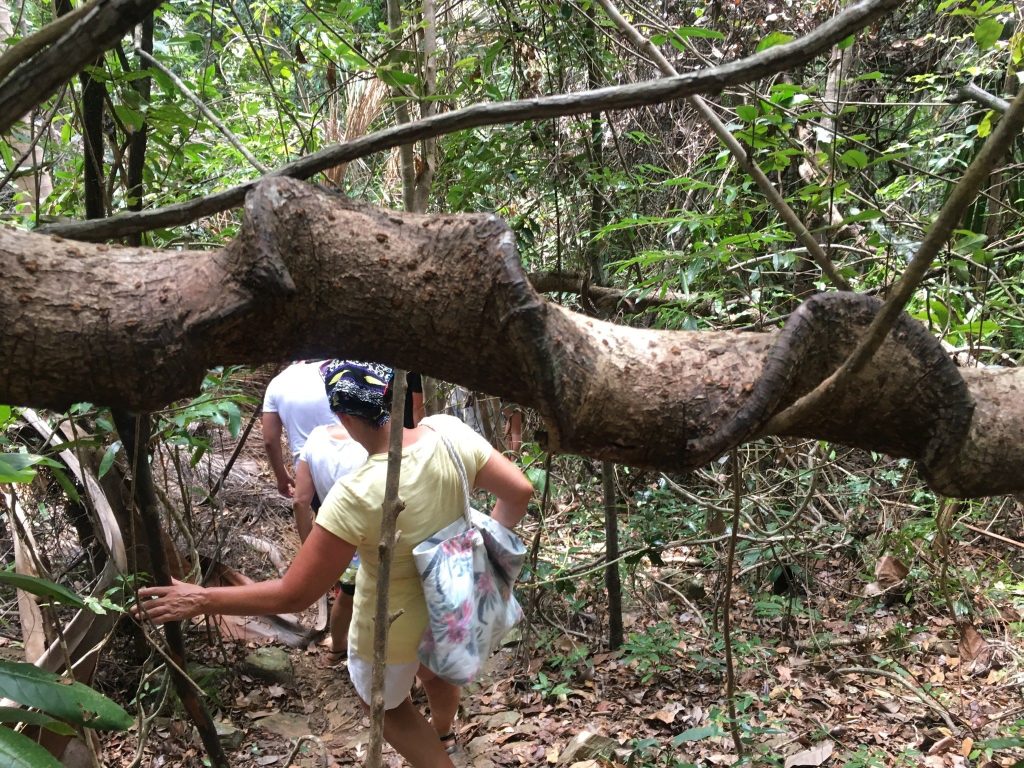
Long sleeves and long trousers serve double duty against sun and mosquitoes, and light colours are easier to spot ticks and leeches on. Leech socks are worth having for the wet months in the eastern parks, where leeches turn up in numbers after rain.
Convertible trousers work well given the temperature swing between a highland morning and a lowland afternoon. Bring more socks than seems reasonable, since wet feet are the most common complaint on rainforest circuits.
Clothing for the Highlands and Cold Nights
This is what catches most travellers out. Antananarivo sits at 1,280 metres, Antsirabe at 1,500 and the Andringitra plateau higher still, where nights drop below freezing and frost is normal.
A fleece and a hat are the minimum for June to August anywhere on the RN7. Hotels in the highlands rarely have heating, so the layers you brought for hiking are also what you sleep in.
Anyone camping at Andringitra, Marojejy or Isalo needs a proper sleeping bag rated for cold rather than a summer liner. Travellers who pack for a tropical island and arrive at 2,000 metres have a memorable night for the wrong reasons.
Rainforest parks. Waterproof jacket, quick-dry long sleeves and trousers, boots with grip, leech socks in the wet months, dry bags, headlamp. Andasibe, Ranomafana, Masoala, Marojejy, Zahamena.
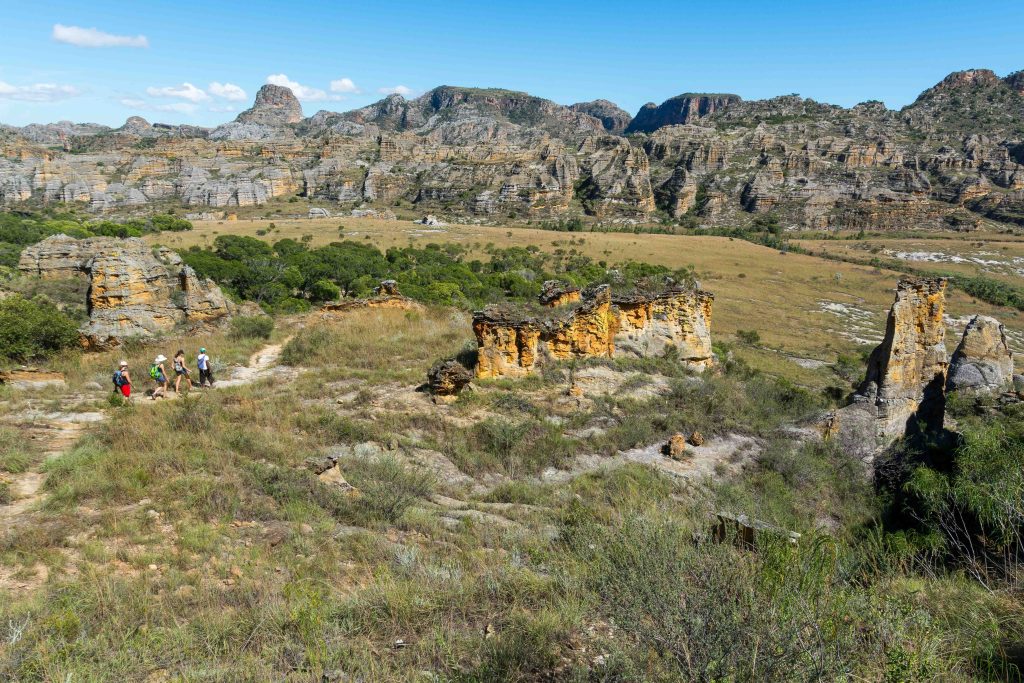
Highlands and trekking. Fleece, hat, gloves for Andringitra, warm sleeping bag if camping, sturdy boots, sun protection at altitude. Antsirabe, Fianarantsoa, Andringitra, Pic Boby.
South, west and coast. Light breathable clothing, wide-brimmed hat, high-SPF and reef-safe sunscreen, more water capacity than feels necessary, swimwear, sandals. Isalo, Toliara, Ifaty, Nosy Be, Tsingy.
Wildlife Watching Gear and Photography Equipment
Binoculars are the single best addition to a Madagascar trip and the one most travellers regret leaving behind. Eight or ten times magnification suits forest work, where the animals are high and the light is poor.
Camera gear needs protection more than it needs range. Humidity is the enemy, and dry bags or waterproof pouches matter more than an extra lens. Silica gel packets in the camera bag are worth the space.
A red-filtered torch is better than a white one for night walks, since it disturbs nocturnal animals less. Guides carry lamps but relying on theirs means seeing what they point at rather than looking for yourself.
Drone users should check current regulations before travelling, as rules have tightened and permits are required in protected areas.
Health, Medication and Insect Protection
Malaria is present across most of the country, so prophylaxis prescribed by a travel clinic should be arranged well before departure rather than at an airport pharmacy.
Repellent with DEET is the standard recommendation, applied in the evenings when mosquitoes are most active. Long light-coloured clothing after dark reduces exposure considerably.
A basic medical kit is worth carrying: rehydration salts, antidiarrhoeals, antihistamines, plasters, antiseptic and any personal medication in original packaging. Pharmacies exist in the cities but stock is unpredictable, and there is nothing at all at remote parks. Water purification tablets or a filter bottle reduce plastic waste and cover you where bottled water is unavailable.
Medical facilities outside Antananarivo are limited, and at remote parks the nearest hospital may be many hours away by rough road with no phone signal en route. Evacuation cover is worth buying rather than considering, particularly for Marojejy, Masoala, Namoroka and Baie de Baly.
Money, Documents and Electronics
The Ariary is a closed currency, so you cannot obtain it before arriving. Change money at the airport or a bank on landing, and carry more cash than feels comfortable when heading to remote areas.
Passport validity of six months beyond entry is enforced, with two or three blank pages required. Carry a printed copy of your eVisa approval if you applied online, since immigration officers ask for paper. A photocopy of the passport kept separately is sensible given how often police checkpoints request identification.
Madagascar uses Type C and E plugs at 220 volts, so European travellers need nothing and others need an adapter. Power cuts are common and many lodges run generators for limited hours, so a power bank keeps phones and headlamps alive.
What to Wear in Villages and at Sacred Sites
Dress modestly away from beaches and resorts. Shoulders and knees covered is the general standard in villages, markets and at cultural sites, and it costs nothing to observe.
Sacred sites carry restrictions that vary from place to place under fady, the system of local taboos. Some prohibit photography, some prohibit entry entirely, and a few have specific requirements about conduct or what may be brought in. Guides brief visitors before setting out.
Ask before photographing people. At Bara tomb sites near Isalo the custom is to indicate with a curled finger rather than pointing, which is the kind of detail a guide will mention and a visitor would never guess.
Luggage, Bags and Getting It All There
Soft bags travel better than hard cases in Madagascar. Vehicles are loaded to the roof, pirogues carry luggage on the floor, and porters at Marojejy and Andringitra carry loads on their backs rather than wheeling them.
A daypack is needed for every park walk, holding water, a waterproof, camera and binoculars. Something around twenty to thirty litres suits full-day circuits at Isalo or Ranomafana without being unwieldy on narrow trails.
Domestic flights impose lower baggage allowances than international carriers, and the small aircraft serving Sambava, Maroantsetra and Morondava are stricter still. Check limits before packing, since excess is charged at the counter and occasionally refused outright on full flights.
Packing cubes help more than usual on a trip that moves every two or three days, and a small padlock is worth having for guesthouse rooms with basic fastenings.
What to Leave at Home
Plastic bags, which have been banned since 2017. Bring a cloth bag for markets instead.
Formal clothing, which has no use anywhere in Madagascar including the better lodges. Heavy walking poles unless you have a specific need, since the trails rarely demand them.
Anything valuable or conspicuous. Opportunistic theft is the main risk in Antananarivo and around busy beaches, and jewellery and visible electronics attract attention that is easily avoided.
Camouflage clothing is worth avoiding across much of Africa, and while Madagascar is more relaxed than some countries about it, plain colours are simpler.
Frequently Asked Questions
What is the one thing I should not forget?
A waterproof jacket, followed closely by boots with real grip. Rain falls in every month in the eastern rainforest, and the trails at Ranomafana, Marojejy and Masoala are steep and muddy year-round. Travellers who skimp on either report it as their main regret.
Do I need hiking boots or will trainers do?
Boots for the rainforest and the tsingy parks. Trails run on wet clay and exposed roots, and the limestone at Ankarana and Tsingy de Bemaraha is sharp enough to cut. Trainers are adequate for Isalo, the coastal parks and general travel, so many travellers bring both.
How much cash should I carry?
Enough for all park fees, guides, porters and meals until your next bank. Park entry runs 45,000 Ariary per adult per day at most parks with guides charged separately per group, and everything is cash in Ariary. ATMs are absent at Bekopaka, Soalala and Manantenina and unreliable elsewhere, with low withdrawal limits.
Do I really need warm clothes?
Yes, if your route includes the highlands or any trekking. Antsirabe sits at 1,500 metres with nights close to freezing from June to August, and the Andringitra plateau records the lowest temperatures in Madagascar with frost on the ground. Hotels rarely have heating. A fleece and hat cover most itineraries; campers need a proper sleeping bag.
Are binoculars worth the space?
More than almost anything else you could pack. Indri sit forty metres up in dense canopy, ground-rollers are located by call and then need finding, and much of the bird list is at height. Eight or ten times magnification suits forest conditions.
What about leeches?
They appear in numbers in the eastern rainforest during and after the wet months, particularly at Masoala, Marojejy and Ranomafana. Leech socks with closed shoes are the practical answer. They are unpleasant rather than dangerous and guides deal with them routinely.
Can I buy things I forget?
In Antananarivo, mostly. Outside the capital, selection is limited and specialist outdoor gear is simply not sold. Pharmacies in the cities carry basics but stock is unpredictable. Assume anything you need for the parks must come with you.
What should I bring for children?
The same layers plus more of them, since children feel the highland cold sooner. Insect repellent formulated for their age, sun protection, and snacks for long drives where stops are limited. Night walks run late and involve uneven ground, so a headlamp each rather than sharing.
Planning Your Trip
Packing for Madagascar comes down to accepting that one trip crosses several climates. A waterproof jacket and warm layers alongside swimwear and sun protection looks like overpacking until you spend a morning in rainforest and an afternoon on a beach.
Booking Your Madagascar Trip
The safari companies and tour operators listed on this website put trips like this together for a living and know which camps, guides and routes actually deliver. We are an independent guide to Madagascar; we do not book or sell tours ourselves.
When you are ready, arrange your safari, tour or holiday with one of the recognised operators listed here. Tell them your dates and what matters most, and a real person, not a form, will handle the itinerary, park bookings and logistics for you.