Chameleons of Madagascar

Madagascar holds roughly half the world’s chameleon species, from Parson’s chameleon at the length of a forearm to Brookesia leaf chameleons small enough to sit on a fingernail. The island is where the family is thought to have originated, and nearly every species here lives nowhere else. Finding them depends almost entirely on your guide, since a chameleon that does not want to be seen is close to invisible.
Chameleon Spotting Tours and How Guides Find Them
The first thing visitors learn on a Madagascar walk is that they cannot find chameleons themselves. Guides locate animals a metre from the trail that a group has just walked past, and this is not a party trick but years of pattern recognition.
By day the search is for shape and shadow against the wrong background. At night it becomes far easier, because sleeping chameleons pale considerably and sit exposed on the ends of twigs, where a torch beam picks them out from several metres away.
This is the strongest argument for night walks even for visitors whose main interest is lemurs. The same forest that hides chameleons through the day gives them up after dark, often at eye level and in colours they never show while awake.
Roughly half the chameleon species on earth live on one island. The family is thought to have originated here before spreading to Africa and beyond.
Parson’s Chameleon and the Large Species
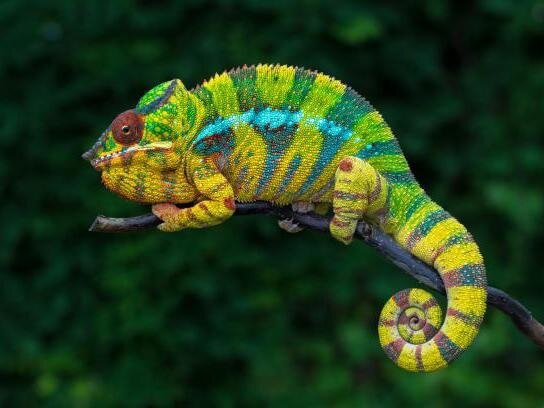
Parson’s chameleon is the one people remember, a heavy green animal reaching the length of a forearm and moving with almost no urgency at all. Males carry two flattened horns on the snout and colours running through turquoise, green and yellow.
Andasibe-Mantadia is the reliable place, along with the eastern rainforest mostly. The animals are slow enough to photograph properly, which is not true of most Madagascar wildlife.
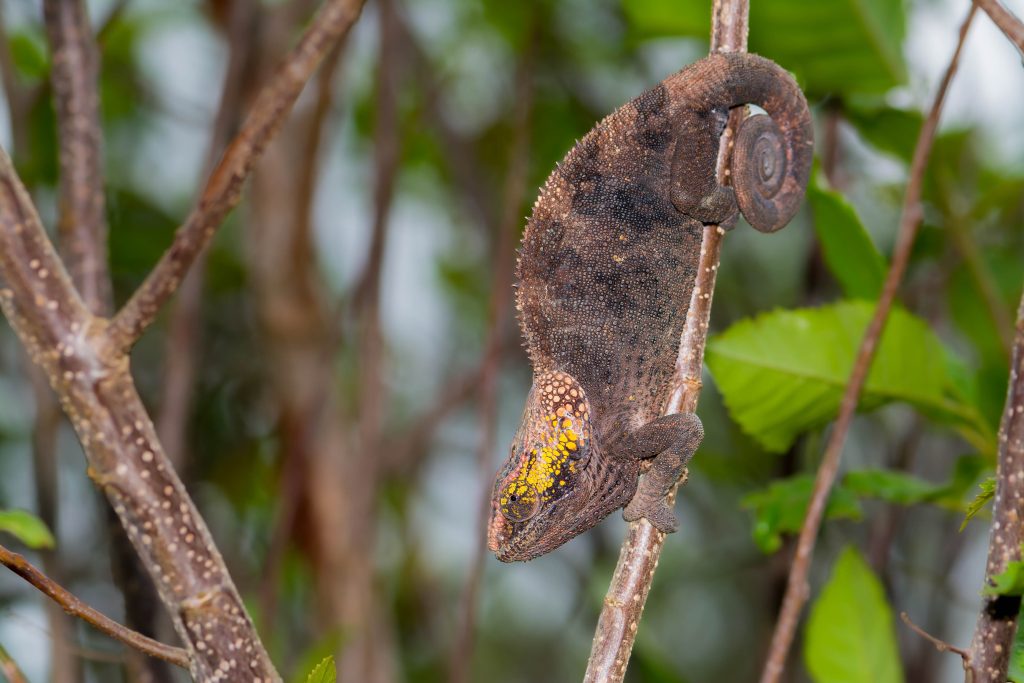
Oustalet’s chameleon is the other giant and among the largest chameleons in the world, found in drier country including Isalo and the west. It is less colourful than Parson’s, running to greys and browns, and is common enough to turn up on roadside vegetation.
Other large species worth knowing include the panther chameleon on Nosy Be and the northern coasts, which in electric blues and greens is the most photographed reptile in Madagascar, and the rhinoceros chameleon at Ankarafantsika with its blunt nasal projection.
Brookesia Leaf Chameleons and the Smallest Reptiles
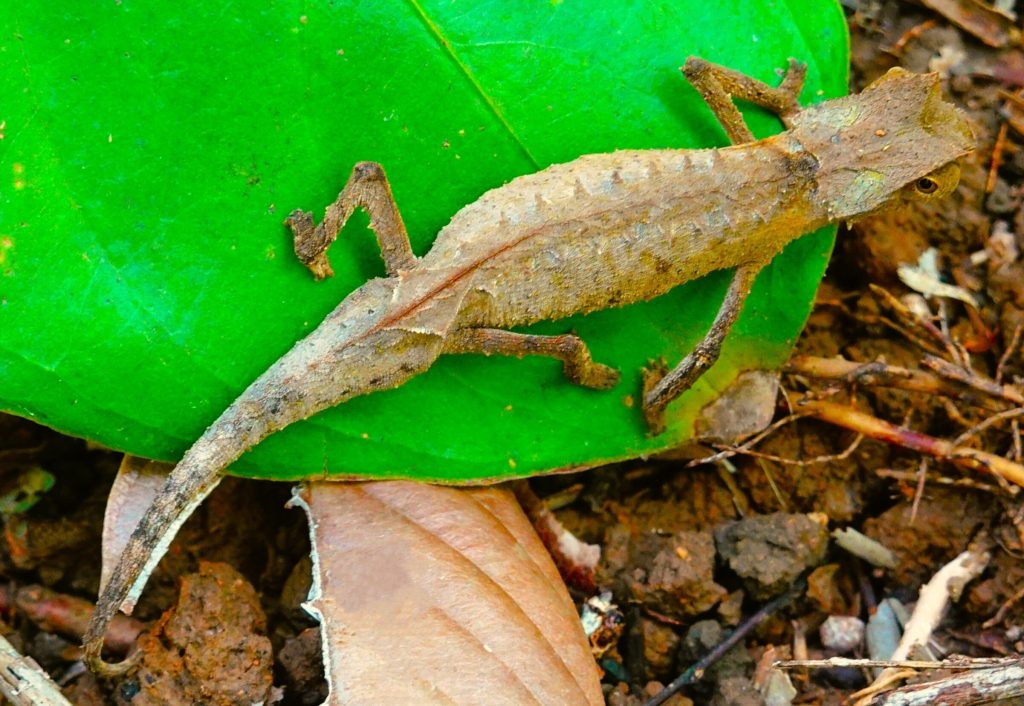
At the other end sit the Brookesia, brown leaf chameleons that live in leaf litter rather than trees and look exactly like dead leaves.
Brookesia micra, described from Nosy Hara off the northern coast, reaches around thirty millimetres including the tail and is among the smallest reptiles on earth. Brookesia tuberculata at Amber Mountain is comparably tiny and lives only on that massif. Brookesia brunoi occurs around Anja, and Brookesia decaryi at Ankarafantsika.
Finding one takes a guide who knows the ground and a willingness to stand still while they search. They are usually pointed out at night, when torchlight catches them on low vegetation, and most visitors are genuinely startled by the scale.
Where to See Chameleons Across Madagascar
Chameleon diversity follows habitat, and the species you meet change entirely between the rainforest east and the dry southwest.
Eastern rainforest. Parson’s chameleon, nose-horned chameleon, short-nosed chameleons and several Brookesia. Andasibe-Mantadia, Ranomafana, Masoala and Marojejy. Best on night walks in the warmer months.
North and islands. Panther chameleon in its brightest forms on Nosy Be and Lokobe, Amber Mountain chameleon on that massif alone, Brookesia micra at Nosy Hara. The strongest region for colour.
Dry west and south. Oustalet’s chameleon, jewel chameleon, carpet chameleon, warty chameleon and Furcifer antimena in the Mikea forest. Isalo, Ankarafantsika, Kirindy and the spiny forest reserves.
Ranomafana and Andasibe hold the richest lists in the east. Ankarafantsika is the best dry-forest site, with open vegetation making the search easier than in dense rainforest.
Colour Change and What It Actually Means
The common belief that chameleons change colour to match their surroundings is largely wrong, and guides will tell you so.
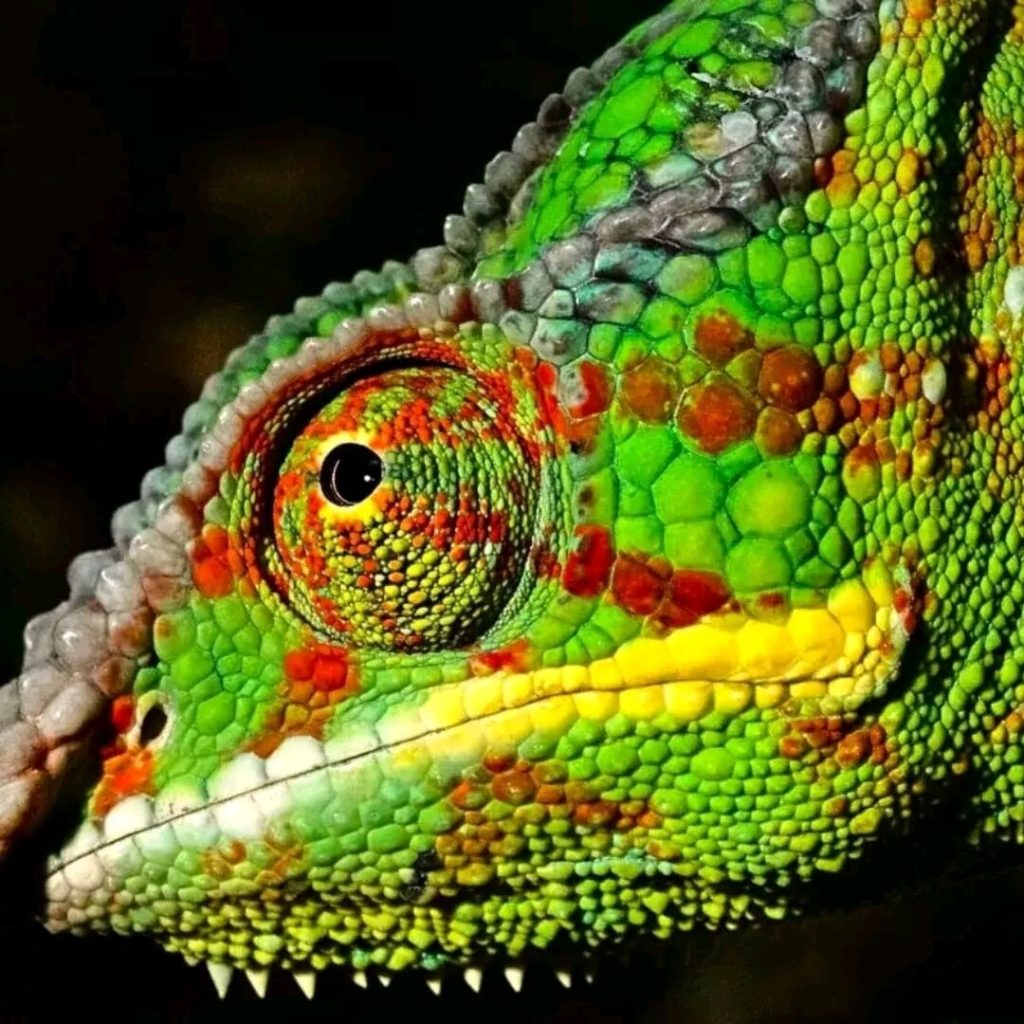
Colour shifts are driven by temperature, light and above all social signalling. A male displaying to a rival or courting a female produces the most dramatic colours in the repertoire. A stressed or threatened animal darkens. A cold one goes darker still to absorb heat.
The mechanism is not pigment moving but crystal structures in the skin changing spacing, which alters the wavelengths reflected. Camouflage is a side effect of the resting state rather than the purpose of the system.
The eyes are the other feature worth watching. Each moves independently through nearly a full hemisphere, giving the animal two separate fields of view until it fixes on prey, at which point both eyes converge for depth perception before the tongue fires.
Seasonality and When Chameleons Are Active
Season matters more for chameleons than for lemurs. The warm wet months from November through March are when they are most active, most colourful and most likely to be breeding.
In the cool dry season from June to August, particularly in the highlands and at altitude, many species become sluggish and stay hidden. Travellers visiting Ranomafana or Andasibe in July will see fewer chameleons than the same route in November.
Some species live very short lives. Furcifer labordi in the western dry forest has among the shortest lifespans of any tetrapod, hatching, growing, breeding and dying within a single year, with the entire population spending several months of each year as eggs in the ground.
If chameleons are a priority, travel between November and March and build night walks into every park stop. The trade-off is rain, mud and cyclone risk on the eastern side, but the difference in reptile activity between a July trip and a December one is substantial. April and May offer a compromise, with the rains easing and the animals still active.
Other Reptiles You Will Meet Alongside Them
Chameleon walks turn up the rest of Madagascar’s reptile fauna, and guides looking for one will point out the others.
Leaf-tailed geckos of the genus Uroplatus are the ones that stop people mid-trail. They press flat against bark with fringed skin eliminating any shadow, and even once a guide has indicated the exact spot it can take a minute to resolve the animal from the tree. The satanic leaf-tailed gecko at Ranomafana looks precisely like a curled dead leaf.
Day geckos of the genus Phelsuma are the opposite, bright green and often gold-spotted, working trunks and buildings in daylight. Koch’s day gecko at Ankarafantsika turns up on almost every tree near the forest station.
Snakes are present and none is dangerous to people. Madagascar tree boas and ground boas are the largest, and the giant hognose snake is common on western trails. Tortoises include the critically endangered radiated tortoise in the south and the ploughshare tortoise at Baie de Baly, which survives in that one place alone.
Photographing Chameleons
Chameleons are the easiest wildlife in Madagascar to photograph and the most rewarding for anyone without a long lens, since they move slowly and let you get close.
Night walks give the best results for the small species, though flash should be used sparingly and never repeatedly on one animal. Some guides carry red-filtered torches for exactly this reason. Daytime shots of Parson’s or panther chameleons benefit from patience while the animal works through its colour range.
Handling is the line not to cross. Guides at reputable operations do not pick chameleons up, and travellers should not ask. Stress causes visible darkening and repeated handling harms animals that are already under pressure from habitat loss and the pet trade.
Conservation and the Pet Trade
Habitat loss is the main threat, as it is for everything in Madagascar. Species with tiny ranges, including the Amber Mountain chameleon and several Brookesia known from single forests, have nowhere to go when that forest is cleared.
The international pet trade adds pressure, with panther chameleons in particular collected for export. Exporting wildlife or wildlife products from Madagascar without permits is illegal and prosecuted, and buying anything derived from reptiles is both unlawful and counterproductive.
Visiting parks and paying guide fees is the practical counterweight, since it gives communities a reason to keep forests standing. Community reserves like Anja and the Andasibe night-walk forests channel that money directly to the villages doing the protecting.
Frequently Asked Questions
How many chameleon species live in Madagascar?
Roughly half of all known chameleon species, with the count still rising as new ones are described. Nearly all are endemic, found on this island and nowhere else. The family is thought to have originated in Madagascar before spreading to mainland Africa, Asia and southern Europe.
Where is the best place to see chameleons?
Andasibe-Mantadia and Ranomafana for the eastern rainforest species including Parson’s chameleon. Nosy Be and Lokobe for panther chameleons in their brightest forms. Ankarafantsika for dry-forest species in open vegetation that makes them easier to find. Night walks at any of these are more productive than day circuits.
When should I visit for chameleons?
November to March, when the warm wet conditions make them most active and most colourful. Many species become sluggish and hidden in the cool dry season from June to August, particularly at altitude. April and May are a reasonable compromise, with rains easing and animals still active.
Do chameleons really change colour to camouflage?
Mostly no. Colour changes are driven by temperature, light and social signalling, with the most dramatic displays occurring between rival males or during courtship. A stressed animal darkens, and a cold one darkens to absorb heat. Camouflage is a side effect of the resting state rather than the purpose of the mechanism.
Can I find chameleons without a guide?
Realistically no, and guides are compulsory in the parks anyway. A resting chameleon against foliage is close to invisible to an untrained eye, and the Brookesia leaf chameleons in the litter are harder still. Guides find animals a metre from a trail that an entire group has just walked past.
What is the smallest chameleon?
Brookesia micra, described from Nosy Hara off the northern coast, reaches around thirty millimetres including tail and is among the smallest reptiles on earth. Brookesia tuberculata at Amber Mountain is comparably tiny. Both live in leaf litter and are usually pointed out at night.
Is it safe to handle them?
It is not safe for the chameleon. Handling causes stress that shows as visible darkening, and reputable guides do not pick animals up or encourage visitors to. Photograph without touching, use flash sparingly, and move on rather than crowding an animal for repeated shots.
Can I take one home?
No. Exporting wildlife from Madagascar without permits is illegal and prosecuted, and the pet trade is a documented pressure on species including the panther chameleon. Buying reptiles or reptile products from vendors does not make exporting them lawful.
Planning Your Trip
Chameleons reward two decisions above all: travelling in the warmer months and doing night walks at every park stop. Both cost little and transform how much of Madagascar’s reptile life you actually see.
Booking Your Madagascar Trip
The safari companies and tour operators listed on this website put trips like this together for a living and know which camps, guides and routes actually deliver. We are an independent guide to Madagascar; we do not book or sell tours ourselves.
When you are ready, arrange your safari, tour or holiday with one of the recognised operators listed here. Tell them your dates and what matters most, and a real person, not a form, will handle the itinerary, park bookings and logistics for you.