Berenty Private Reserve

Berenty Private Reserve offers the easiest and closest lemur viewing anywhere in Madagascar, with around 500 ring-tailed lemurs and dancing Verreaux’s sifaka on wide flat trails you can walk unguided. Most visitors stay one or two nights and add a night walk in the spiny forest. The reserve covers only a few square kilometres of tamarind gallery forest on the Mandrare River, about 80 km west of Fort Dauphin.

Ring-Tailed Lemur Watching Tours at Berenty
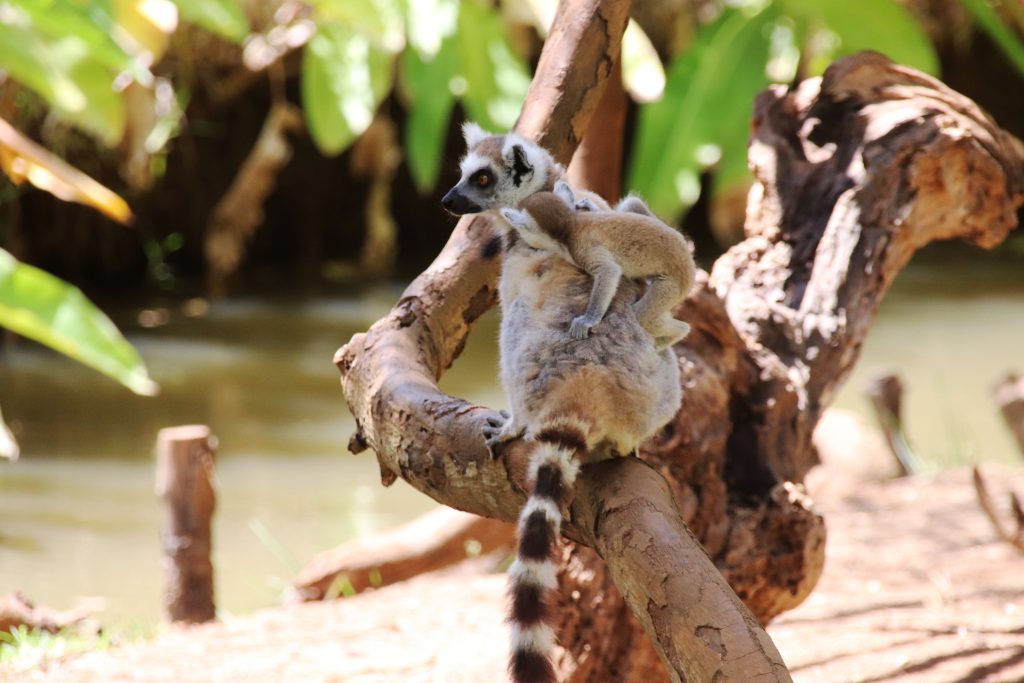
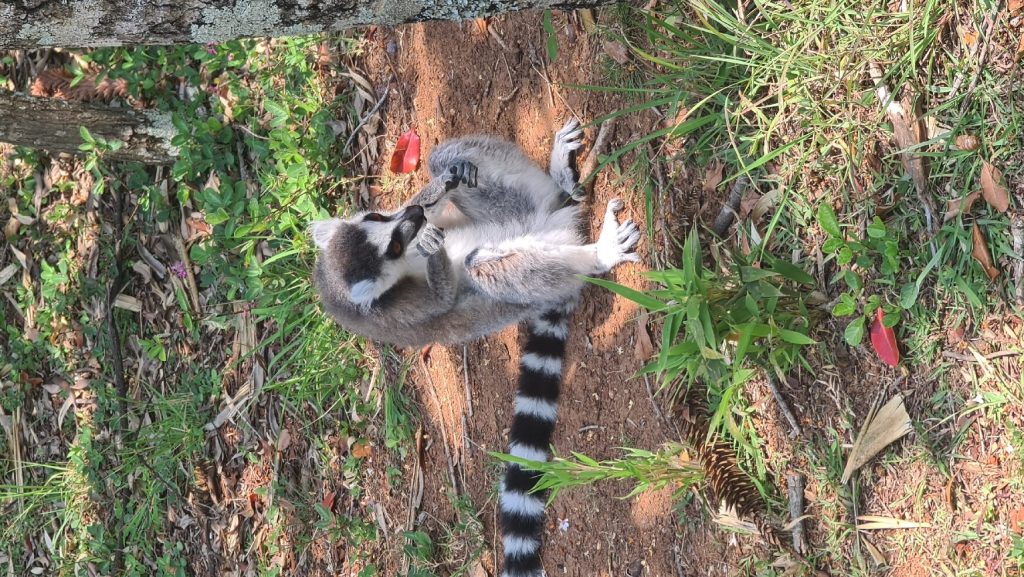
Ring-tailed lemur watching tours hardly need the word tour. Around 500 ring-tails live in a reserve small enough to walk across, and they are entirely unbothered by people. Troops sit on bungalow verandas through the heat of the afternoon, walk down trails past visitors and get into luggage if a door is left open.
Roughly 2,000 lemurs in total occupy this patch of forest, a density that exists because the reserve is an island of habitat inside a sisal estate. That confinement is the reason viewing is so easy and also the reason some visitors find the place uncomfortable.
September and October are when infants appear, riding on their mothers’ bellies and later their backs. It is the single most photographed wildlife scene in southern Madagascar.
Verreaux’s Sifaka Watching Tours and the Dancing Crossing
The other headline draws watching tours of its own. Verreaux’s sifaka cannot walk on all fours, so crossing open ground between forest patches means standing upright and bounding sideways with arms raised, a movement universally described as dancing.
At Berenty the forest is broken enough that these crossings happen regularly and in the open, which is precisely why the footage everyone has seen of dancing sifaka tends to come from here or from nearby reserves in the deep south.
Red-fronted and red-collared brown lemurs have both been introduced to the reserve and now interbreed, producing hybrids. Six lemur species occur in total, including nocturnal white-footed sportive and grey mouse lemurs.
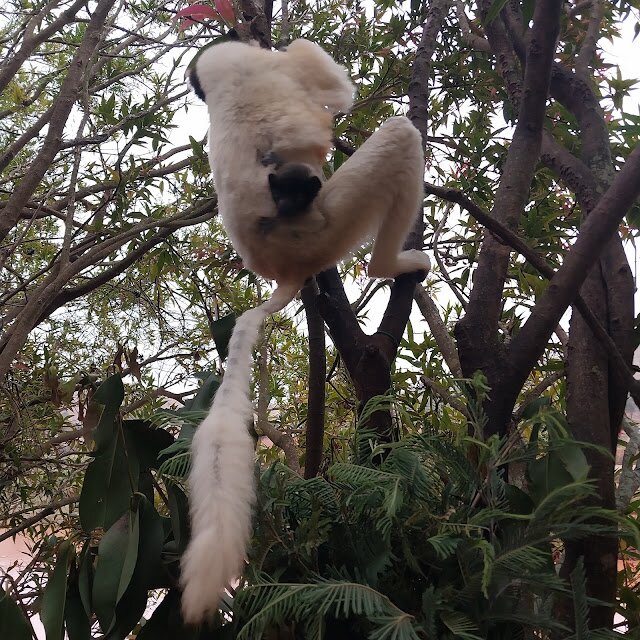
Around a third of Madagascar’s remaining tamarind gallery forest sits inside this one small reserve, surrounded by sixty square kilometres of sisal.
Night Walk Tours in the Spiny Forest
Night walk tours at Berenty work a separate patch of spiny forest and produce a completely different species list from the daytime gallery walks. White-footed sportive lemurs and grey mouse lemurs are the targets, along with Madagascar scops owls, chameleons and hissing cockroaches.
The spiny forest itself repays attention. Around 92 percent of its plant community is endemic, which makes it among the most biologically distinct vegetation types on earth. Octopus trees of the genus Alluaudia, pachypodiums and euphorbias grow in stands that look like nothing else.
Walks are short and easy underfoot. Most visitors do one on the evening they arrive and rate it among the better parts of the stay.
Fruit Bat Colony and Birding Tours
Birding tours along the gallery forest turn up giant couas walking the trails, sickle-billed vangas, knob-billed ducks and a solid list of southern endemics. The riverine setting concentrates birds in a way the surrounding sisal cannot.
The reserve also holds the largest colony of Madagascar fruit bats in the south, hanging in daylight where they can be watched and photographed without difficulty. The noise and smell are considerable and the spectacle is worth it.
Verrucose chameleons, Madagascar boas and radiated tortoises round out the reptile list. None of the snakes here threatens people.
Antandroy Cultural Tours and the Ethnographic Museum
Berenty keeps a well-regarded ethnographic museum covering the Antandroy, the people of the thorns, who live across this arid corner of the south. A reconstructed village sits alongside it, and cultural tours of both are included in most stays.
The displays cover burial practices, cattle herding, house construction and the material culture of a people whose country supports very little agriculture. It is more substantial than the token cultural stop many reserves offer.
The reserve has been owned since 1936 by the same family that founded the surrounding sisal estate, and the museum reflects a long association with the region rather than a recent addition for visitors.
Gallery Forest Walking Tours Along the Mandrare
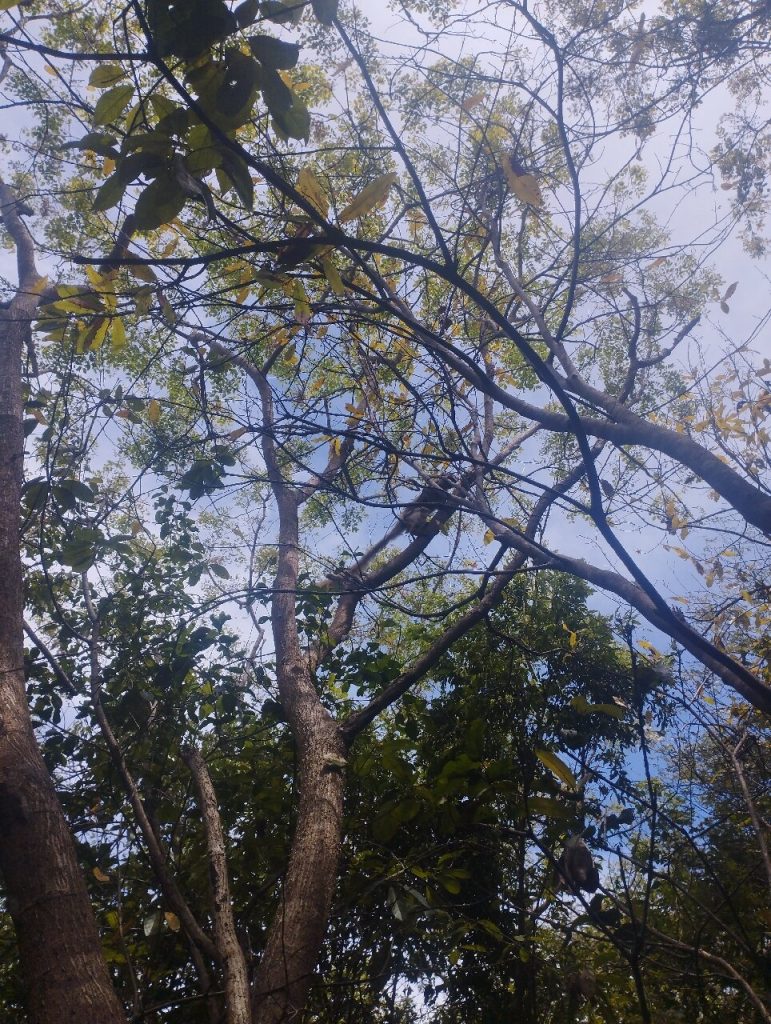
Walking tours through the tamarind gallery forest are the core of a Berenty visit, and unusually for Madagascar you can do them without a guide. Trails are wide, flat and short, crisscrossing a reserve that sits on an oxbow bend of the Mandrare River.
Tamarind dominates the canopy. This forest type once lined rivers throughout the south and has been almost entirely cleared, so what survives here represents a large share of the national total. The name Berenty means many eels, referring to what the river once held.
An arboretum and a separate spiny forest parcel extend the walking beyond the gallery strip, and both are worth the time if you are staying two nights.
One night. Arrive by afternoon, night walk in the spiny forest, full morning in the gallery forest, leave after lunch. Covers the ring-tails, the sifaka and the bats. What most itineraries allow.
Two nights. Adds the arboretum, the museum, a second night walk and unhurried time for photography. Worth it given how long the drive from Fort Dauphin takes.
Research History and Why Berenty Matters Scientifically
Berenty holds a place in primatology that its size does not suggest. Long-running study of the ring-tailed lemurs here, sustained across decades and producing a large body of published work, has made Lemur catta among the best understood of all lemur species.
That research depended on exactly the conditions some visitors find uncomfortable. Habituated animals in a confined and accessible area can be followed individually, year after year, in a way that is impossible in large wild populations. What the reserve gives up in wildness it has returned in knowledge.
The wider picture is bleaker. Ring-tailed lemur numbers across Madagascar have fallen sharply, and the species now survives in scattered pockets across the south and southwest rather than continuously. Berenty, along with Anja Community Reserve near Ambalavao and a handful of national parks, holds a meaningful portion of what remains. The gallery forest it protects would almost certainly have gone to sisal decades ago without the family that fenced it off.
Getting to Berenty from Fort Dauphin
Fort Dauphin, or Tolagnaro, is the gateway, reached by air from Antananarivo in a little over an hour. From there Berenty lies about 80 to 90 km west on the RN13, turning off at Amboasary Sud roughly 10 km before the reserve.
The drive takes two to three hours in a four-wheel drive, and some operators quote considerably longer depending on road conditions. The route passes through a striking sequence of habitats, from rainforest near the coast through transitional forest into full spiny forest, with roadside stops for carnivorous pitcher plants, Antanosy memorial stones and triangular palms.
Driving all the way from Antananarivo takes around three days and the final stretch is rough and unpredictable, so nearly everyone flies. Accommodation is the reserve’s own lodge with bungalows, which is the only option on site.
Berenty divides opinion and it is worth knowing that before you book. The lemurs are habituated to the point of climbing on furniture, the reserve is small and hemmed in by plantation, and some visitors describe it as closer to an open-air zoo than wild country. Others rate it the highlight of their trip for exactly the same reasons. If unmanaged wilderness is what you want, the nearby Mandrare River Camp and Ifotaka forest offer a different experience.
Best Time for a Berenty Visit
This is the arid deep south, hot for most of the year with a short and unreliable wet season. The reserve is walkable throughout.
April to June. Following whatever rain fell, temperatures ease and the gallery forest is at its greenest. Comfortable walking and fewer visitors than the peak months.
July and August. Coolest and driest, and the busiest period on the southern circuit. Reliable road conditions from Fort Dauphin. Book the lodge ahead.
September and October. The strongest window. Infant ring-tails and sifaka appear, which is what most photographers come for. Warming quickly toward the end of October.
November to March. Hot, with brief and irregular rain. Midday becomes uncomfortable and the RN13 can deteriorate. Reptiles are more active and the forest greens up.
Frequently Asked Questions
How much does it cost to visit Berenty?
As a private reserve, Berenty sets its own fees rather than following the national park schedule, and entry is typically bundled with accommodation at the reserve lodge. Rates are higher than most Malagasy parks, reflecting the private ownership and the remote position. Vehicle hire from Fort Dauphin for the return trip is a separate and substantial cost. Confirm what your package includes before travelling.
Do I need a guide?
No, and this is unusual for Madagascar. Trails are wide, short and well marked, and you can walk them alone. Guides are available and worth taking for the night walk and for anyone wanting help with birds or reptiles, but the ring-tails and sifaka require no assistance whatsoever to find.
How many nights should I stay?
Two is better than one given the drive involved. One night covers the headline species. Two lets you do both night walks, the museum, the arboretum and the spiny forest parcel without rushing, which makes the long transfer from Fort Dauphin easier to justify.
Will the lemurs really come that close?
Yes, closer than most people expect. Troops rest on bungalow verandas and walk past visitors on the trails. Keep doors and windows closed, since lemurs will investigate rooms and luggage given the chance. Feeding them is discouraged and does the animals no favours.
Is Berenty ethical?
Reasonable people disagree. The reserve protects a genuinely rare forest type that would otherwise have gone to sisal, funds a museum and employs locally, and the lemurs are wild rather than captive. Against that, the habituation is extreme, the area is small, and the surrounding monoculture means the population is confined. Visitors uneasy about that can look at Mandrare River Camp and the Ifotaka community forests nearby.
What else is near Fort Dauphin?
Andohahela National Park, with its three separate habitat parcels, is the main one, and most southern itineraries pair the two. Smaller reserves and the wetlands north of town holding endemic pitcher plants are worth a half day. Fort Dauphin itself has beaches and a surf break.
Is it good for photography?
Exceptionally, which is the honest reason for its reputation. The lemurs are close, unafraid and active in good light, the gallery forest is open, and the sifaka crossings happen in the open on sand. Few places in Madagascar make wildlife photography this straightforward.
Planning Your Visit
Berenty is the reserve that decides itself for you. If you want close, reliable, well-lit lemur viewing with no walking difficulty, nothing in Madagascar comes close. If you want to feel like you have found something wild, this is not it, and the honest move is to book the nearby community forests instead or as well.
Booking Your Madagascar Trip
The safari companies and tour operators listed on this website put trips like this together for a living and know which camps, guides and routes actually deliver. We are an independent guide to Madagascar; we do not book or sell tours ourselves.
When you are ready, arrange your safari, tour or holiday with one of the recognised operators listed here. Tell them your dates and what matters most, and a real person, not a form, will handle the itinerary, park bookings and logistics for you.