Ankarafantsika National Park
Ankarafantsika National Park is the best place in Madagascar to see eight lemur species and 129 birds in one short stay, protecting one of the last large stands of western dry deciduous forest. Circuits run from ninety minutes to a full day across eleven maintained trails, with boat trips on Lake Ravelobe and productive night walks. The park sits on the Bongolava plateau in the Boeny region and belongs to the UNESCO-listed Andrefana Dry Forests.
Coquerel’s Sifaka Watching Tours at Ampijoroa
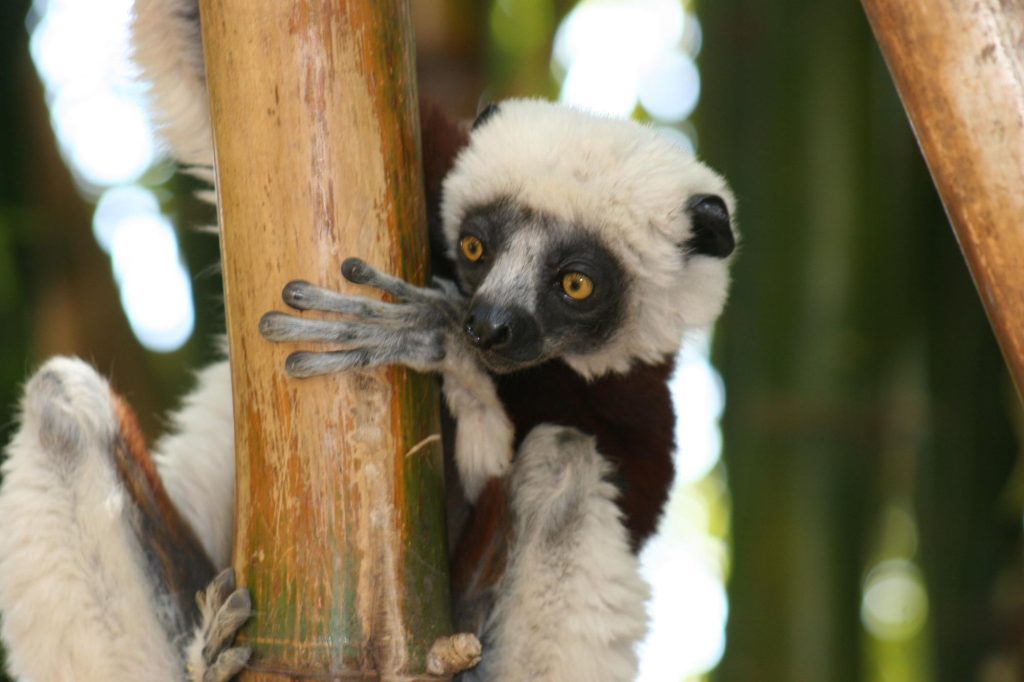
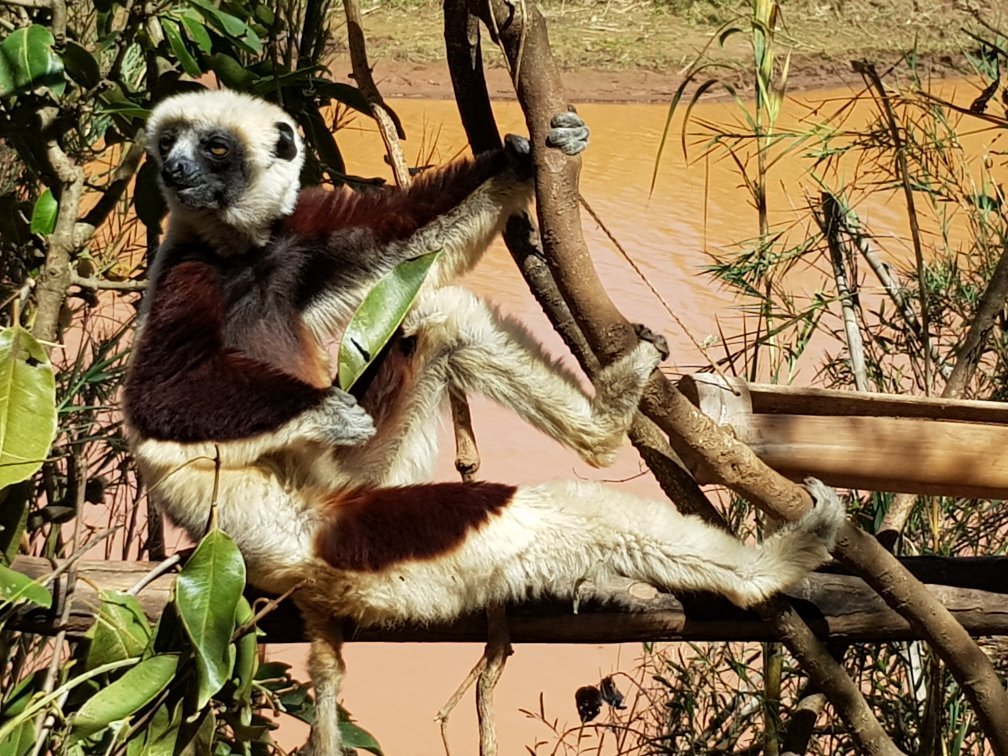
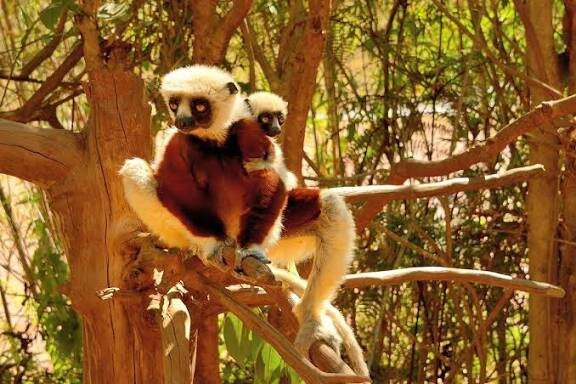
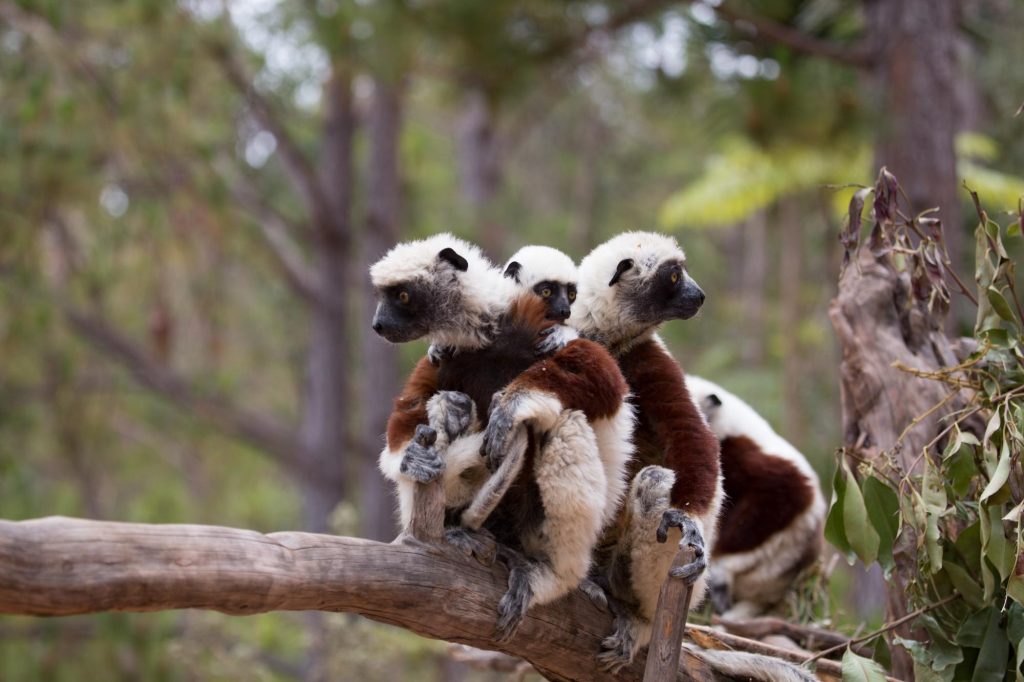
Coquerel’s sifaka watching tours are the easiest lemur viewing in Madagascar, and the reason first-time visitors are so often steered here. The animals around the Ampijoroa forest station are relaxed about people, frequently coming within a few metres, white-bodied with chocolate patches on the arms and thighs.
They leap between trunks rather than climbing, launching sideways across open gaps in a way that photographs well and takes very little patience to witness. The species is restricted to this corner of northwestern Madagascar.
Eight lemur species live in the park, and with luck you can see all eight across an afternoon, an evening walk and the following morning. Mongoose lemurs and brown lemurs are the other diurnal pair. That completeness in a short stay is unusual anywhere in the country.
Birding Safaris in the Kingdom of Birds
Birding safaris earned Ankarafantsika its local nickname, the kingdom of birds, with 129 species recorded and around 75 of them endemic to Madagascar. For visiting birders this is a fixture rather than an option.
Van Dam’s vanga is the great prize, a scarce bird found in this park and a couple of neighbouring forests and almost nowhere else. Add white-breasted mesite, Schlegel’s asity, rufous and sickle-billed vangas, Coquerel’s and red-capped couas, both vasa parrots and the Madagascar green pigeon. Most are findable on the forest circuits with a decent guide.
The dry forest here belongs to the Dalbergia, Commiphora and Hildegardia community, open enough that birds are visible in a way they never are in eastern rainforest. That visibility is why lists build so fast.
Eight lemur species, 129 birds, 64 reptiles and over 800 plants, in forest open enough that you can actually see them. Few Malagasy parks make wildlife this easy to observe.
Lake Ravelobe Boat Tours and Madagascar Fish Eagles
Boat tours on Lake Ravelobe use a covered flat-bottomed craft that moves quietly along the reed margins. The lake covers around 60 hectares and holds one of the more reliable populations of the Madagascar fish eagle, among the rarest raptors anywhere.
Glossy ibis, herons, egrets and ducks work the shallows, and viewing towers around the water give a second vantage without a boat. White-throated rail skulks in the reeds.
Nile crocodiles breed in the lake and are left entirely undisturbed, since local communities regard them as sacred. Ravelobe itself is a doany, a place of worship, and the same status attaches to other lakes in the park. Guides will explain where the restrictions apply.
Night Walk Tours for Mouse Lemurs and Chameleons
Night walk tours around the forest station are unusually productive. Golden-brown mouse lemurs, Microcebus ravelobensis, are the speciality, since this is the one site where visitors reliably see them. Grey mouse lemurs, western woolly lemurs, fat-tailed dwarf lemurs and fork-marked lemurs make up the rest.
Reptiles are the other half of the walk. Rhinoceros chameleons and the tiny ground-dwelling Brookesia decaryi both occur here, along with Koch’s day geckos on almost every trunk and the scarce leaf-tailed gecko Uroplatus guentheri for anyone whose guide is sharp.
Ankarokaroka Canyon Hiking Tours
Hiking tours to the Ankarokaroka canyon show a completely different face of the park. Erosion has cut into the laterite plateau, exposing red and ochre walls that stand in odd contrast to the forest behind them.
The circuit from Lake Ravelobe crosses secondary forest dominated by sandbox trees before reaching stands of Adansonia madagascariensis, the local baobab. Sunset from the canyon rim is the standard finish to a day here.
Short forest circuits. Ninety minutes to three hours over two to three kilometres, flat and easy. Coquerel’s sifaka, mongoose lemurs, Van Dam’s vanga and the main bird list. What most visitors walk.
Lake and canyon routes. Half day. Boat trip for fish eagles and waterbirds, or the walk out to Ankarokaroka canyon and the baobabs. Best in early morning or late afternoon.
Night walks. One to two hours after dark near the station. Golden-brown mouse lemurs, dwarf lemurs, chameleons and geckos. Worth doing on every night you stay.
Reptile Spotting Tours in the Dry Forest
Reptile spotting tours turn up 64 recorded species. Madagascar ground boas and tree boas both occur, neither dangerous to people. Horned chameleons and Oustalet’s chameleons are regular finds, and the giant Malagasy hognose snake is common enough on the trails.
The rarity is the Madagascar big-headed turtle, Erymnochelys madagascariensis, critically endangered and dependent on exactly this kind of lake and river system. Ankarafantsika is among its more important remaining strongholds.
Baobabs and Dry Forest Botany at Ankarafantsika
Over 800 plant species grow in the park, with a high proportion found nowhere outside Madagascar. Botanical walks are worth asking for, because the dry forest reads as scrubby to an untrained eye and repays having someone explain it.
The baobabs are the obvious draw. Adansonia madagascariensis stands along the canyon circuit, smaller than the giants of the Morondava avenue but growing in natural forest rather than a cleared roadside. Sandbox trees dominate the secondary growth, firing their seeds when the pods split.
Among the useful species is Cedrelopsis grevei, an aromatic medicinal tree, alongside wild vanilla, rosewood and a range of plants the surrounding communities harvest. The park was gazetted as a forest reserve as far back as 1927, becoming a national park in 2002, and that long protection is why the stand survives at all while dry forest elsewhere in western Madagascar has been cleared for charcoal and pasture.
Getting to Ankarafantsika National Park from Mahajanga
The park straddles the RN4 between Antananarivo and Mahajanga, which makes it one of the more accessible protected areas in Madagascar. The road runs directly through it, so no rough track or river crossing stands between you and the gate.
Mahajanga is about 115 km away, roughly two hours by road, and has flights from the capital. Driving the whole way from Antananarivo takes most of a day on tarmac. Bush taxis run the RN4 and will drop you at Ampijoroa.
The park office and the main accommodation both sit at Ampijoroa, where a gîte offers simple rooms and camping is available. Facilities are modest but adequate, and staying on site means you are on the trails at first light and out again after dark, which is when the park performs.
Two nights at Ampijoroa is the sweet spot. That gives you a morning forest circuit, an afternoon on the lake or at the canyon, two night walks and a second morning for anything missed. Day visitors passing on the RN4 see a fraction of what the park holds.
Best Time for an Ankarafantsika Safari
This is seasonal dry forest, and the difference between wet and dry months is more pronounced here than in the eastern rainforests. Both have something to recommend them.
April to June. Rains have ended and the forest still carries leaves. Comfortable temperatures, good visibility and few visitors. A strong all-round window.
July to September. Peak dry season. Trees drop their leaves, which makes lemurs and birds far easier to see, and the trails are firm. Cooler mornings. The best months for building a bird list.
October and November. Hot and building toward the rains. Reptiles and amphibians become much more active, infant lemurs appear, and night walks improve. Midday walking gets uncomfortable.
December to March. Wet season. The forest greens up and the lake fills, with frogs and reptiles at their peak. Trails are muddy and some circuits become awkward, though the park stays open and the RN4 remains passable.
Frequently Asked Questions
How much does it cost to visit Ankarafantsika National Park?
Park entry is 45,000 Ariary per adult per day, with children under twelve at 25,000 Ariary. Guide fees are charged per group by circuit, with short walks starting around 15,000 Ariary for parties of up to six and rising for larger groups and longer routes. Boat trips on Lake Ravelobe and night walks are priced separately. All payment is cash in Ariary at the Ampijoroa office.
Where do I stay?
The gîte at Ampijoroa sits inside the park beside the office and is where most visitors stay, with simple rooms and a campsite alongside. Standards are basic rather than comfortable. Mahajanga two hours away has proper hotels, but commuting from there wastes the early mornings and the night walks, which are the best parts of a visit.
Is this a good first park in Madagascar?
It is one of the best. The forest is open, the sifakas are relaxed around visitors, the trails are flat and short, and eight lemur species are realistically visible in a single stay. Compared with the eastern rainforests, where animals are high in dense canopy, Ankarafantsika asks very little of you.
How many days should I allow?
Two nights covers the park well. One night gives you a morning circuit and a night walk, which is enough to see the headline species but leaves the lake and canyon out. Birders working for Van Dam’s vanga and the full endemic list should plan three.
Can I swim in Lake Ravelobe?
No. The lake holds a healthy breeding population of Nile crocodiles, undisturbed because they are locally regarded as sacred. Boat trips are the way to see the water. The lake is also a place of worship, so follow your guide on where you may and may not go.
How does it compare with the eastern rainforest parks?
Completely different, and complementary rather than competing. Andasibe and Ranomafana give you indri, sifakas and dense wet forest where sightings take patience. Ankarafantsika gives you dry forest where the wildlife is visible with far less effort, plus a bird list the eastern parks cannot match. Many itineraries include both.
Do I need a guide?
Yes, as in all Madagascar National Parks properties. Guides at Ampijoroa are accredited and several speak English. For birding, ask by name for someone who knows Van Dam’s vanga, since finding it depends on knowing where the birds have been holding.
Planning Your Visit
Ankarafantsika is the park where the wildlife does the work for you, which makes it the easiest recommendation in Madagascar for anyone whose time is short or whose interest is broad rather than specialist.
Booking Your Madagascar Trip
The safari companies and tour operators listed on this website put trips like this together for a living and know which camps, guides and routes actually deliver. We are an independent guide to Madagascar; we do not book or sell tours ourselves.
When you are ready, arrange your safari, tour or holiday with one of the recognised operators listed here. Tell them your dates and what matters most, and a real person, not a form, will handle the itinerary, park bookings and logistics for you.