Andasibe-Mantadia National Park
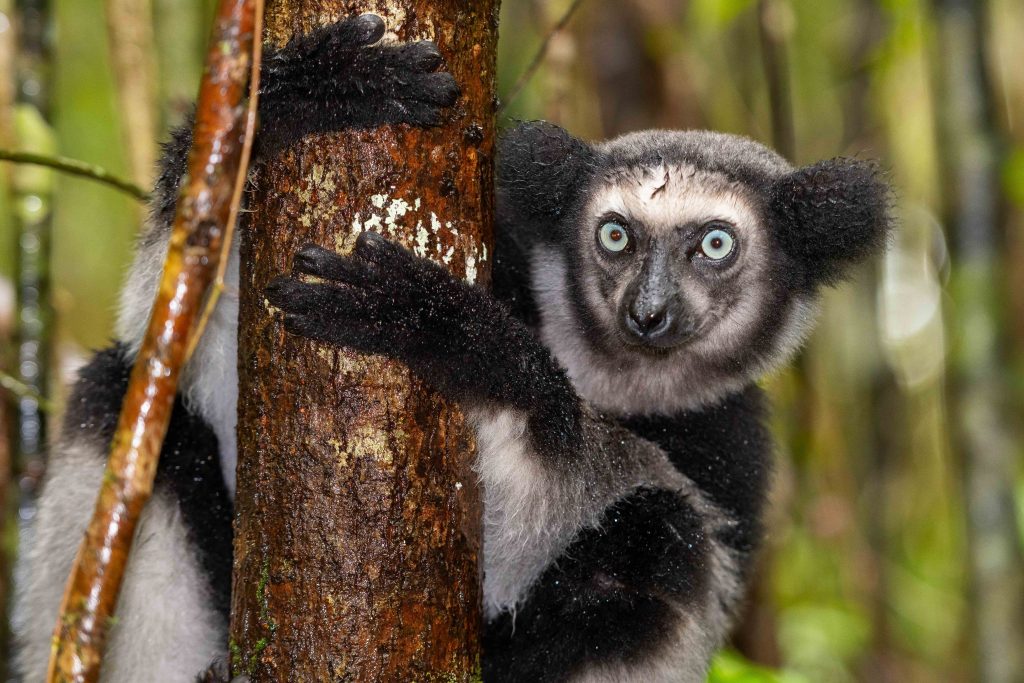
Andasibe-Mantadia National Park is the easiest place in Madagascar to see wild lemurs, above all the indri, whose calls carry for kilometres through the canopy at first light. Most visitors book a guided walking safari of two to six hours, then add a night walk in the community forests next door. The park sits about 150 km east of Antananarivo on the paved RN2, protecting 155 square kilometres of montane rainforest split across two separate sections.
Indri Trekking Safaris in Analamazaotra Reserve
An indri trekking safari in Analamazaotra is what brings almost everyone here, and it delivers more reliably than any other lemur walk in the country. Over sixty indri families live in this section of forest. Several groups are habituated, which means a morning trek on a maintained trail gives you a strong chance of standing under one within an hour or two of setting off.
You hear them before you see them. The call is a long rising howl, closer to whale song than anything a primate ought to produce, and it travels up to three kilometres through wet air. Groups answer each other across valleys from around dawn until late morning, then again in the afternoon. Guides work by ear, stopping mid-trail with a hand up, waiting for the next round of calling to fix a direction.
Analamazaotra covers only 810 hectares, and its trails reflect that. Four circuits run from the park office. Circuit Indri 1 is the short and popular one at roughly 3.5 km, walked in two to three hours. Circuit Indri 2 stretches to about 4.5 km. The Circuit Aventure runs four to six hours for walkers who want distance and quieter forest, and the Palmier circuit is the gentle option at one to two hours. Terrain here is mostly flat to gently sloping, with some slippery root sections after rain.
Go early. Gates open around six in the morning, and the first two hours are the best of the day for calling, for light, and for having a stretch of trail to yourself. By nine, tour groups from Antananarivo start arriving.
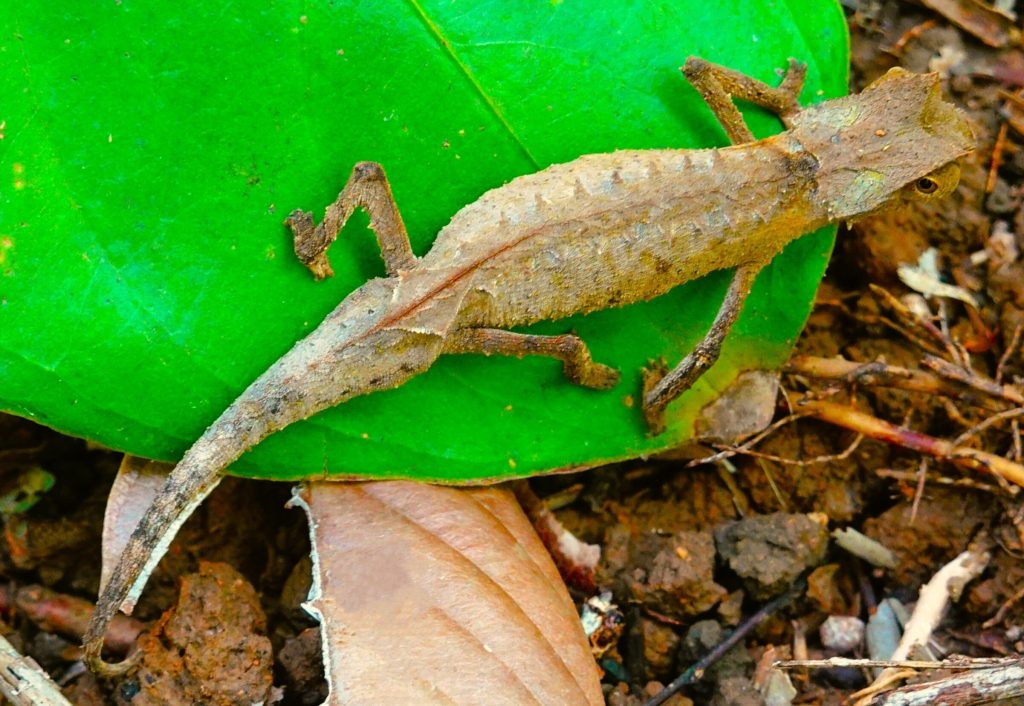
Guiding is mandatory in both sections of the park, and it is not a formality. Without trained eyes the rainforest reads as undifferentiated green. Guides find the finger-length chameleons, the geckos flattened invisibly against bark, and the indri sitting motionless forty metres up.
Mantadia Rainforest Trekking and Primary Forest Tours
A Mantadia trekking tour is a different proposition from the Analamazaotra walk, and worth a full day if you have one. Mantadia lies about 20 km north, reached by a rough track that takes roughly ninety minutes to two hours from Andasibe village. That road is the reason most visitors skip it. It is also the reason the forest feels wilder and the trails are usually empty.
This is primary rainforest, largely unmodified, running from about 900 to 1,250 metres. The circuits are longer and steeper than anything in Analamazaotra. The Sacred Waterfall circuit takes around two hours and passes sites the local community treats as holy. Rianasoa runs one to two hours through orchid-rich forest to a natural pool where swimming is allowed. Belakato climbs and drops for about three hours. Walkers with a full day can link the lot into a single long trek.
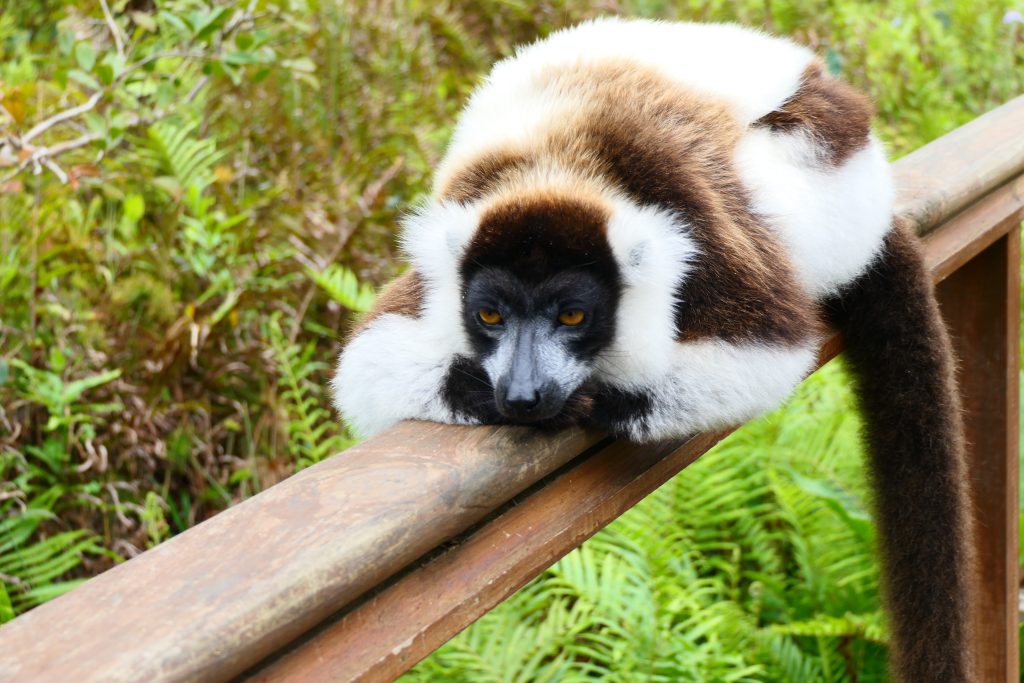
Species you have little chance of seeing in Analamazaotra turn up here. Black-and-white ruffed lemurs, diademed sifaka in their gold and silver coats, and four species of ground-roller are the reasons serious wildlife walkers make the drive. A high-clearance vehicle is needed. Most lodges arrange one the evening before.
Analamazaotra. Close to the RN2 and Andasibe village. Short circuits of one to six hours on well-maintained trails. Very high chance of indri. Busy from mid-morning. Suits families, first-time visitors and anyone on a tight schedule.
Mantadia. Twenty kilometres north on a rough track, ninety minutes each way. Longer and steeper circuits through primary forest. Better for diademed sifaka, ruffed lemurs and ground-rollers. Few other walkers. Needs a full day and a proper vehicle.
Lemur Watching Tours and the Species You Can Expect
Lemur watching tours here cover fourteen recorded species, though nobody sees all of them in a single visit. The indri is the certainty. Everything else depends on which section you walk, what time of day you go out, and a fair amount of luck.

Common brown lemurs and grey bamboo lemurs turn up regularly on the Analamazaotra circuits, often low enough for decent photographs. Diademed sifaka and black-and-white ruffed lemurs were moved into this section from forest that was being cleared, and small numbers persist, though sightings are far from guaranteed. Red-bellied lemurs are around but quiet and easily missed.
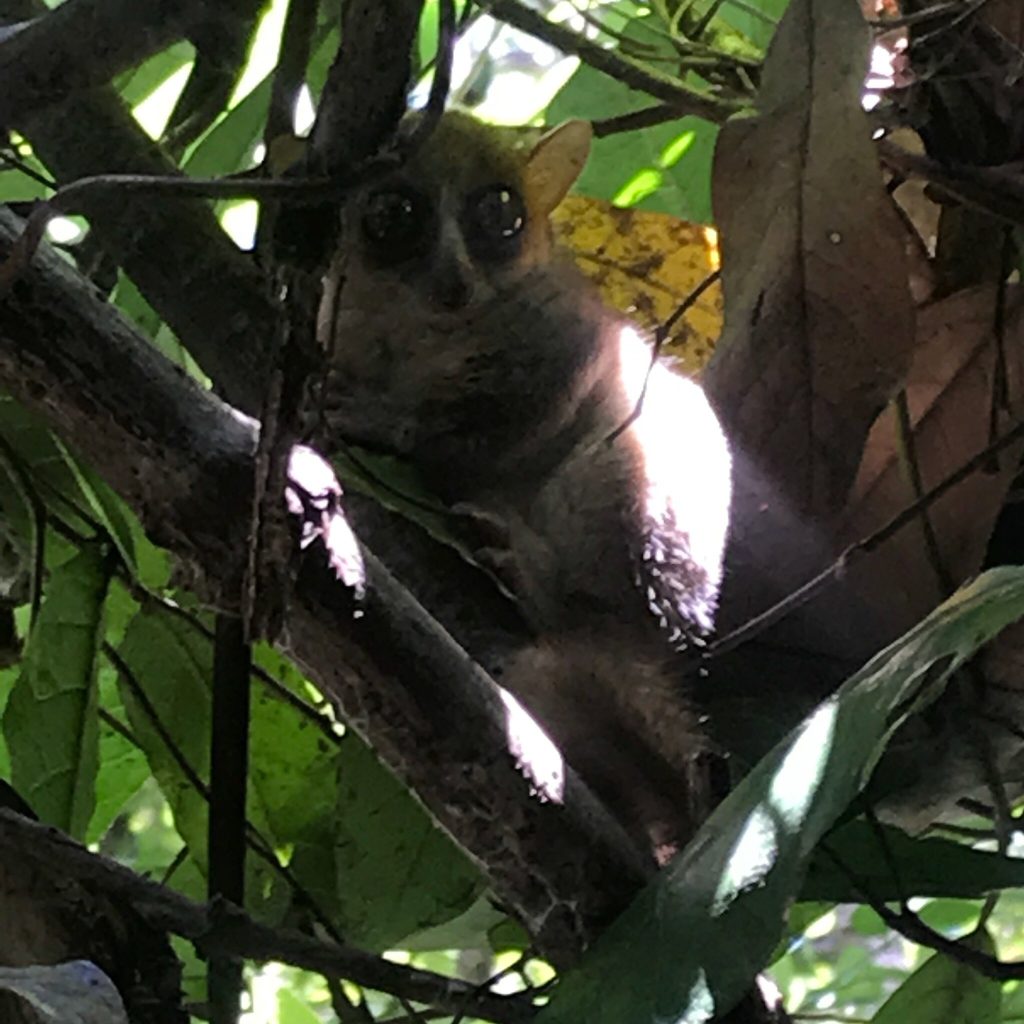
The nocturnal species are a separate cast entirely: Goodman’s mouse lemur, eastern woolly lemur, weasel sportive lemur, and in the warmer months the furry-eared dwarf lemur. You will not see these on a day walk. They need a torch and a night guide.
The indri cannot survive in captivity. Every one that exists lives in a shrinking band of eastern rainforest, which is why this park matters well beyond its size.
September through November is when infants appear, clinging to their mothers’ bellies and later riding on their backs. Good months for photographers, and busier ones on the trails.
Night Walk Tours at VOIMMA and Mitsinjo
A night walk tour at Andasibe does not happen inside the national park. This catches people out. Madagascar National Parks closes its gates in the afternoon, so the after-dark walking takes place in the community and private reserves that ring the village, and those reserves are genuinely good.
VOIMMA is a community-run forest parcel about 1.5 km from the Analamazaotra entrance, set up by local villagers and managed entirely by them. Mitsinjo, directly opposite the park office, is run by a local association and has hosted film crews working on indri footage. Both offer night walks and both are cheaper and quieter than the national park by day. A third option is the strip of secondary growth along the tarmac road, which works but gets crowded between late August and December, with several groups converging on the same mouse lemur.
Bring a strong torch and spare batteries. Two hours is typical. What you get is frogs calling from every direction, chameleons asleep on twigs at eye level in colours they never show by day, leaf-tailed geckos that take a guide several minutes to point out even once you are looking at the right branch, and if the night goes well, mouse lemurs blinking back from the beam.
Birding Safaris in Andasibe and Mantadia
Birding safaris at Andasibe-Mantadia put this park on most Madagascar bird itineraries, with somewhere between 100 and 120 species recorded and a high proportion of them endemic. Mantadia carries the better list, which is why birders make the effort to get there.
Four ground-rollers are the headline: pitta-like, scaly, short-legged and rufous-headed. Add velvet asity, common sunbird-asity, blue and red-fronted coua, nuthatch vanga, Crossley’s babbler, collared nightjar and Madagascar blue pigeon. The marshy ground holds Meller’s duck, Madagascar snipe and the slender-billed flufftail, all of which take patience and an early start.
Serious birders should book a specialist guide rather than take whoever is next in the rotation at the gate. The general park guides are excellent on lemurs and reptiles. Ground-rollers are a different discipline, and the difference between a guide who knows their calls and one who does not is the difference between four species and none.
Chameleon and Leaf-Tailed Gecko Spotting Tours
Reptile and amphibian spotting tours are the quiet strength of this park, and the reason many visitors end up staying a night longer than planned. Around fifty reptile species and more than eighty frogs have been recorded across the two sections, which is a lot of small things hiding in a small area.
Parson’s chameleon is the one people remember, a heavy green animal that can reach the length of a forearm and moves with almost no urgency at all. Smaller species are easier to miss and often more interesting: nose-horned chameleons, short-nosed chameleons, and the brown leaf chameleons of the genus Brookesia, some of which sit comfortably on a fingertip. Giant leaf-tailed geckos press themselves flat to trunks and vanish completely.
Frogs peak in the wet months. From November through March the forest at night is loud with them, and the tomato frogs and bright Boophis tree frogs that guides look for are far more active. Chameleons are harder to find in the coldest part of the dry season, when several species become sluggish and stay tucked away.
Vakona Private Reserve Tours and Lemur Island
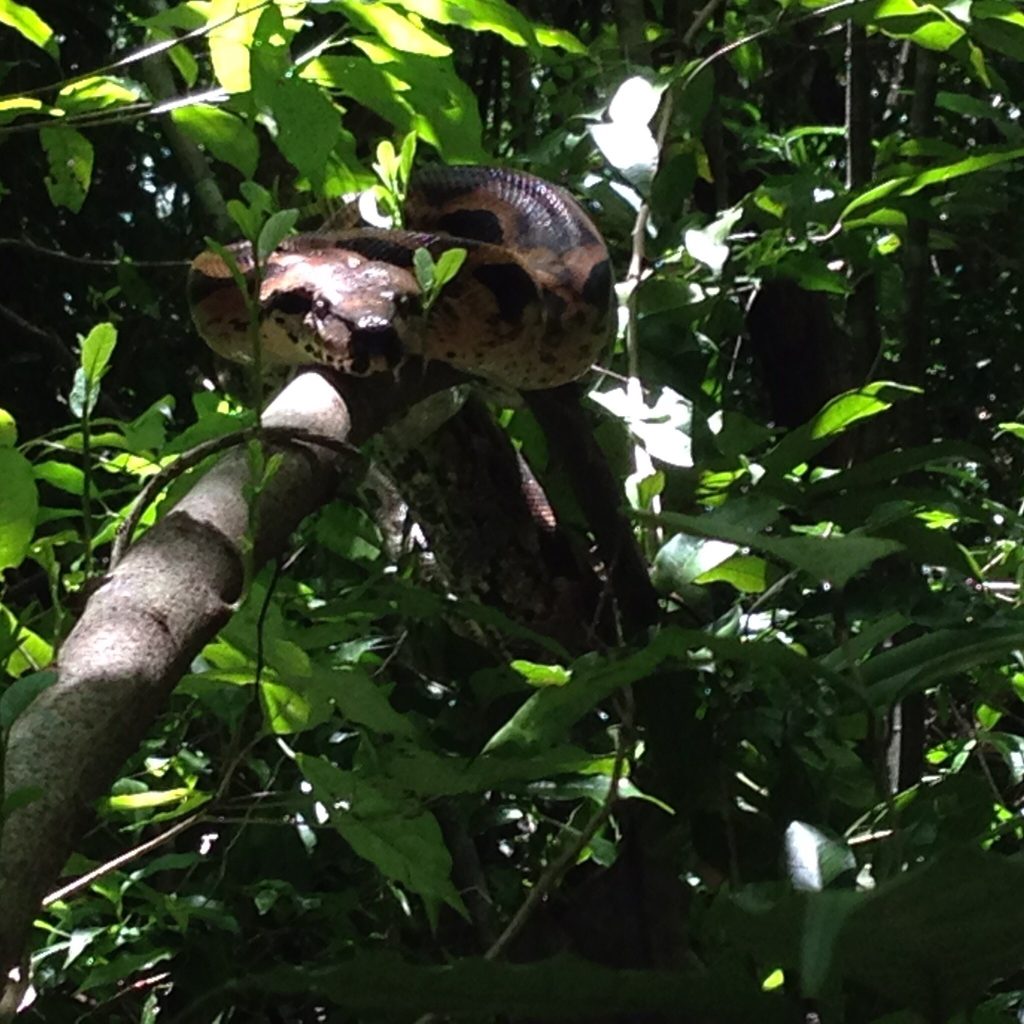
Tours of the Vakona Private Reserve, attached to Vakona Forest Lodge a few kilometres from the park, are the standard afternoon filler for groups arriving from Antananarivo. Lemur Island holds habituated groups on a small patch of ground surrounded by water. The animals climb on visitors and take fruit from their hands. There is also a crocodile enclosure on the same site.
Be clear about what this is. It is not wild lemur watching, and it should not replace a proper walk in Analamazaotra. Some travellers find the hand-feeding uncomfortable, and that is a fair reaction. For families with young children who cannot manage a long forest trek, or for anyone whose schedule collapsed on the RN2, it does offer close views of species that are otherwise high in a canopy. Treat it as an extra rather than the main event.
Getting to Andasibe-Mantadia National Park from Antananarivo
The park lies roughly 150 km east of the capital on the RN2, the main road to the port at Toamasina. The road is paved the whole way. Estimates for the drive run from three hours to five, and the honest answer is that it depends on trucks, roadworks and how long you spend leaving Antananarivo. Four hours is a realistic plan. Do not schedule it for the same day you land after a long-haul flight.
Most visitors travel by private vehicle with a driver, arranged through a lodge or operator. Taxi-brousse minibuses running toward Moramanga and Toamasina will drop you near the Andasibe junction, from where it is a short walk to accommodation, though this is slow going with luggage. Recent cyclone seasons have blocked sections of the RN2 for periods during the January to March window, so check road status before committing to travel in those months.
Accommodation clusters in and around Andasibe village. Feon’ny Ala sits closest to the forest with simple bungalows and lemurs in the garden. Mantadia Lodge is the more comfortable option on a hillside with forest views. Vakona Forest Lodge is larger and further out, near the Mantadia access track. Rooms in the good places go early during the dry season.
Best Time for an Andasibe-Mantadia Safari
The park stays open year-round, and there is no month in which you cannot see indri. What changes is comfort, mud, and which other species are active.
April and May. The rains have mostly ended, forest is at its greenest, trails are drying out and visitor numbers are low. One of the better value windows, with reliable walking conditions.
June to August. Peak season and the coolest part of the year. Comfortable hiking by day, but nights in the highlands drop sharply, sometimes to around ten degrees. Reptiles are less active. Book lodges well ahead.
September to November. For most visitors this is the best overall window. Infant lemurs appear, orchids flower, birds are breeding and calling, and the weather is warming without the heavy rain. Trails get busy in October.
December to March. Wettest and warmest, with January the peak at around 313 mm of rain. Frogs and reptiles are at their most active and night walks are excellent, but trails turn to mud and cyclones can close the RN2.
Rain is part of the deal at any time of year. This forest records rainfall on roughly 210 days annually and averages around 1,700 mm. Pack a proper waterproof and boots with grip, whichever month you choose.
Frequently Asked Questions
How much does it cost to visit Andasibe-Mantadia National Park?
Park entry currently runs at 45,000 Ariary per adult per day, with children under twelve at 25,000 Ariary. Guide fees are charged separately by circuit, typically 20,000 to 40,000 Ariary, with the shorter Indri circuit at the lower end and the full Mantadia circuit at the top. Night walks in the community reserves carry their own guide fee of roughly 20,000 to 25,000 Ariary. All of it is paid in cash in Ariary at the gate office, since there is no card payment and no online booking system.
What does a full trip to Andasibe cost including accommodation?
Independent travellers doing three days at Andasibe, with park entry and guides for two days, a simple guesthouse and a taxi-brousse from the capital, can complete the trip for around 150 US dollars. Simple bungalows near the village start around 30 to 40 dollars a night. The more comfortable lodges run roughly 60 to 100 dollars, and a private vehicle with driver from Antananarivo will add substantially more. Tipping guides is customary and not included in the posted fees.
Do I need a guide, or can I walk the trails alone?
A certified guide is compulsory in both sections of the national park and has been for years. You cannot walk in unaccompanied. In the community reserves at VOIMMA and Mitsinjo a guide is strongly recommended rather than required, but going without one in a rainforest this dense means missing nearly everything.
How likely am I to see an indri?
Very likely in Analamazaotra, where several groups are habituated and guides know their territories. Most visitors who walk a morning circuit see them. Hearing them is close to certain if you are anywhere near the forest between dawn and late morning. Sightings are never promised, and heavy rain can keep groups quiet and still, but this is the most dependable large lemur viewing in Madagascar.
Can you do a night walk inside the national park?
No. The national park gates close in the afternoon, so all night walking happens in the community and private reserves nearby, mainly VOIMMA and Mitsinjo, or along the roadside forest strip. These are separate entries with their own fees. The wildlife is much the same, since the forest is continuous.
How many days should I spend at Andasibe-Mantadia?
Two nights is the sensible minimum. That gives you a morning trek in Analamazaotra, a night walk, and a full day for Mantadia. One night is enough for the indri and little else, and plenty of people regret rushing it. Birders and photographers routinely stay three or four.
Is the park suitable for children?
Yes, particularly the Analamazaotra circuits, which are short and mostly flat. The Palmier circuit at one to two hours works well for younger walkers. Mantadia is harder going and involves a long rough drive each way, so it suits older children better. Night walks are usually a hit, though they run late and the trails are uneven in the dark.
Planning Your Visit
Getting the pace right at Andasibe matters more than most things you can plan in advance. Two nights, an early start, and a guide who knows where the indri groups have been feeding will do more for your visit than any amount of gear.
Booking Your Madagascar Trip
The safari companies and tour operators listed on this website put trips like this together for a living and know which camps, guides and routes actually deliver. We are an independent guide to Madagascar; we do not book or sell tours ourselves.
When you are ready, arrange your safari, tour or holiday with one of the recognised operators listed here. Tell them your dates and what matters most, and a real person, not a form, will handle the itinerary, park bookings and logistics for you.